Marine Decarbonization Roadmap: Fleet Compliance, Retrofit Planning and ROI Scenarios
From shore power to wind assist and hybrid systems, we retrofit proven technologies that cut emissions and keep your fleet compliant—without disrupting operations.
Maritime decarbonization compliance is changing, owners need a plan

Regulations, carbon pricing, and technology choices are accelerating. Marine decarbonization is no longer a future topic, it is a commercial and compliance requirement. A fleet decarbonization roadmap gives shipowners a structured way to choose retrofit priorities, budget correctly, and plan installations around routes and dry dock cycles.
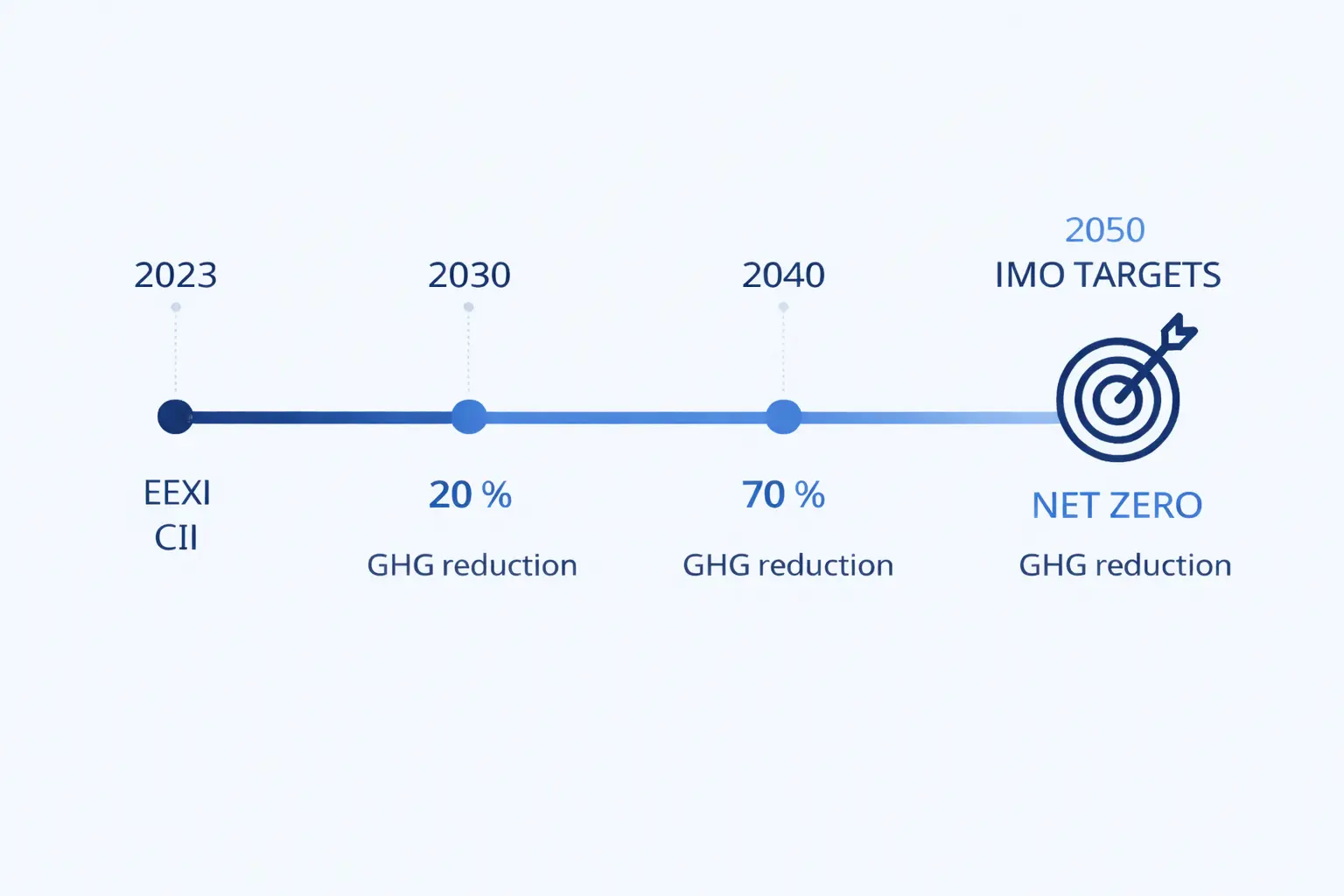
 

Why shipowners need a decarbonisation roadmap now

Regulatory frameworks are tightening, and investment decisions are becoming high-stakes. From IMO targets to FuelEU Maritime and EU ETS, maritime decarbonization compliance now requires a clear shipping decarbonization strategy.

  • Compliance deadlines are getting closer, and scrutiny is rising
  • Technology choices are expanding, with different readiness levels
  • Wrong decisions can mean lost time, wasted CAPEX, or stranded assets

As the industry moves toward decarbonising maritime transport pathways to zero carbon shipping by 2035, shipowners need structured plans to evaluate retrofit technologies, manage CAPEX, and align compliance with commercial operations.

What is a Decarbonization Roadmap?

A decarbonization roadmap is a vessel or fleet-specific action plan that outlines how to reduce emissions over time. It starts with a baseline assessment of operational efficiency and emissions, then screens viable technologies and operational measures, and finishes with ROI scenarios and a retrofit pathway aligned with dockings and trading patterns.
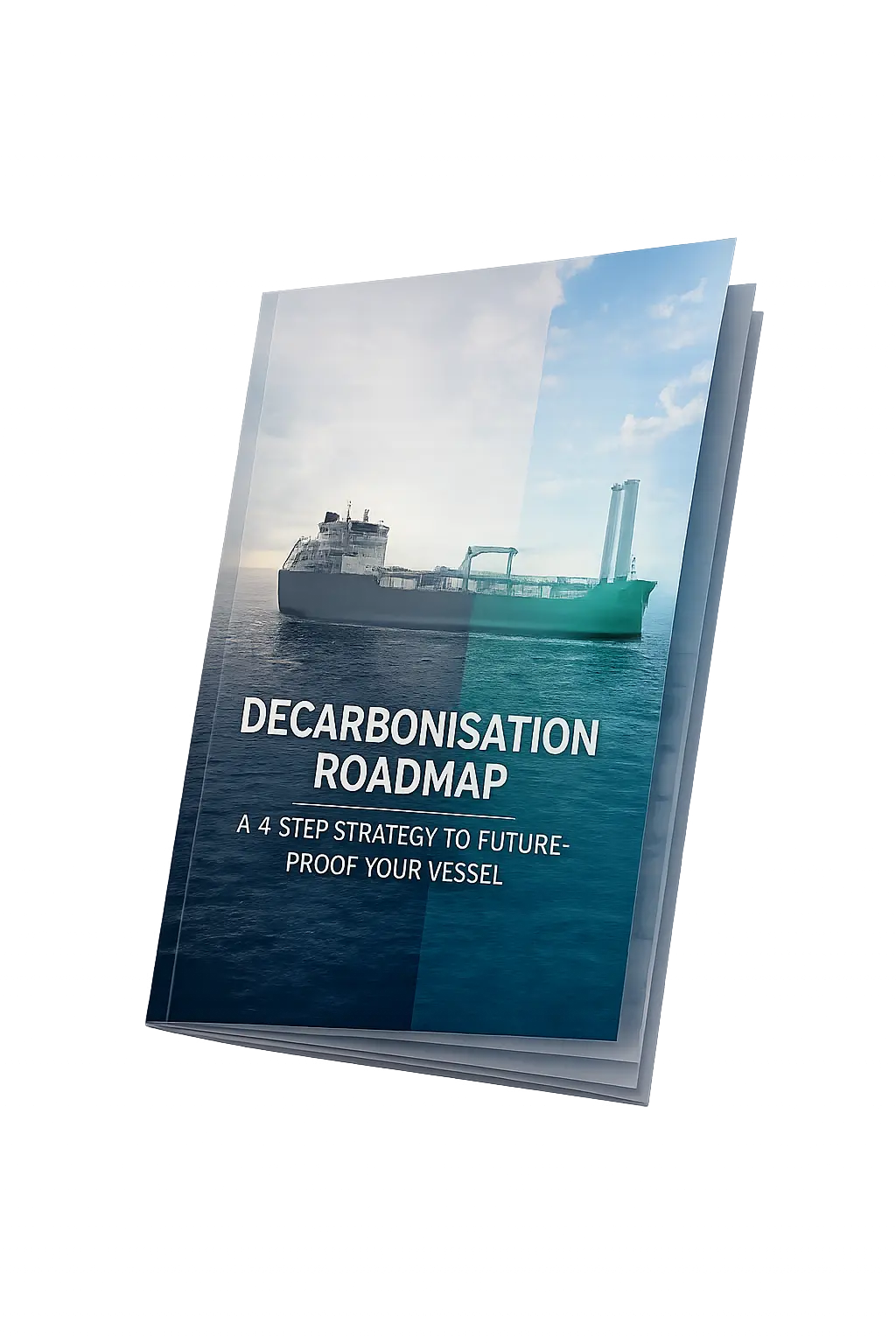
Download the Decarbonization Roadmap

Get a practical framework for marine decarbonization planning, including fleet decarbonization roadmap steps, technology screening, ROI scenarios, and an executive-ready action plan for maritime decarbonization compliance.

What’s inside:

✔ Vessel and operations assessment inputs
✔ Technologies for maritime decarbonization screening logic
✔ ROI modelling structure and retrofit phasing
Get the roadmap
Our Approach to Defining the Best Retrofit Pathway

We start by understanding the asset before proposing solutions. Every vessel has a unique technical profile, trading pattern, and compliance exposure. Effective marine decarbonization planning begins with a clear picture of where the vessel stands today.

Vessel technical profile and operational pattern


Review the vessel’s configuration and how it actually operates, including routes, speed, port time, and energy use.

CII trajectory and compliance horizon


Check the current CII position and forecast the compliance timeline against IMO targets, EU ETS, and FuelEU Maritime.

Commercial and dry-dock constraints


Map charter commitments and dry-dock windows to define what can be done, and when, with minimal disruption.

We translate the diagnostic findings into practical options. Using the vessel’s operating profile and compliance horizon, we model retrofit scenarios and compare technologies for maritime decarbonization in a way that supports confident decisions.

Screening of viable retrofit technologies


Evaluate suitable technologies for maritime decarbonization based on technical fit and operational profile.

CAPEX, fuel savings, and ROI modelling


Estimate investment needs, fuel reduction potential, and financial return.

Impact on CII, downtime, and lifetime


Assess effects on CII rating, off-hire risk, and long-term asset value.

We turn the modelled scenarios into a clear investment decision. The goal is to select a capital strategy that supports compliance, protects asset value, and fits your long-term financial planning.

Compare investment strategies

Assess phased versus front-loaded approaches, balancing risk, return, and timing.

Aligned with long-term investment planning

Ensure the selected pathway matches capital allocation priorities and fleet strategy.

Deliver a phased or front-loaded roadmap

Provide a structured fleet decarbonization roadmap, sequenced around compliance milestones and dry-dock windows.
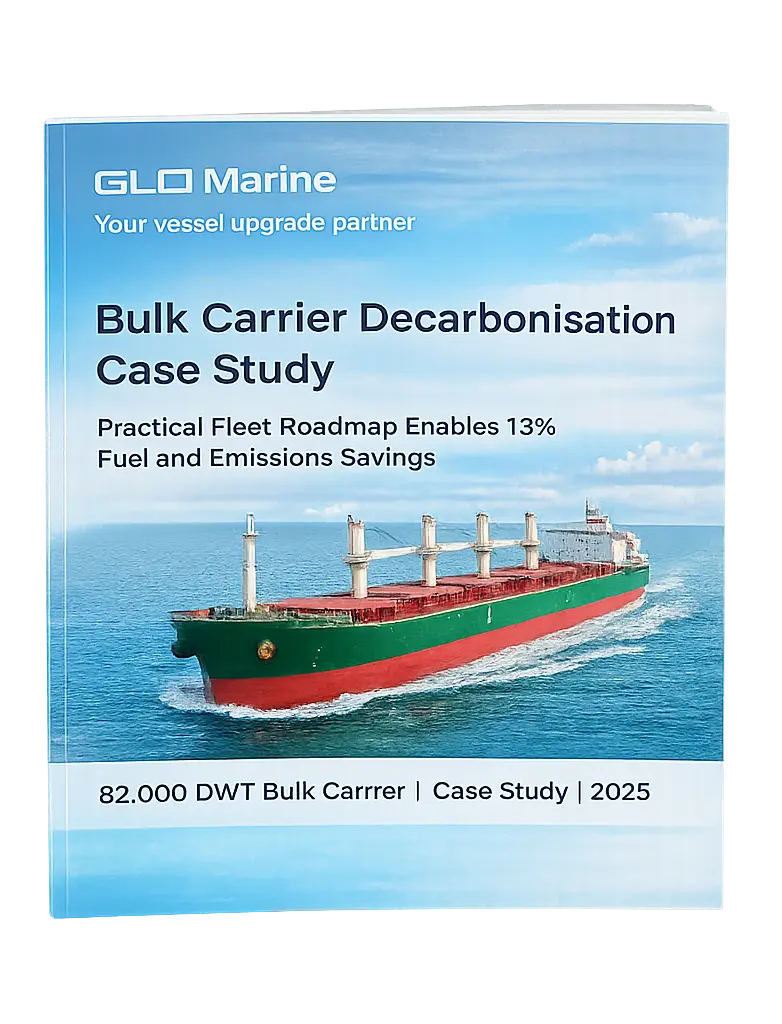
Planning your decarbonization roadmap reduces risk and improves decisions

Planning your decarbonization roadmap reduces risk and supports better investment decisions. It sets clear retrofit priorities across the fleet, aligned with maritime decarbonization compliance deadlines and commercial constraints. You get a practical shipping decarbonisation strategy, not a theoretical study.

The roadmap helps you compare technologies for maritime decarbonization, such as air lubrication systems, wind-assisted propulsion (WAPS), shore power, hybrid systems, alternative fuels, and onboard carbon capture. It supports class approvals and yard planning, using consistent ROI scenarios to guide CAPEX decisions with confidence.

Technologies for Maritime Decarbonization

Air Lubrication System Integration

Frictional resistance is the main source of a vessel’s resistance. Air Lubrication Systems inject air bubbles along the flat bottom to reduce hull friction and improve efficiency with minimal structural changes.

Scope:

✔ Hull survey inputs and integration concept
✔ Ducting, compressor, piping, and automation interfaces
✔ Power, controls, and PMS integration checks
✔ Class-ready documentation for retrofit planning
Learn more about Air Lubrication Retrofits

Wind-assisted propulsion (WAPS) retrofits

WAPS can deliver 5% to 20% annual fuel and emissions savings on some ships, and supports EU ETS and FuelEU Maritime compliance. Retrofit is typically possible when there’s deck space and unobstructed airflow.

Scope:

✔ Deck space and airflow suitability check for retrofit
✔ Foundations, load cases, and stability integration concept
✔ Route and operating profile review to screen WAPS options (rotor, suction, wing)
✔ Installation planning and sister-vessel standardisation
Explore Wind-Assisted Propulsion Solutions

Shore Power (Cold Ironing) Integration

Enable lower-emission port stays and stronger compliance by connecting to shore electricity. Best fit for vessels with regular port calls and longer berth times.

Scope:

✔ Trading pattern review and HV/LV concept selection
✔ Switchboards, cabling routes, protection, and interlocks
✔ PMS integration and safety procedures for connection and changeover
✔ Standardised fleet rollout package for repeatable retrofits
Learn More about Cold Ironing
Marine Decarbonization Strategy for Shipowners


Book technical assessment for shipping decarbonisation

A specialist will review your fleet and build a marine decarbonization roadmap with feasible retrofit options, phasing, ROI scenarios, and class-ready next steps.

The cost of delay is often higher than the cost of planning.

Who this is for:

  • Fleet owners preparing for IMO 2030 targets
  • Operators facing CII rating pressure
  • Technical managers evaluating retrofit CAPEX


Request an Assessment

Why GLO Marine

Fleet roadmap clarity

Fleet decarbonization roadmap and phasing across fleets and vessels.

Class ready

Feasibility and designs built for approvals, technical readiness, and execution.

End to end delivery

Consultancy, project management, procurement, installation and commissioning.

Global site support

Mobilised site teams and riding crews for shipboard works.

Let's work together on your maritime decarbonisation plan

With CII tightening and EU ETS costs rising, early planning reduces compliance risk and stranded CAPEX.

Tell us what you’re planning for your vessels, and we’ll recommend the next steps, from a fleet decarbonisation roadmap to feasibility and retrofit integration.

What we can support:

  • Maritime decarbonization compliance planning
  • Feasibility studies and ROI scenarios
  • Marine decarbonisation engineering
  • Retrofit pathways and fleet rollout

3000 characters left