 Request an assessment
 +40790870949
Shipping is entering its most demanding regulatory period. The IMO's Carbon Intensity Indicator (CII) framework is tightening annually, EU ETS obligations are expanding in scope, and EEXI verification requirements are already in force for vessels above 400 GT. Owners who do not act risk operational restrictions, higher CO₂ levies, and reduced charterability as charterers embed emissions performance into fixture negotiations.
ALS technology has been validated across multiple vessel segments, supported by classification societies, and recognised under EEDI and EEXI frameworks. For vessels with suitable hull geometry, a properly engineered ALS retrofit is one of the most direct and bankable routes to improving carbon intensity without compromising operational flexibility.
It is whether it is the right fit for your vessel, and whether it has been engineered correctly for your operating profile. That is precisely where independent technical expertise makes the difference.
That is where independent technical expertise makes the difference.
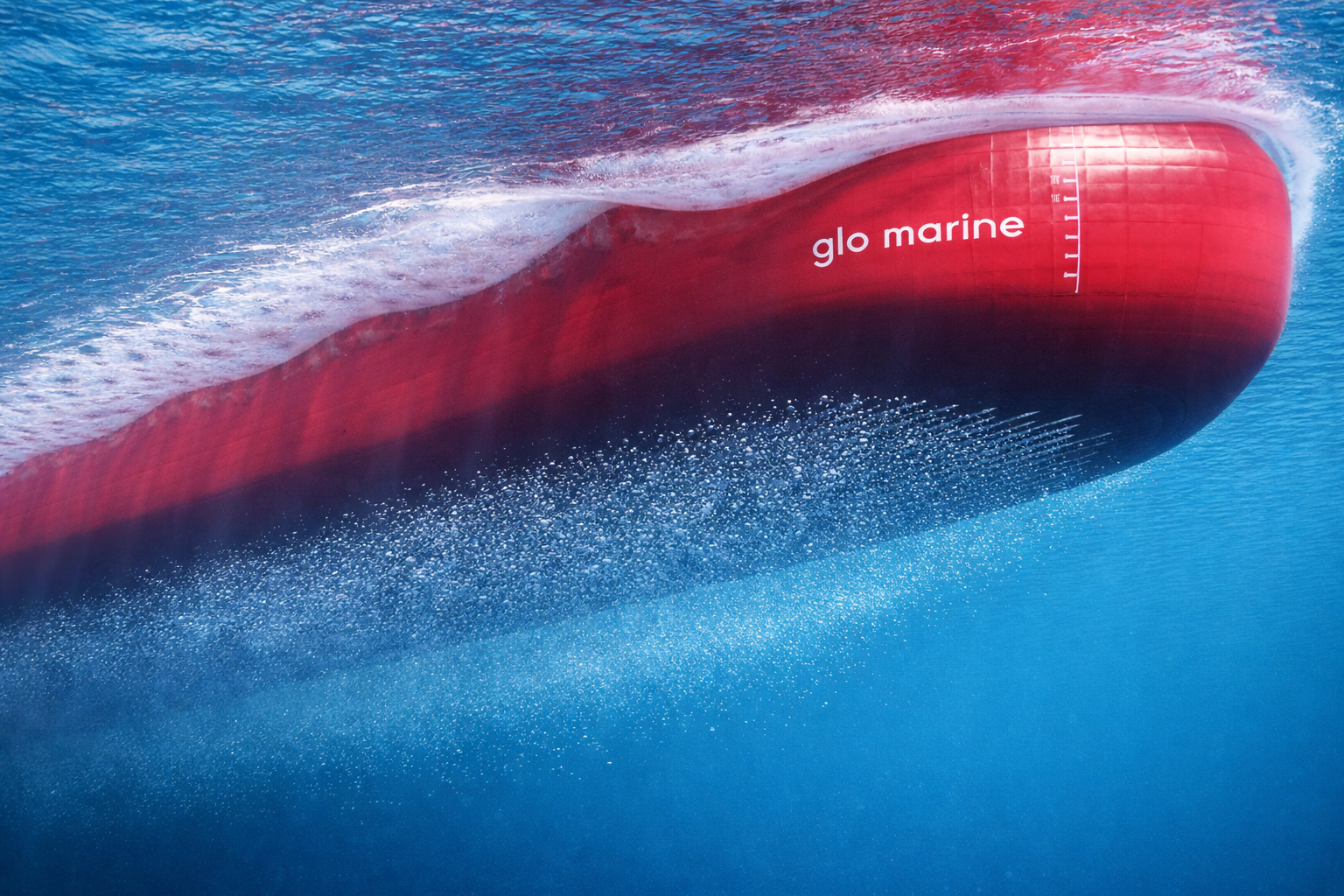
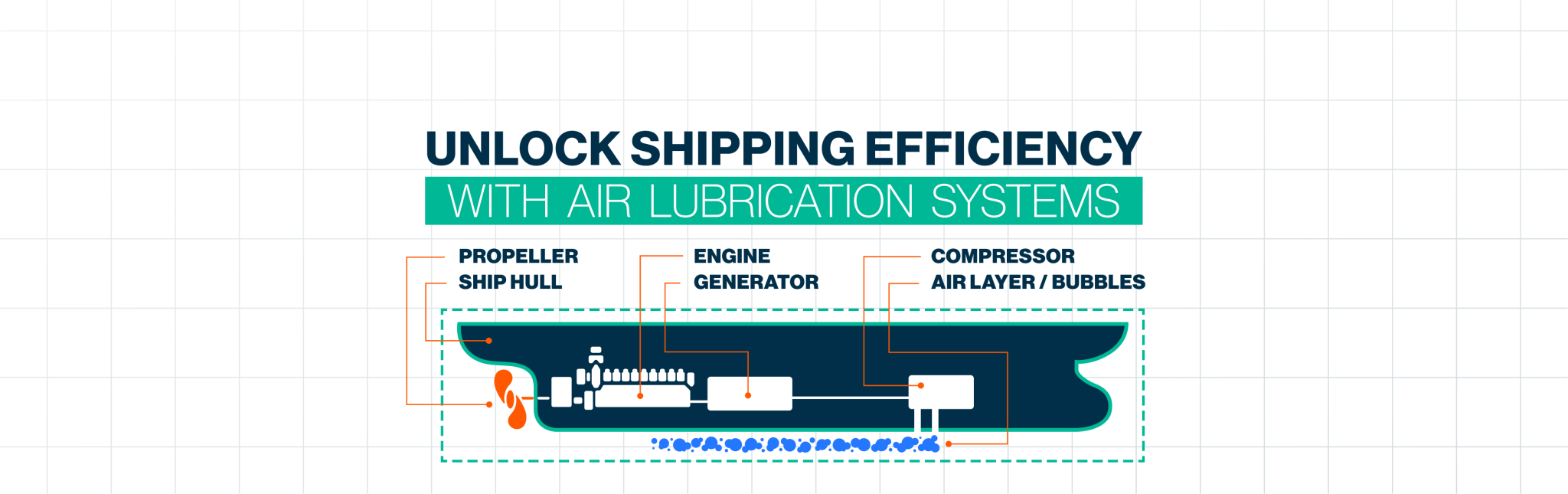
Air Lubrication Systems (ALS) reduce frictional resistance by injecting compressed air beneath the vessel’s flat bottom through nozzles, air release units, or cavitators. This creates an air layer between the hull and the water, reducing drag, lowering propulsion demand, and cutting fuel consumption and CO₂ emissions.
For displacement vessels operating at low to moderate Froude numbers, frictional resistance is often the largest component of total hull resistance. This makes ALS a relevant retrofit option for shipowners seeking measurable efficiency gains and improved environmental performance.
Actual results depend on vessel-specific factors such as hull geometry, draft, speed profile, sea state, and compressor power demand.
Decarbonisation investment decisions in shipping are rarely straightforward. Capital is finite, drydock windows are planned years in advance, and the regulatory landscape continues to evolve. However, several converging factors make the current period a compelling window to evaluate ALS retrofit projects.
CII ratings are already affecting charter negotiations, port access, and financing terms for many vessel types. A vessel rated D or E faces not only fines but reputational and commercial consequences that compound over time. ALS contributions to CII improvement are formally recognised by the IMO.
Even at conservative bunker price assumptions, the fuel savings generated by a properly deployed ALS system — ranging from 4 to 12% depending on vessel type and operating profile — can represent a material improvement in voyage economics over a 10 to 15-year asset lifecycle.
Retrofitting ALS during a scheduled drydock significantly reduces the incremental cost of installation. Coordinating the project during a planned maintenance cycle avoids additional off-hire days and optimises the overall capital deployment.
The EMSA study confirms that ALS delivers a stronger return on investment when integrated into newbuild design than as a retrofit — but this does not diminish the retrofit case for vessels with remaining asset life. For owners planning future newbuilds, operational experience with ALS technology on existing vessels provides invaluable calibration data.
Not all Air Lubrication Systems are the same. The appropriate technology depends on your vessel's hull geometry, operating draft and speed profile, and infrastructure constraints. Here is a structured overview of the three principal system types used in commercial shipping today.
Bubble Drag Reduction systems use low-pressure compressors or blowers to inject microbubbles into the turbulent boundary layer beneath the hull.
Compatible with a wide range of hull forms, including vessels without extensive flat bottom areas. Performance is sensitive to operating speed and draft.
Energy consumption of compressors — typically 3 to 5% of propulsion power — must be factored into the net efficiency calculation.
Advanced Air Layer systems use patented fluidic oscillator technology to distribute air uniformly across the hull in a homogeneous layer, replacing conventional point-injection with distributed release across multiple bands.
Demonstrated net fuel savings of 5 to 12% in real-world operation, with peak savings exceeding 15% in favourable conditions.
Notable secondary benefit: measurable reduction in hull vibration and underwater radiated noise — relevant as marine noise regulation gains traction.
Air Cavity Systems use structural hull modifications to create stable air pockets beneath the hull, retained by longitudinal skegs and transverse cavitator profiles. Requires substantially lower air flow — and therefore lower compressor power — compared to first-generation bubble systems.
Confirmed fuel savings of 10 to 20% on inland waterway vessels and 5 to 12% on seagoing ships. Originally developed at TU Delft and validated under real ship conditions at MARIN and HSVA. RINA certified, qualified for the Green Award, and EU EIA tax reduction for Dutch-flag vessels.
The ALS market has matured considerably over the past decade, but independent analysis, including the 2026 EMSA/DNV studies, confirms that performance claims must be evaluated critically. A well-structured investment decision requires three layers of cost analysis:
Prior to any drydock commitment, a vessel-specific feasibility study should include computational fluid dynamics (CFD) analysis for air release unit (ARU) placement, structural review for nozzle or cavitator integration, and a detailed engineering cost and timeline estimate.
This phase defines the project scope and validates the performance assumptions before capital is committed.
ALS retrofit installation requires drydocking and shipyard coordination. Typical retrofit CAPEX ranges from €500,000 to €1.5 million or more, depending on vendor scope, vessel size, system type, and yard rates.
Retrofit installation carries a cost premium compared to newbuild integration, typically 40 to 80% higher, which must be reflected in the return-on-investment modelling.
Ongoing operational costs include periodic nozzle and ARU inspection during drydock, potential adjustments to hull coating maintenance schedules near installations, and energy costs associated with compressor or blower operation.
These factors are frequently underrepresented in vendor-provided payback calculations and must be modelled explicitly.
Air Lubrication Systems reduce hydrodynamic resistance by modifying the boundary layer between the hull and water. By introducing air beneath the flat bottom, the system partially replaces water with a fluid of lower density and viscosity, reducing shear stress along the hull surface.
Depending on system design, this results in different flow regimes:
• Microbubble drag reduction through dispersed air injection
• Transitional regimes with intermittent air patches
• Air layer drag reduction where a continuous air film is formed
The reduction in friction directly lowers propulsion power demand for a given speed.
Fuel savings depend on vessel type, operating profile, draft, speed, and system integration. In suitable applications, ALS can deliver measurable fuel savings under operational conditions. The actual performance varies across vessels and is influenced by how well the system is matched to the vessel’s design and operating pattern.
The net benefit is defined by:
• Reduction in hydrodynamic resistance
• Additional power required for air generation and distribution
ALS is generally more effective on vessels with favourable hull geometry, particularly those with larger flat bottom areas where air can be distributed efficiently.
Favourable candidates typically include:
• LNG carriers and cruise vessels with wide flat bottoms
• Container vessels with consistent operating profiles
• Ro/Ro and Ro/Pax vessels with suitable hull geometry
Suitability must also consider draft variability, propeller interaction, and flow separation effects along the hull.
ALS can be implemented as a retrofit, but it requires careful integration into existing vessel systems. The feasibility depends on:
• Availability of space for compressors, piping, and control systems
• Structural considerations for air release units and hull modifications
• Electrical load capacity and integration with the power management system
• Routing of piping systems within existing compartments
Retrofit projects must also consider installation sequencing, access constraints, and alignment with dry dock schedules.
ALS contributes to decarbonization by improving energy efficiency and reducing fuel consumption. This leads to lower CO2 emissions and supports efficiency-based regulatory frameworks.
The impact is indirect, as ALS does not alter fuel type or carbon intensity of fuel, but reduces total fuel consumption. As such, it can support performance metrics such as CII and broader emissions reduction strategies.
Whether you are planning a drydock in the next 12 months or building a long-term decarbonisation roadmap, our engineers can provide a structured assessment of ALS suitability and ROI for your vessels.
Provide your details below and a member of our technical team will be in contact within two working days.


