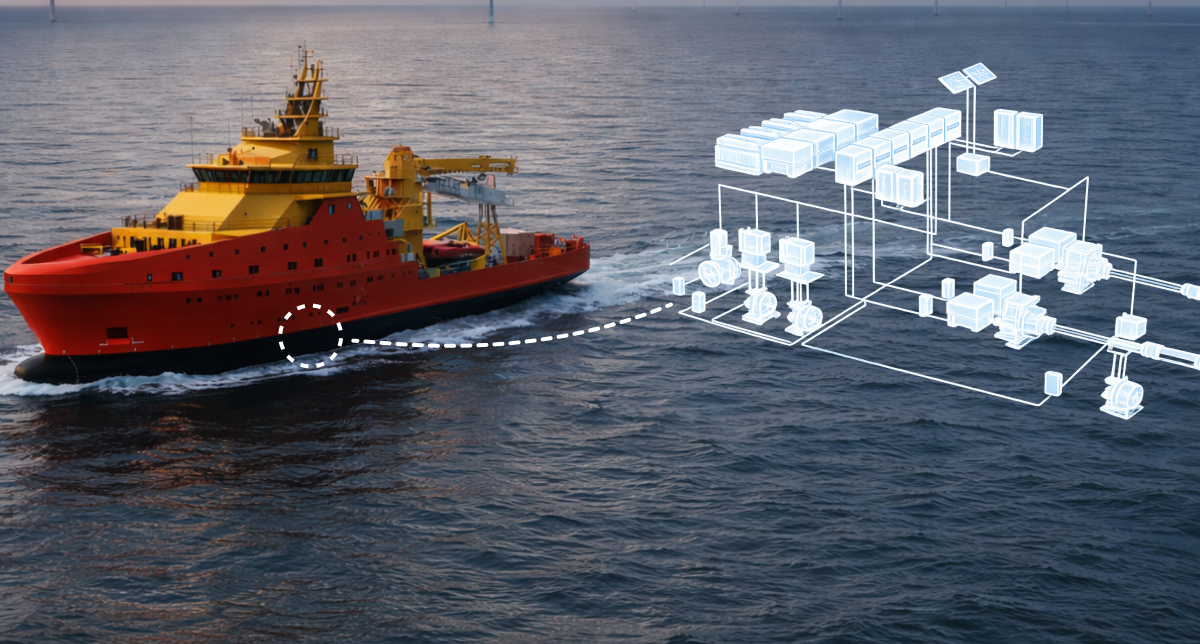
Decarbonisation in the maritime sector is often associated with alternative fuels or propulsion changes. However, improvements in vessel power architecture can also play a significant role in enhancing energy efficiency.
Hybrid power systems combine conventional marine engines with battery energy storage systems (BESS) and advanced energy management systems. Together, these components optimise how electrical power is generated, stored, and distributed onboard.
Offshore vessels typically operate under highly variable power demand conditions. Activities such as dynamic positioning (DP), standby operations, and offshore construction introduce frequent load fluctuations, which can impact generator efficiency and overall energy performance.
Many offshore vessels use diesel-electric propulsion systems, where generators supply power to propulsion motors, thrusters, and auxiliary equipment. While this setup offers flexibility, fluctuating demand can result in engines running at low load levels. Since marine diesel generators achieve optimal efficiency at approximately 70–85% load, prolonged low-load operation can reduce efficiency.
Hybrid systems address this challenge by integrating batteries into the vessel’s electrical network. Acting as an energy buffer, batteries store excess power and supply it when demand increases, helping generators operate closer to their optimal load range.
A hybrid power system typically includes generators, lithium-ion battery packs, and an energy management system that controls power flow across the vessel.
Battery integration supports offshore operations through:
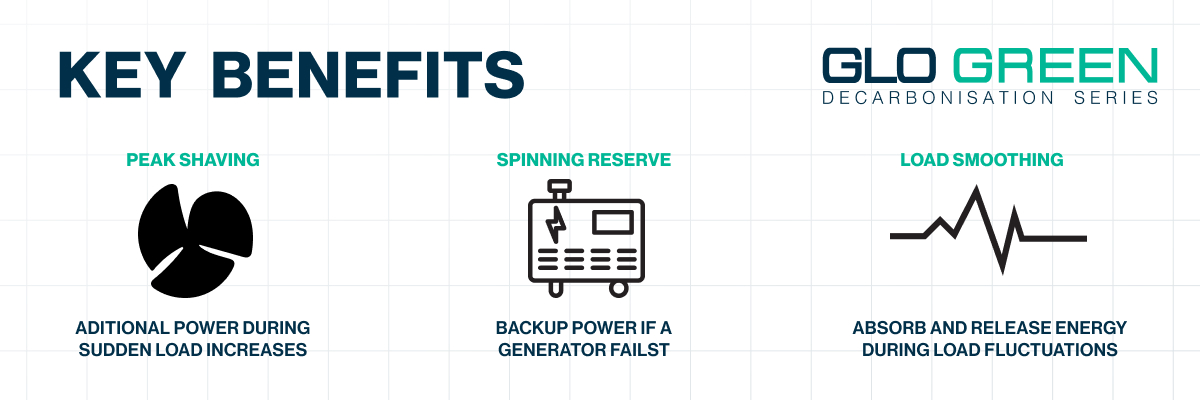
Peak shaving – providing additional power during sudden load increases, such as thruster response during DP
Spinning reserve – delivering instant backup power in case of generator failure, enabling fewer generators to run while maintaining redundancy
Load smoothing – absorbing rapid load variations and releasing energy gradually to stabilise generator performance
These functions improve how power is managed across the vessel during dynamic operating conditions.
Optimised generator loading and reduced reliance on additional running engines can contribute to lower fuel consumption. Industry data indicates potential fuel savings of approximately 10–20% in typical offshore operations, with higher reductions possible during DP or standby periods.
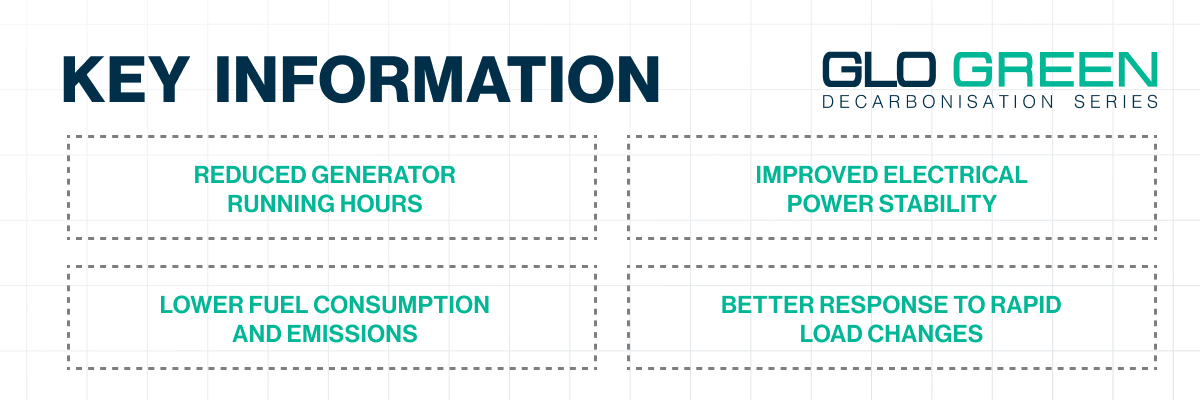
Hybrid systems may also influence:
Generator running hours and maintenance intervals
Fuel consumption and associated emissions
Stability of the onboard electrical network
Response to rapid load changes
The overall impact depends on vessel type, system configuration, and operational profile.
Successful integration of hybrid systems requires a detailed assessment of the vessel’s power architecture and operational profile. Key factors include battery capacity, available space, electrical integration, and load characteristics.
Additional considerations involve:
Integration with existing power management systems
Battery safety and protection systems
Cooling requirements
Compliance with classification society rules and regulations
Hybrid power systems are increasingly considered as part of broader strategies to improve energy efficiency in offshore vessel operations. By combining conventional engines with energy storage and intelligent control systems, they provide greater flexibility in onboard power generation and distribution.
For vessels operating in offshore wind, hybrid and BESS integration can also provide the onboard energy-storage foundation required for offshore charging integration for CTVs and SOVs.
As offshore operations evolve and environmental requirements become more stringent, these technologies are expected to remain a key area of technical development and operational optimisation.
Reach out to GLO Marine to discuss your vessel’s profile and discover what a tailored hybrid power solution could look like in practice.


