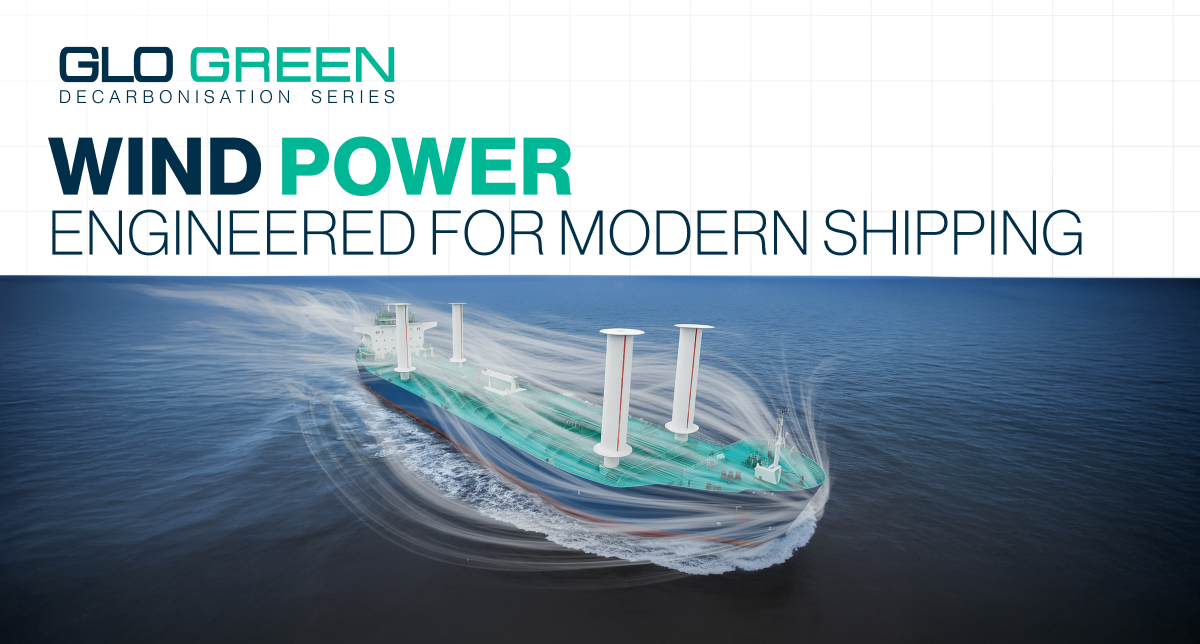
As global emission standards tighten and fuel costs continue to rise, the maritime industry is turning back to one of its oldest and most powerful allies — the wind. Today, advanced wind-assisted propulsion systems (WAPS) are redefining how vessels harness natural energy, transforming traditional sailing principles into highly efficient, data-driven engineering solutions.
At GLO Marine, we integrate these technologies into newbuilds and retrofit projects worldwide, supporting shipowners who are committed to decarbonization and energy efficiency.
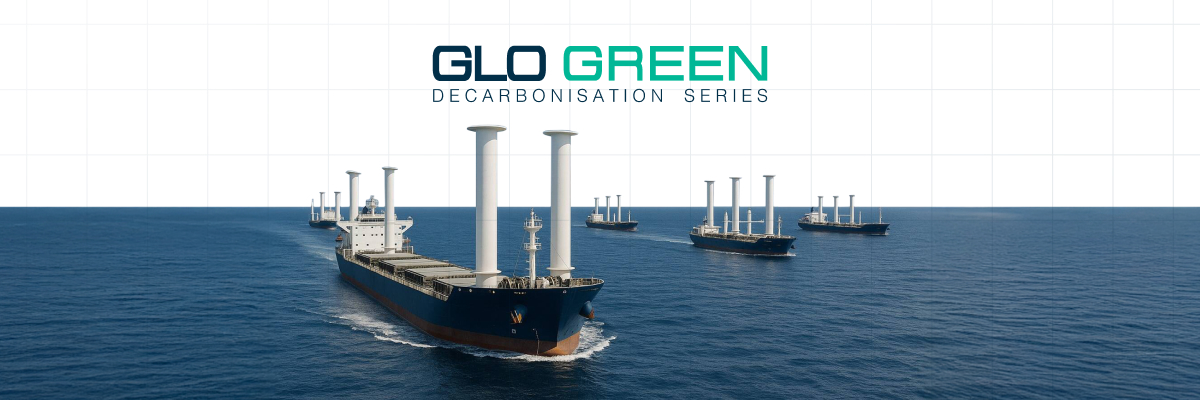
Wind-assisted propulsion systems combine aerodynamics, automation, and smart engineering to reduce engine load and fuel consumption by leveraging wind power. These systems don’t replace conventional propulsion; rather, they complement it, providing auxiliary thrust that leads to significant fuel and emission savings.
From bulk carriers and tankers to Ro-Ro ships, ferries, and general cargo vessels, WAPS solutions are adaptable and scalable. They perform best on routes with steady wind exposure — typically in the Atlantic, North Sea, and Mediterranean regions, but are increasingly being adopted worldwide.
Among the leading WAPS technologies, two stand out for their performance, integration flexibility, and proven results: Suction Sails and Flettner Rotors.
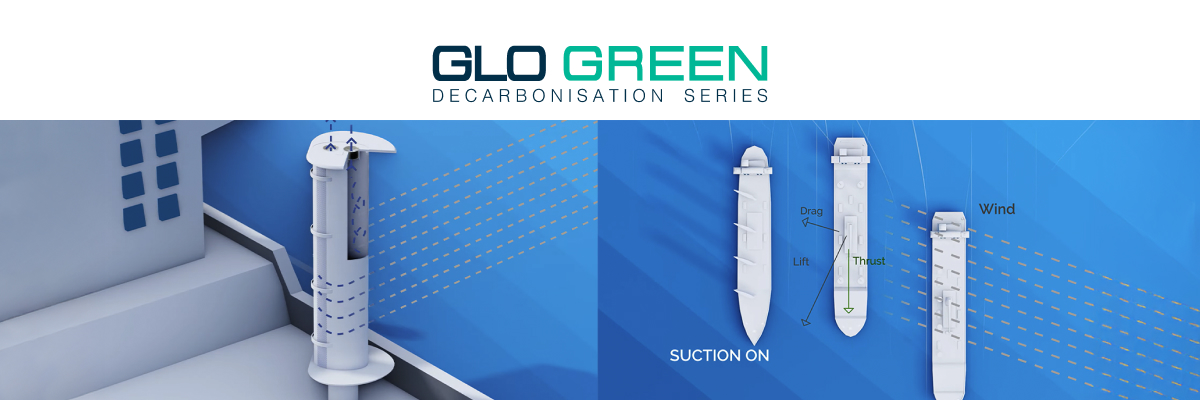
Suction sails — sometimes called active aerofoils — are tall, vertical structures that use internal fans to control airflow across their surface. By keeping air attached longer, they generate greater lift and forward thrust, even when the wind is light or blowing at narrow angles.
While they may resemble vertical columns more than traditional sails, suction sails represent the next generation of aerodynamic innovation at sea.
Typical performance metrics:
Highlights:
Implementing suction sails involves:
These systems are usually installed during planned dry-docking or retrofit projects, ensuring minimal operational downtime. Once activated, suction sails adjust automatically for optimal thrust and energy savings — a truly “set-and-sail” solution for greener operations.
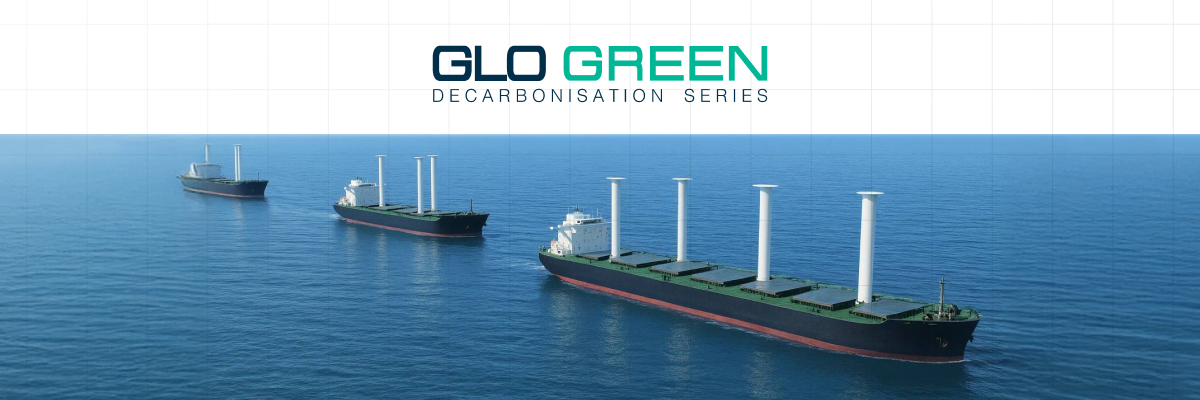
Flettner rotors are rotating vertical cylinders that generate propulsion using the Magnus effect — the same principle that causes a spinning ball to curve in flight. As the rotor spins, it produces lift perpendicular to the airflow, creating forward thrust that reduces the engine’s workload and overall fuel consumption.
Performance metrics:
Highlights:
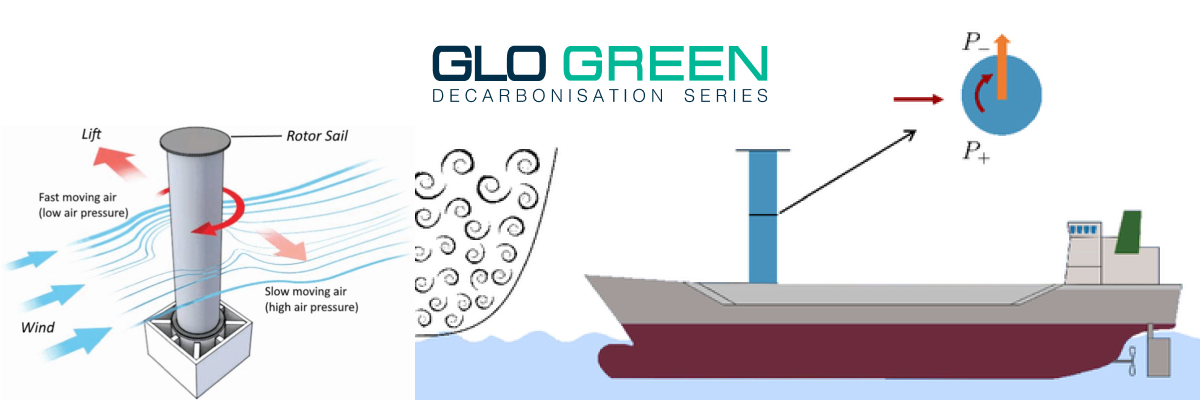
Successful Flettner rotor integration requires:
Typically installed during major refits or dry-docking, Flettner rotors can be adapted for both newbuilds and retrofits, making them one of the most flexible wind-assisted propulsion solutions available.
Modern WAPS installations are often paired with advanced weather routing software, which continuously analyzes wind patterns, sea states, and vessel performance to optimize voyage planning. By intelligently aligning course and speed with prevailing wind conditions, shipowners can maximize fuel efficiency and further reduce carbon emissions.
This synergy between aerodynamics and data analytics is shaping the next generation of maritime operations — where technology, sustainability, and efficiency coexist.
At GLO Marine, we provide full engineering and project management support for integrating wind-assisted propulsion systems into your fleet. Our multidisciplinary team ensures every installation meets class, safety, and performance standards — from structural reinforcement and electrical design to automation and stability verification.
Whether your fleet operates in European waters or across global trade routes, our retrofit specialists deliver tailor-made, turnkey solutions that align with your sustainability goals.
Suction Sails and Flettner Rotors represent more than just innovation — they mark a return to nature, powered by precision engineering and digital intelligence.
As part of the GLO Green Series, we are committed to helping shipowners navigate the path toward decarbonization, compliance, and operational efficiency through practical, proven solutions.
Book a meeting with our retrofit specialists to learn how GLO Marine can help you reduce emissions, optimize fuel consumption, and future-proof your vessels for a greener maritime industry.


