Whether you're planning a WAPS retrofit to reduce fuel consumption, preparing your vessel for EU ETS / FuelEU compliance, or executing a full decarbonisation upgrade, GLO Marine provides the complete vessel-side engineering package — from feasibility and structural design to class approval, installation, and commissioning.
We support wind-assisted propulsion retrofit, ship decarbonisation, rotor sail installation, and energy efficiency retrofits across bulk carriers, tankers, RoRo, and offshore vessels globally.
Our retrofit process is structured to reduce engineering risk, align stakeholders early, and maximize ROI.
We evaluate vessel suitability, operational routes, and wind conditions to determine the technical and commercial viability of WAPS. Within days, you receive a clear assessment of expected fuel savings, CAPEX implications, and integration constraints. This allows you to make early, data-driven decisions before committing to detailed engineering.
We develop a complete vessel-side engineering package covering structural foundations, stability updates, electrical interfaces, and system integration. All disciplines are coordinated to ensure the WAPS solution fits your vessel without conflicts or rework. The result is a build-ready design aligned with class and OEM requirements.
We manage the full class approval process with DNV, ABS, BV, or Lloyd’s from submission to final approval. This includes calculations, drawings, responses to comments, and design updates. Early alignment with class reduces approval cycles and prevents delays during installation.
We work directly with WAPS OEMs and shipyards to align system specifications, interfaces, and installation sequences. This ensures that equipment, engineering, and vessel constraints are fully synchronized before execution. Clear coordination minimizes clashes, change orders, and costly delays at the yard.
From single-system retrofits to multi-technology hybrid propulsion solutions, GLO Marine delivers vessel-side integration engineering across all major wind propulsion systems.
We develop vessel-side engineering for Flettner rotor installations — including structural foundations, load transfer, and control integration.
Wing-based systems require aerodynamic positioning, structural integration, and operational interface alignment.
High-altitude wind systems require minimal deck footprint but complex deployment integration.
WAPS systems introduce new load cases requiring detailed structural analysis.
We ensure vessel compliance under all operational conditions.
Power supply and automation interfaces for WAPS systems.
WAPS retrofit begins with validating vessel fundamentals:
Core disciplines:
Answers to the most important technical and commercial questions about wind assisted propulsion system retrofit (WAPS) for commercial vessels. Learn about vessel suitability, fuel savings, CAPEX, payback periods, and project timelines before starting your retrofit.
Most commercial vessels, including bulk carriers, tankers, RoRo, and offshore vessels, can support a wind-assisted propulsion system retrofit with the right engineering approach. Suitability depends on deck space, structural capacity, stability margins, and trading routes.
GLO Marine provides a fast WAPS feasibility assessment, identifying constraints early and outlining the required modifications for safe and compliant integration.
A wind assisted propulsion system retrofit can typically reduce fuel consumption by 5–20% annually, depending on vessel type, route, and selected technology (e.g., rotor sails or suction wings).
We deliver vessel-specific performance and routing analysis, ensuring realistic fuel savings projections aligned with your operational profile.
The CAPEX for a wind-assisted propulsion retrofit varies based on system type, number of units, and vessel-specific integration requirements such as structural reinforcement and installation complexity.
We provide detailed CAPEX estimates and cost breakdowns early in the process, helping you evaluate investment scenarios and compare different WAPS technologies.
The payback period for a WAPS retrofit is typically between 2 to 6 years, depending on fuel prices, vessel utilization, wind conditions, and regulatory costs such as EU ETS and FuelEU Maritime.
GLO Marine develops custom ROI models, allowing you to understand payback scenarios based on your actual trading routes and operating costs.
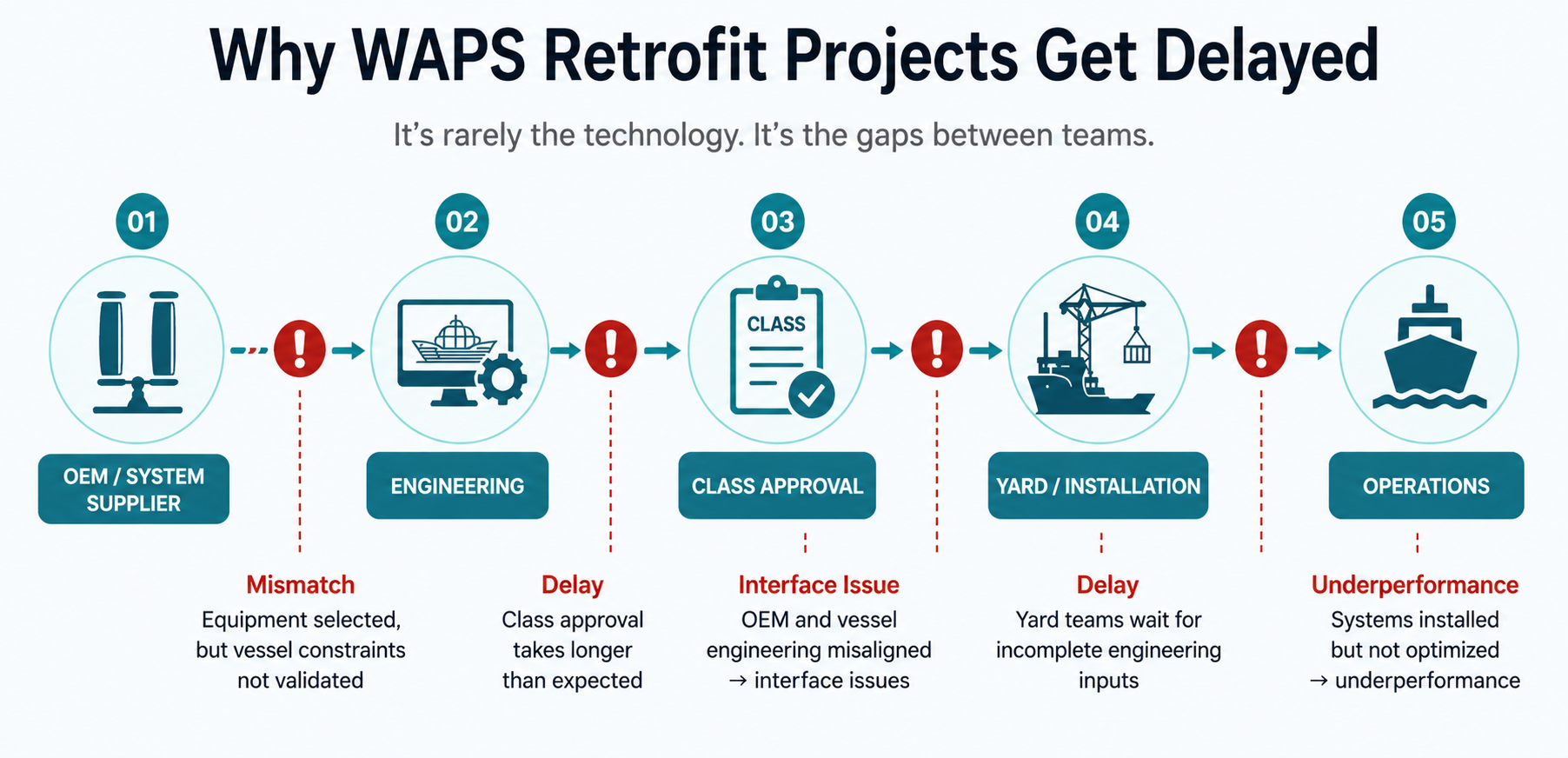
The main risks in wind propulsion retrofit projects come from integration gaps between OEMs, vessel engineering, class approvals, and shipyard execution—not the technology itself.
Without proper coordination, projects may face delays, rework, or underperformance. GLO Marine mitigates these risks through integrated engineering and single-point accountability.
Yes — we work directly with leading wind propulsion OEMs such as Norsepower, Anemoi, bound4blue, Econowind, BAR Technologies, and Airseas, as well as major shipyards and classification societies.
This ensures seamless integration, reduced project risk, and alignment across all stakeholders involved in the retrofit.
With increasing regulatory pressure and fuel costs, early engineering alignment reduces risk, delays, and missed ROI opportunities.
Tell us what you’re planning, and we’ll recommend the next steps.


