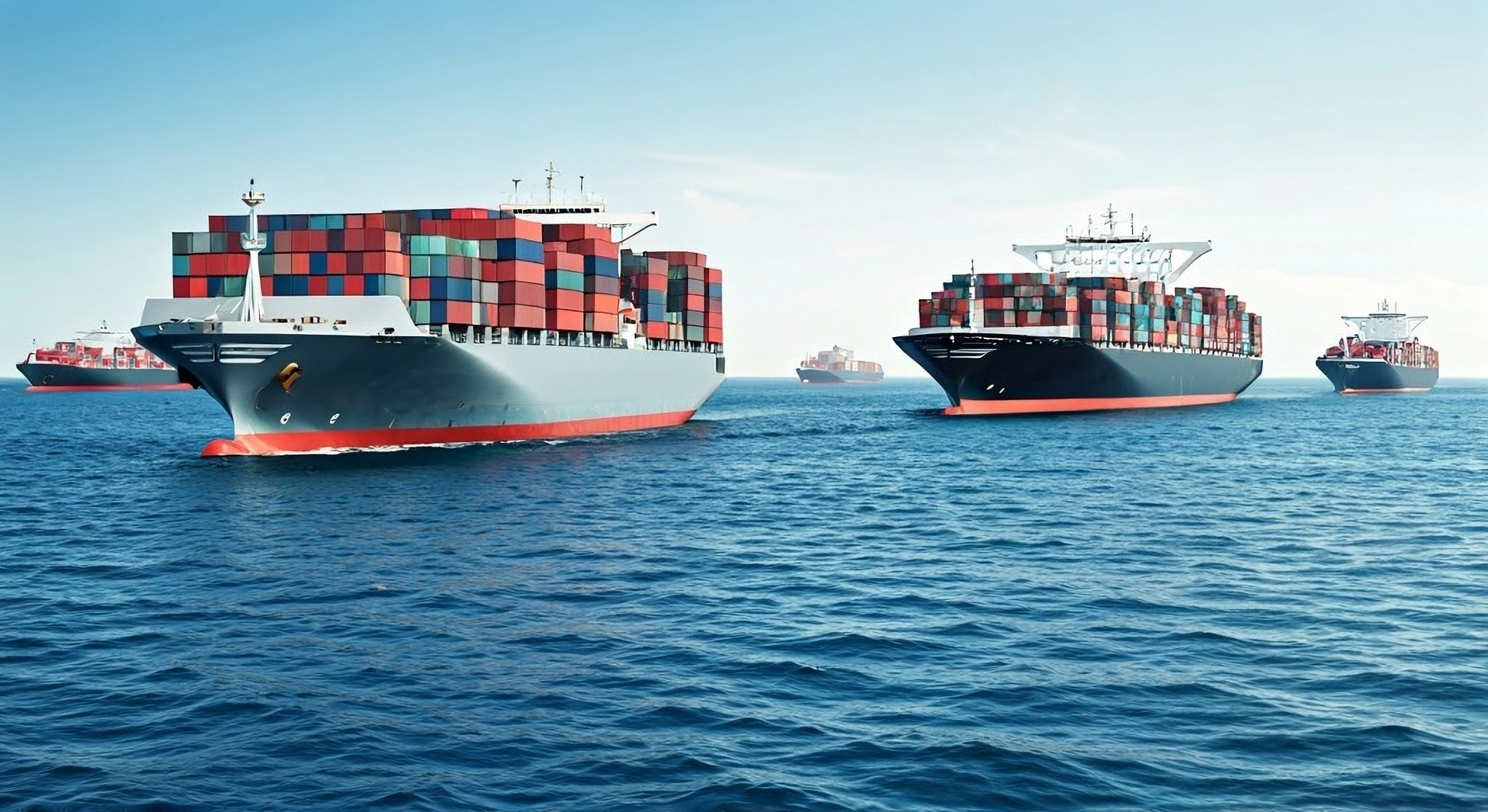
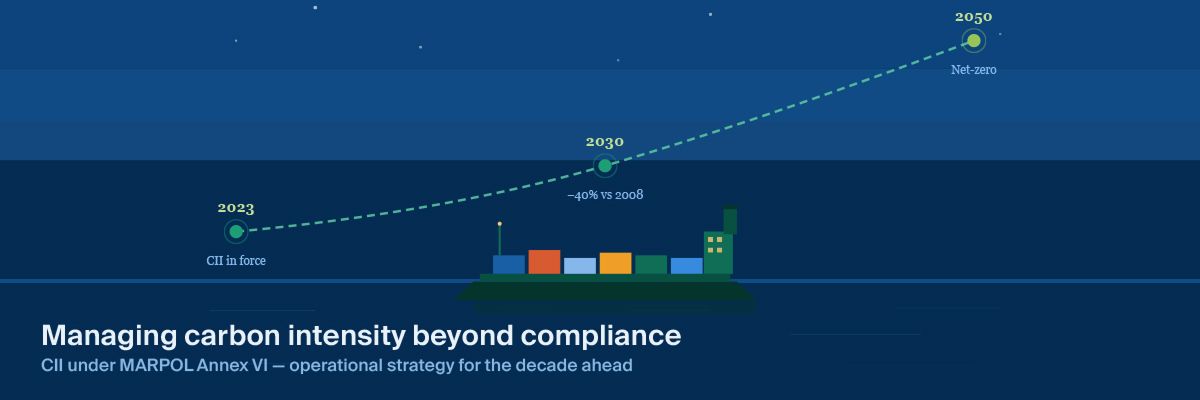
The Carbon Intensity Indicator (CII), introduced under MARPOL Annex VI and in force since 2023, establishes a framework for assessing the operational carbon intensity of vessels. With annual ratings now assigned and reduction factors tightening toward 2030, CII is increasingly treated as an operational parameter requiring continuous management rather than a static compliance requirement.
CII applies to vessels of 5,000 GT and above and supports the IMO’s objective to reduce the carbon intensity of international shipping by at least 40% by 2030 compared to 2008 levels, with a longer-term ambition of achieving net-zero greenhouse gas emissions.
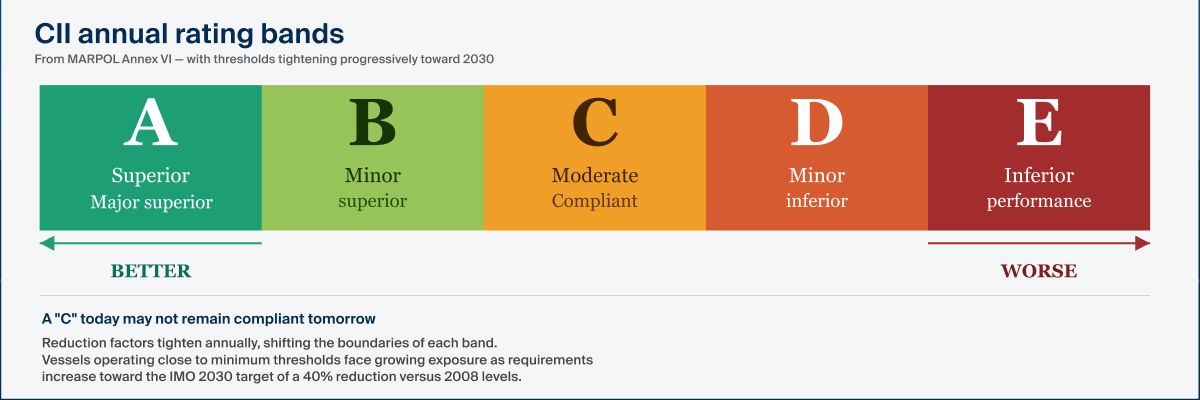
The CII rating system (A–E) is designed to become progressively more stringent. A vessel currently rated “C” may not retain that rating as reduction factors increase and performance margins narrow over time.
The framework is also subject to ongoing IMO review, including potential updates to reduction factors, reference lines, and verification methodologies. Maintaining compliance therefore requires continuous adjustment of operational and technical parameters, rather than relying on fixed performance assumptions.
CII performance is influenced by a combination of operational conditions and vessel characteristics. The most relevant factors include:
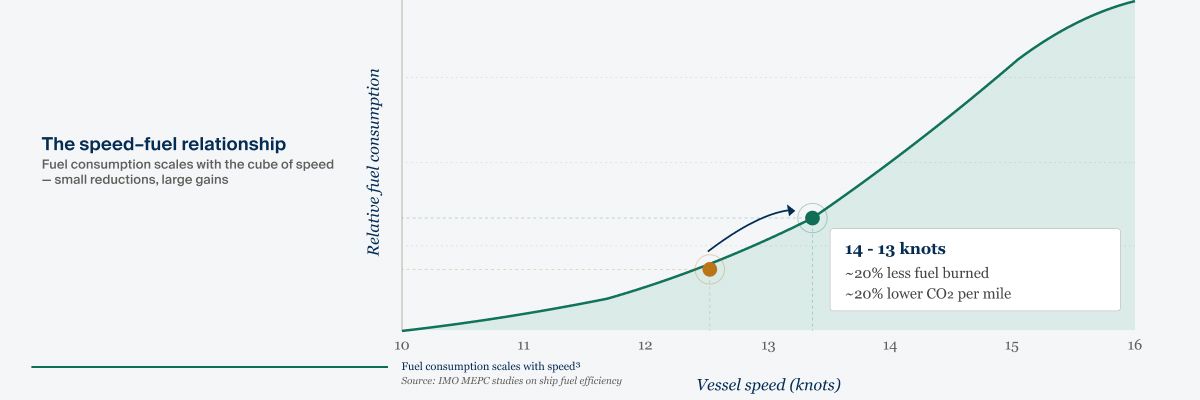
Voyage execution and speed profiles
Cargo intake and transport efficiency
Port-related delays and idle periods
Hull condition and propulsion efficiency
Over a full reporting period, these factors interact continuously. Variations in speed, extended waiting times, or suboptimal loading conditions can increase emissions relative to transport work, directly affecting the annual rating.
Improving carbon intensity requires coordinated adjustments to both operational practices and vessel condition.
From an operational perspective, maintaining stable speed profiles, reducing non-productive time, and improving voyage planning can contribute to more efficient performance. In parallel, technical measures such as maintaining hull condition, optimizing propeller performance, and monitoring fuel consumption support sustained efficiency.
In most cases, improvements are incremental. However, when applied consistently, these measures can result in a measurable reduction in annual carbon intensity.
CII performance is also influenced by factors that are not fully controllable by the vessel operator. These include:
These factors introduce variability into annual results and require continuous adjustment during operations.
CII is increasingly used as an indicator of how efficiently a vessel is operated over time. The annual rating reflects the combined effect of operational decisions, technical condition, and external constraints across the reporting period.
Maintaining a stable rating depends on consistent operational control, ongoing performance monitoring, and incremental efficiency improvements. As reduction factors tighten, the margin for maintaining a given rating is expected to decrease.
Improving CII performance requires measures that deliver a direct and measurable impact on fuel consumption and emissions under actual operating conditions.
GLO Marine supports shipowners and managers through retrofit solutions targeting propulsion and hydrodynamic efficiency, integration of energy efficiency and decarbonisation technologies, and technical assessment of vessel performance and improvement options. These are typically implemented as part of broader retrofit and modification projects.
The approach focuses on practical implementation and measurable performance outcomes, aligned with vessel-specific operational profiles.
Contact GLO Marine to discuss your vessel’s operational profile and identify measures to improve CII performance.


