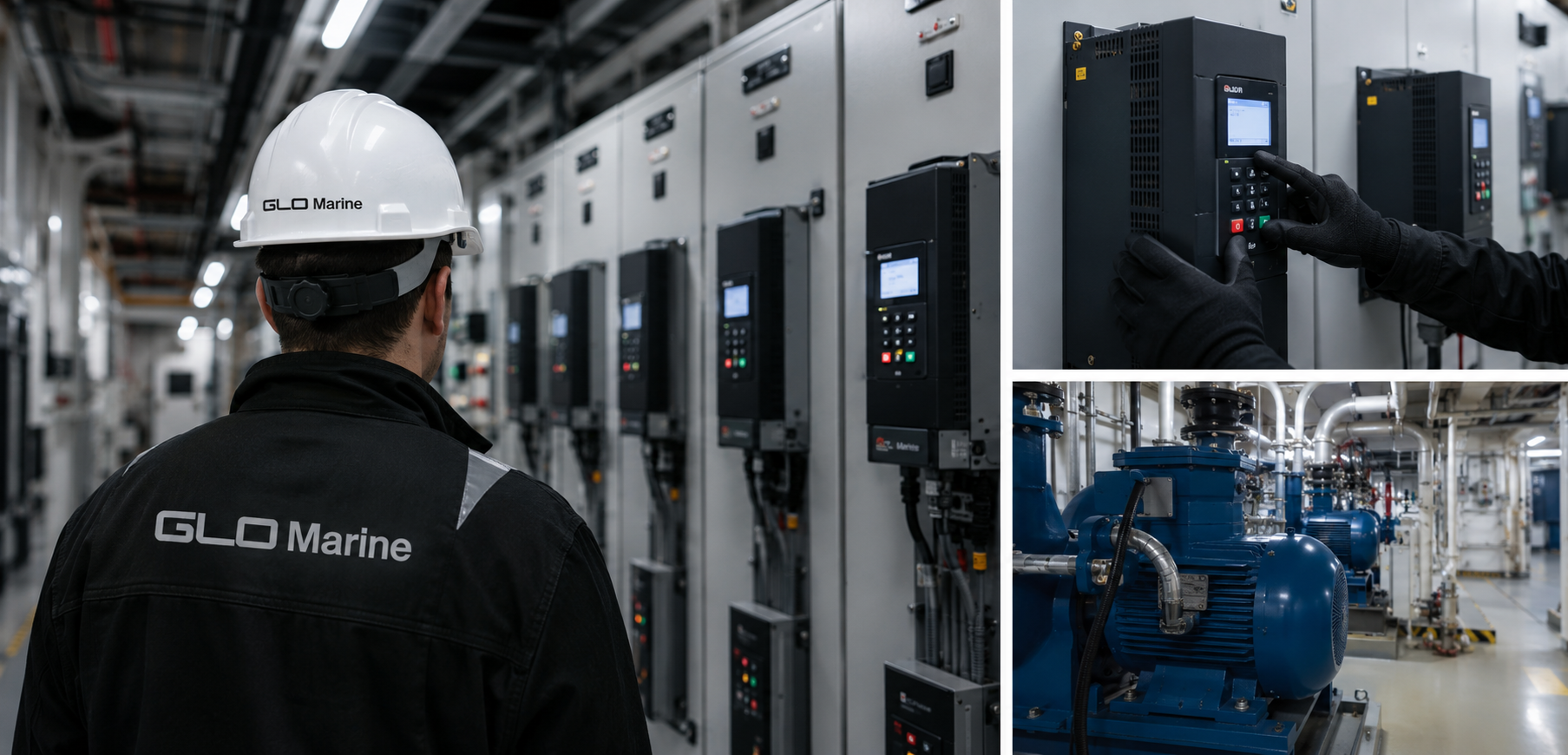
As the maritime industry continues to pursue lower emissions and improved energy efficiency, Variable Frequency Drives (VFDs) have become an increasingly common solution for optimising auxiliary electrical systems.
By allowing motors to operate according to actual system demand rather than fixed speed, VFDs help reduce unnecessary energy consumption, improve generator efficiency, and support compliance with environmental regulations such as CII, EEXI, and FuelEU Maritime.
However, the success of a VFD retrofit depends less on the technology itself and more on identifying where it can deliver measurable operational benefits.
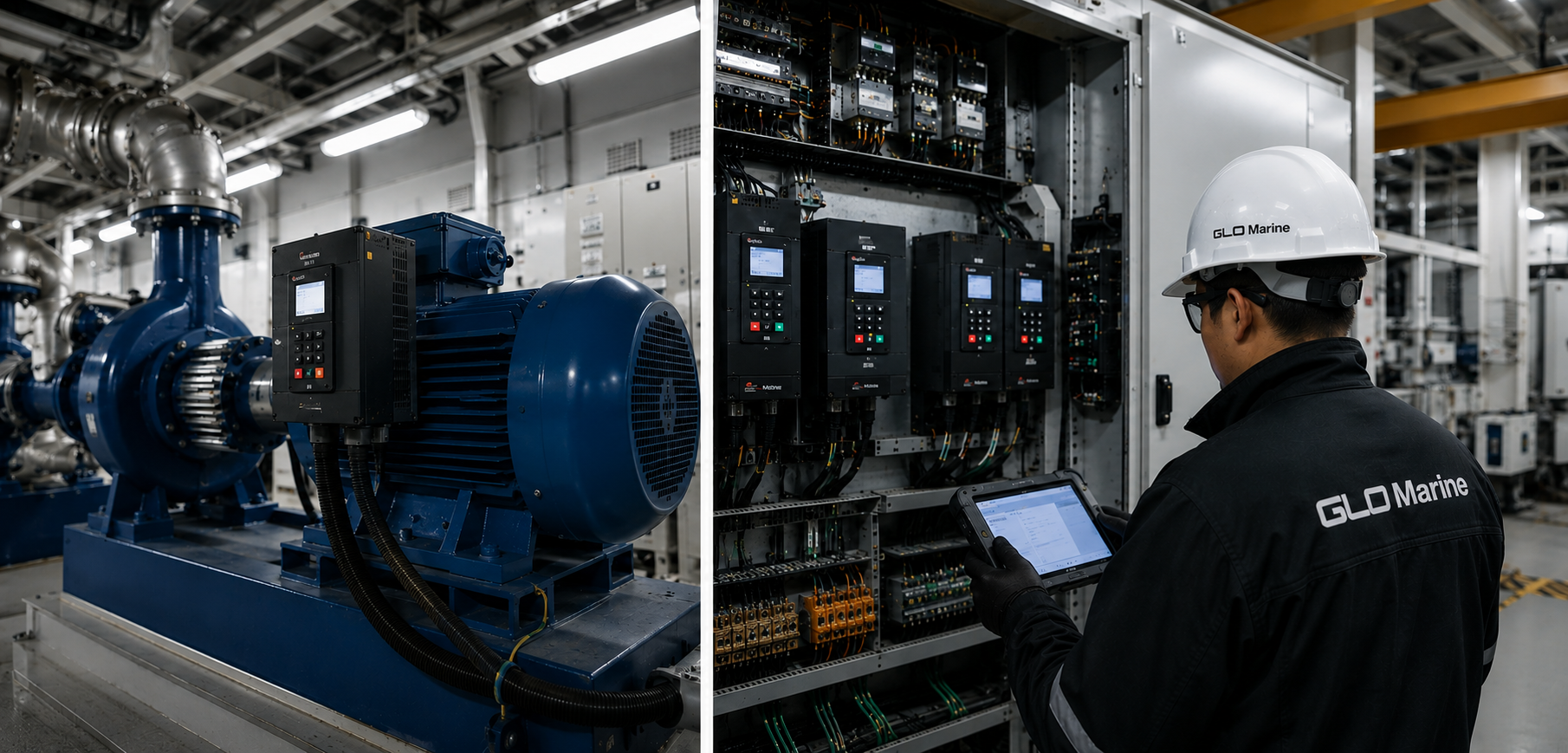
Many onboard pumps and fans are sized for maximum operating conditions but spend most of their service life running at partial load. Conventional control methods often regulate flow by restricting it mechanically, while the motor continues operating at full speed.
A Variable Frequency Drive uses pulse-width modulation (PWM) to regulate motor speed, allowing equipment to match the actual process demand. For centrifugal pumps and fans, the affinity laws demonstrate that power consumption decreases with the cube of rotational speed, meaning even modest speed reductions can produce significant energy savings.
This makes VFDs particularly effective for applications where load conditions vary throughout normal vessel operation.
Not every auxiliary system will benefit equally from variable speed control. The greatest improvements are generally achieved on equipment that operates continuously under changing load conditions.
Typical VFD applications include:
Conversely, systems with constant flow requirements, limited operating hours, or high static head may provide only limited savings, making a retrofit less attractive from both a technical and commercial perspective.
For this reason, VFD projects should begin with an assessment of the vessel's operational profile and electrical load characteristics to identify where the technology will provide the highest return.
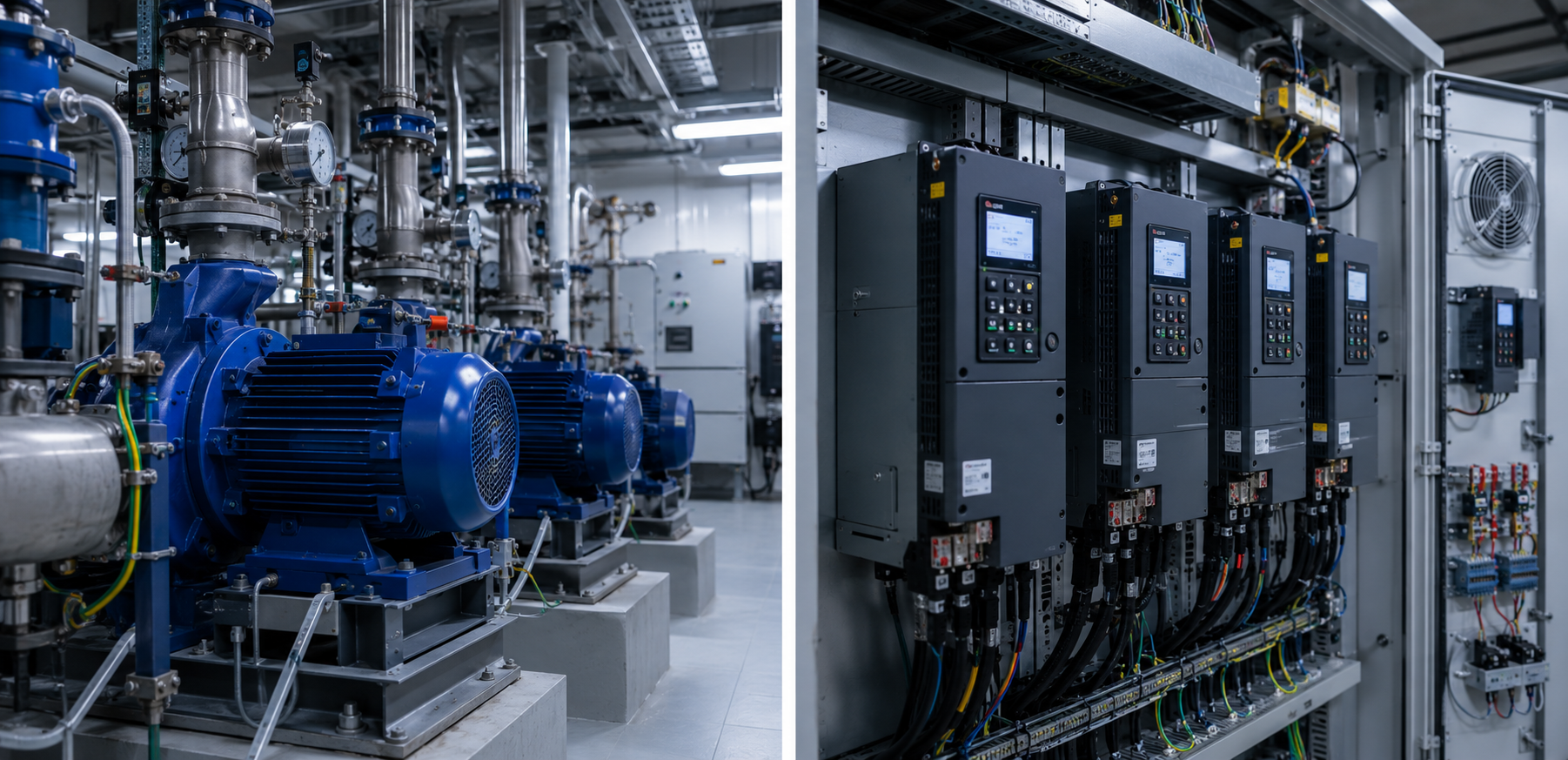
Integrating a Variable Frequency Drive involves much more than replacing an existing motor starter.
A successful retrofit requires a comprehensive engineering review covering motor compatibility for inverter-fed operation, harmonic distortion, power quality, switchboard capacity, cable sizing, electrical protection, and interfaces with the vessel's Power Management System (PMS) and automation systems.
Compliance with applicable Class and international electrical standards must also be considered throughout the design and implementation process to ensure long-term reliability and safe operation.
Reducing auxiliary electrical demand lowers generator loading, improving specific fuel oil consumption (SFOC) and reducing CO₂ emissions during everyday vessel operations. While VFDs are only one element of a broader decarbonisation strategy, they often represent one of the most practical retrofit solutions available, particularly when combined with other technologies such as shore power, Battery Energy Storage Systems (BESS), electrical upgrades, and energy management solutions.
GLO Marine provides end-to-end engineering support for Variable Frequency Drive retrofit projects, from vessel energy assessments and electrical load analysis through detailed engineering, Class approval, procurement, installation, testing, and commissioning.
By combining multidisciplinary electrical engineering with practical retrofit experience, we help shipowners identify where VFD integration will deliver measurable operational improvements, ensuring each solution is technically robust, commercially viable, and tailored to the vessel's operational profile.
Assess your vessel's electrical load profile, identify the most suitable VFD applications, and develop an engineering solution that maximises energy savings while ensuring safe, Class-compliant integration.


