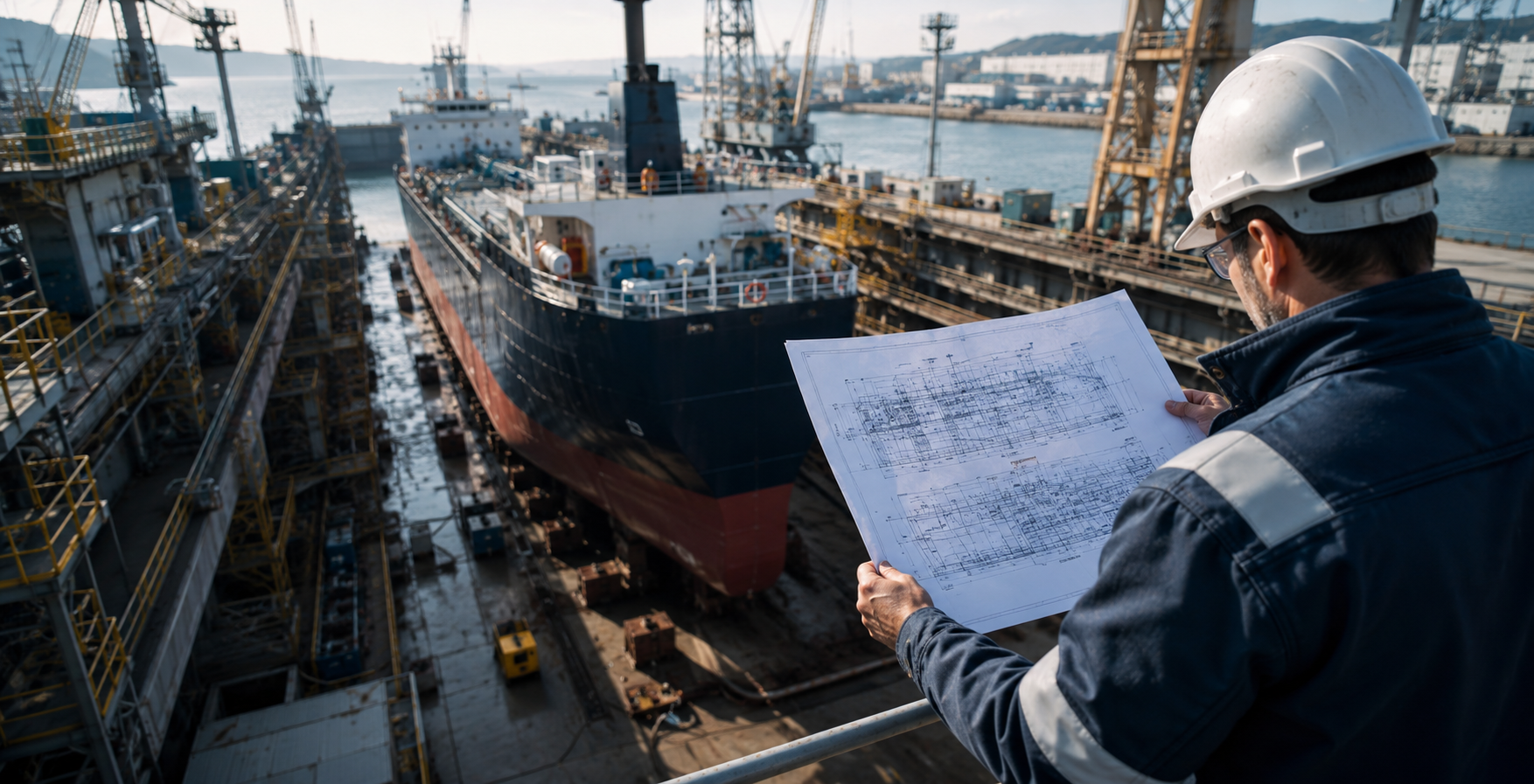
There is no single answer to vessel decarbonisation. Shore power, Battery Energy Storage Systems, Wind-Assisted Propulsion, Variable Frequency Drives, air lubrication, and propulsion optimisation — all of them work. But not on every ship, and not in every operation. The question worth answering is which technology fits a specific vessel, operating a specific route, on a specific timeline.
Regulation makes this urgent. CII, FuelEU Maritime, and EU ETS are already reshaping fleet economics. And most of the ships that will be trading in 2035 are at sea today. Retrofit — not newbuild — is how those vessels join the transition.
Here is a simple way to plan one properly.
Operating profile, power demand, trading route, remaining service life, and dry-dock schedule all shape which technologies are realistic. A ship spending most of its time alongside has different opportunities than one continuously offshore. A vessel two dry-docks from retirement will make different choices than one facing its last. Understand the operation before choosing the technology.
Drawings often lag behind reality. Systems get modified, cable routes change, and equipment gets moved. Before any integration decision, engineers need to know what is on the ship today, not what was on it at delivery. A 3D laser scan and comprehensive onboard survey give the real picture — the one integration must respect.
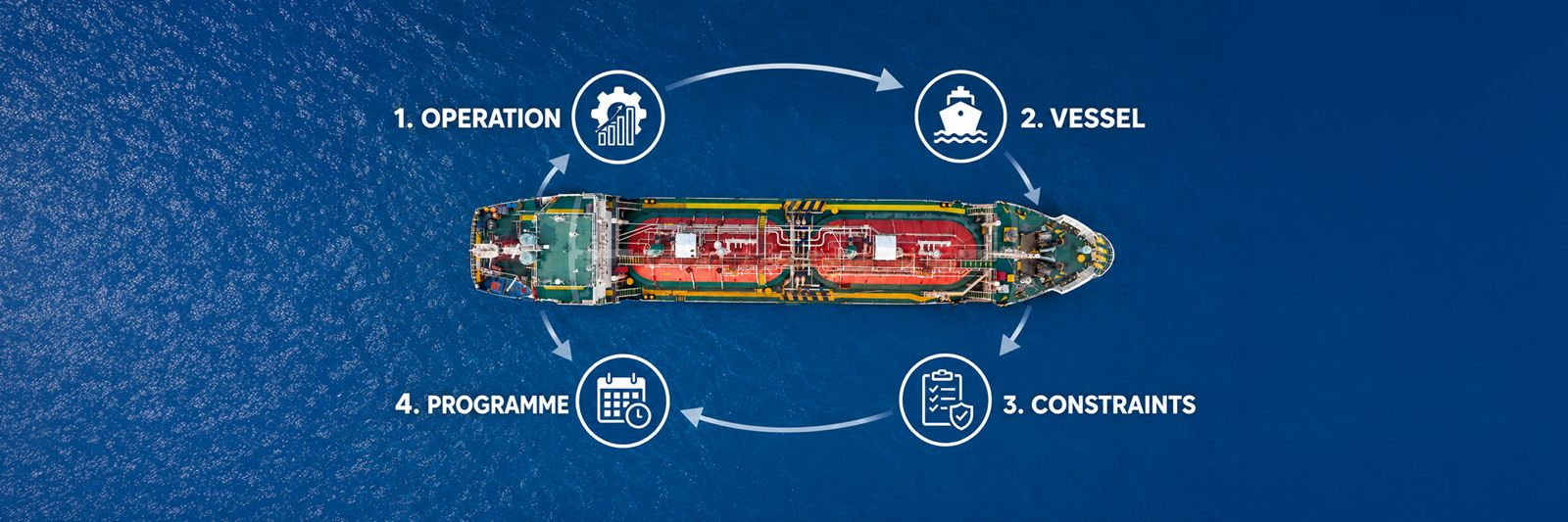
Once the operation and the ship are understood, the constraints that determine feasibility become visible:
Identifying these early and selecting technology becomes evidence-based. Discover them late and everyone becomes a cost overrun.
The strongest retrofits rarely install one technology in isolation. A dry-dock slot is expensive; the marginal cost of adding a second or third coordinated upgrade is often far lower than the cost of the first. VFDs, electrical distribution upgrades, shore power readiness and propulsion optimisation frequently deliver more value together than separately — and prepare the vessel for whatever comes next.
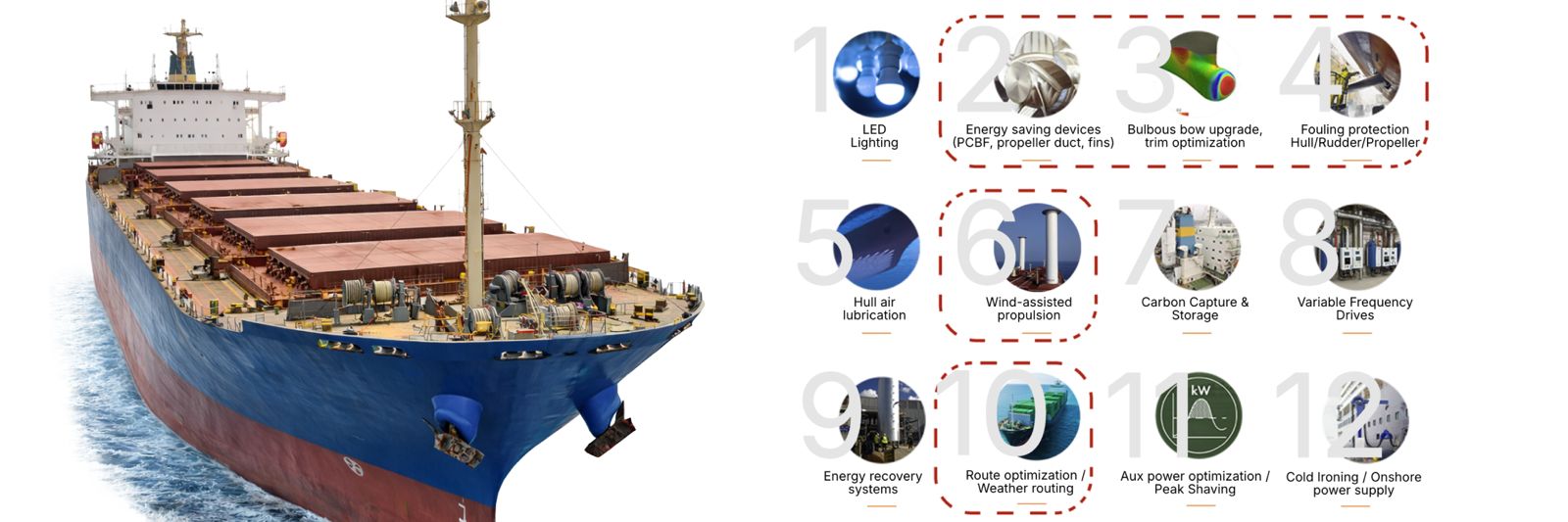
We approach every retrofit the same way: understand the operation, understand the ship, identify the constraints, integrate the right technologies, deliver the installation across every discipline under a single accountable project manager.
That means feasibility studies grounded in vessel-specific engineering, not generic assessments. It means in-house capability across structural, mechanical, electrical and control systems. It means procurement, production of supporting structures, and installation delivery in collaboration with the shipyard. And it means commissioning and close-out delivered by the same team that started the project.
One contract. One project manager. One accountable team. This is how new technology gets onto operating vessels without disrupting what already works.
Most decarbonisation will happen on ships already earning. Doing that well is engineering work first, equipment work second. Choose the right technology for the vessel — and the vessel will deliver what the technology promised.
Assess each vessel’s operating profile, onboard configuration, engineering constraints, and dry-dock opportunities to identify the decarbonisation technologies that fit the ship, the route, the timeline, and the business case.


