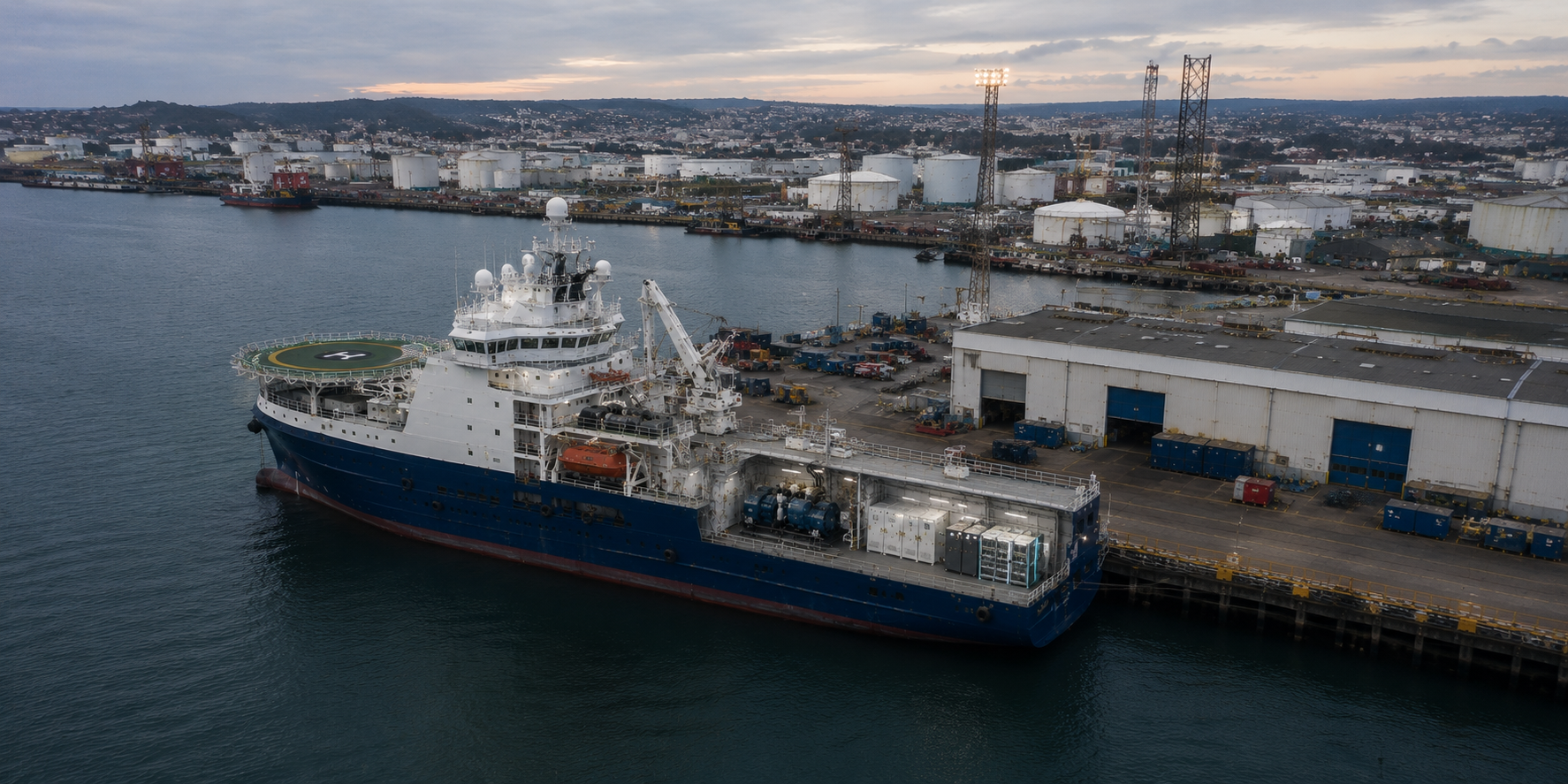
Battery Energy Storage Systems (BESS) have become one of the most effective technologies for improving the efficiency of conventional and hybrid marine power plants. While batteries are often associated with fully electric vessels, today's Battery Energy Storage Systems are increasingly being integrated into existing diesel-electric and conventional ships to reduce fuel consumption, lower emissions, and optimise onboard power generation.
For shipowners facing stricter environmental regulations, rising fuel costs, and increasing pressure to improve Carbon Intensity Indicator (CII) ratings, BESS offers a practical solution that can be implemented through vessel retrofit or incorporated into newbuild projects.
However, the success of any battery integration depends on selecting the right application and ensuring that the system is engineered to operate safely and efficiently within the vessel's existing electrical infrastructure.
On many vessels, diesel generators frequently operate at low loads or additional generators remain online solely to provide spinning reserve. Operating generators under these conditions reduces efficiency, increases fuel consumption, and accelerates engine wear.
A Battery Energy Storage System helps overcome these challenges by acting as an energy buffer. It stores electrical energy when demand is low and supplies power when demand increases, allowing generators to operate closer to their optimal efficiency.
This results in:
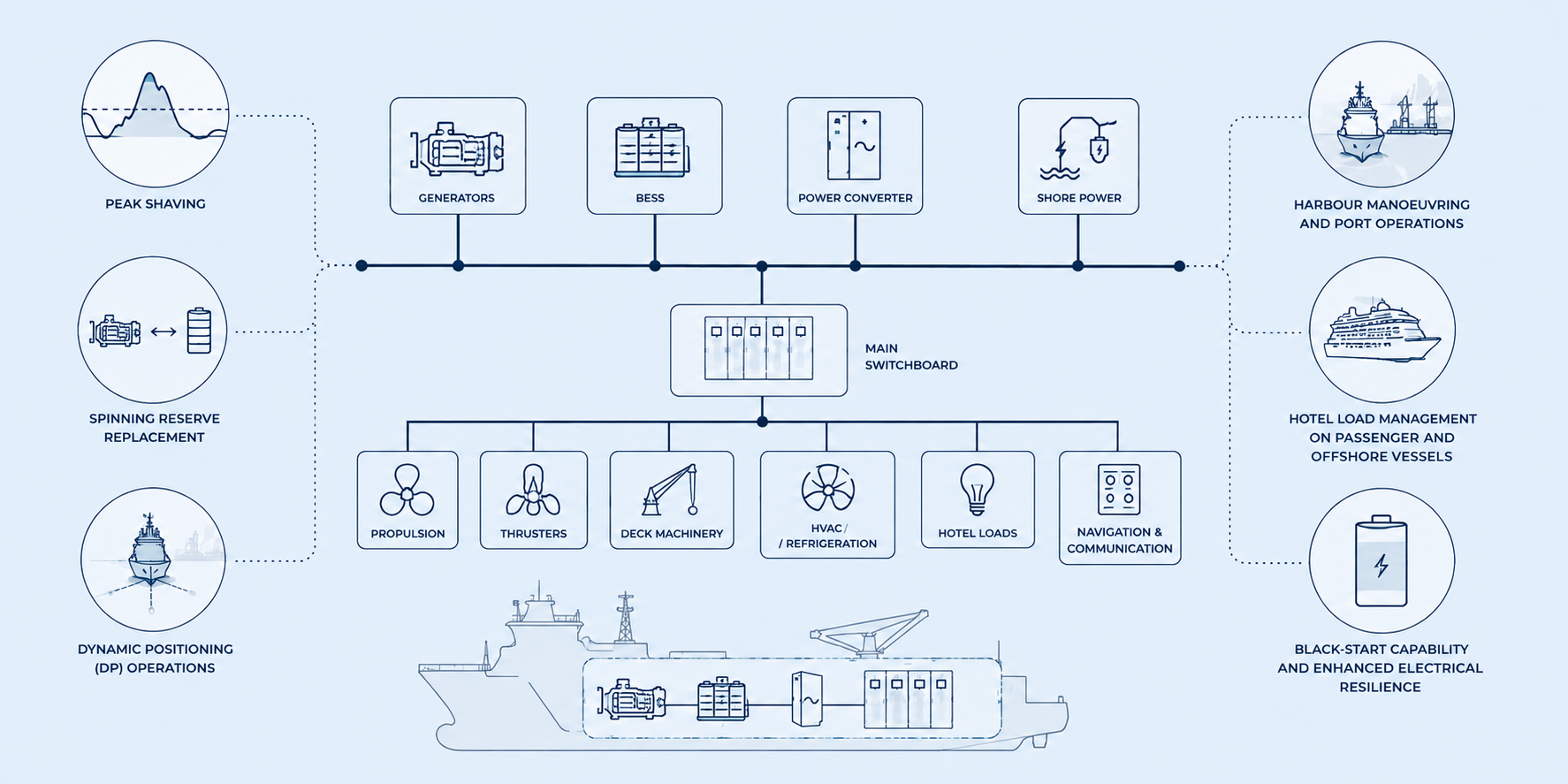
Battery Energy Storage Systems can deliver measurable benefits across a wide range of vessel types, particularly those with variable electrical loads.
Common applications include:
During periods of high electrical demand, the battery supplements generator output, reducing the need to start additional generators and allowing the power plant to operate more efficiently.
Instead of keeping an extra diesel generator running at low load as backup, the battery provides immediate reserve power, reducing unnecessary fuel consumption and engine operating hours.
For offshore vessels operating in DP mode, batteries help stabilise the electrical network during rapid load changes, improving both efficiency and system resilience.
Battery power can support propulsion and auxiliary systems during low-speed operations, reducing emissions and fuel consumption while vessels are close to populated areas.
Passenger vessels, cruise ships, ferries, and offshore accommodation units experience significant hotel loads. BESS helps balance these loads more efficiently while reducing generator operating hours.
Battery systems can restore electrical power following a blackout, improving operational resilience and reducing recovery time.
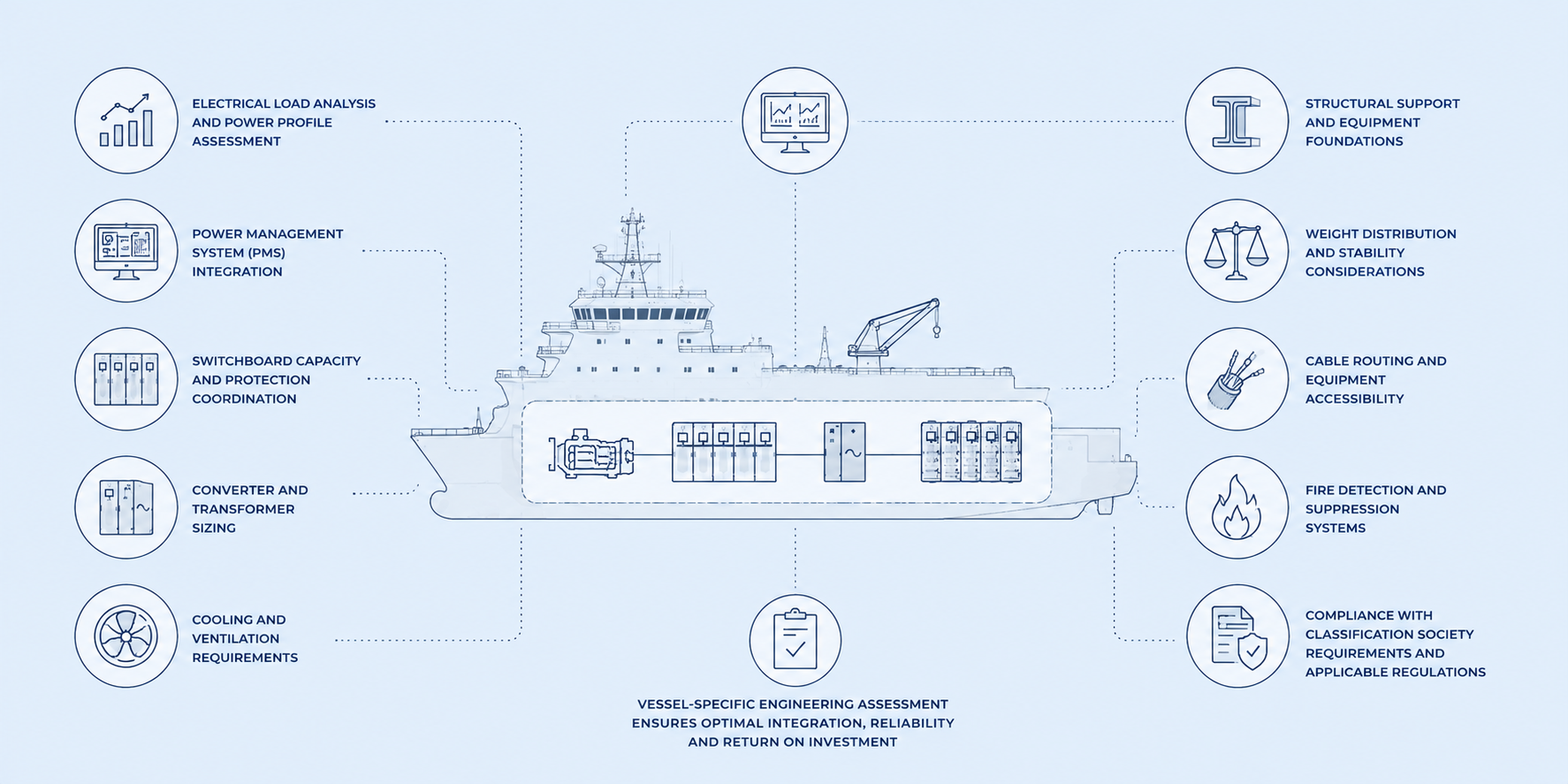
Installing a Battery Energy Storage System involves far more than selecting battery capacity. Every vessel has unique operational characteristics, electrical infrastructure, space constraints, and commercial objectives that influence the optimal system design.
A successful retrofit requires a comprehensive engineering assessment covering both technical performance and regulatory compliance.
Key engineering considerations include:
By analysing the vessel's operating profile and onboard systems, engineers can determine the most effective battery configuration and integration strategy while avoiding oversized or underutilised installations.
When engineered and integrated correctly, BESS can provide both immediate operational improvements and long-term commercial value.
Key benefits include:
The greatest returns are typically achieved on vessels with highly variable power demand, where battery systems can significantly reduce inefficient generator operation.
At GLO Marine, we support shipowners throughout every stage of Battery Energy Storage System (BESS) implementation, from initial feasibility studies to engineering, installation, commissioning, and performance verification. Our multidisciplinary team combines electrical, mechanical, structural, and automation expertise with extensive retrofit experience to deliver solutions tailored to each vessel's operational profile.
Our BESS services include:
Whether your objective is to improve energy efficiency, reduce fuel consumption and emissions, enhance CII performance, or prepare for future decarbonisation requirements, GLO Marine delivers Battery Energy Storage System solutions that are technically robust, operationally efficient, and tailored to your vessel's operational needs. Contact our team to assess the technical and commercial viability of a BESS retrofit or hybrid power solution for your fleet.
Review your vessel’s power demand, generator operation and available space to determine where battery storage could add value and how it can be integrated into your existing systems.


