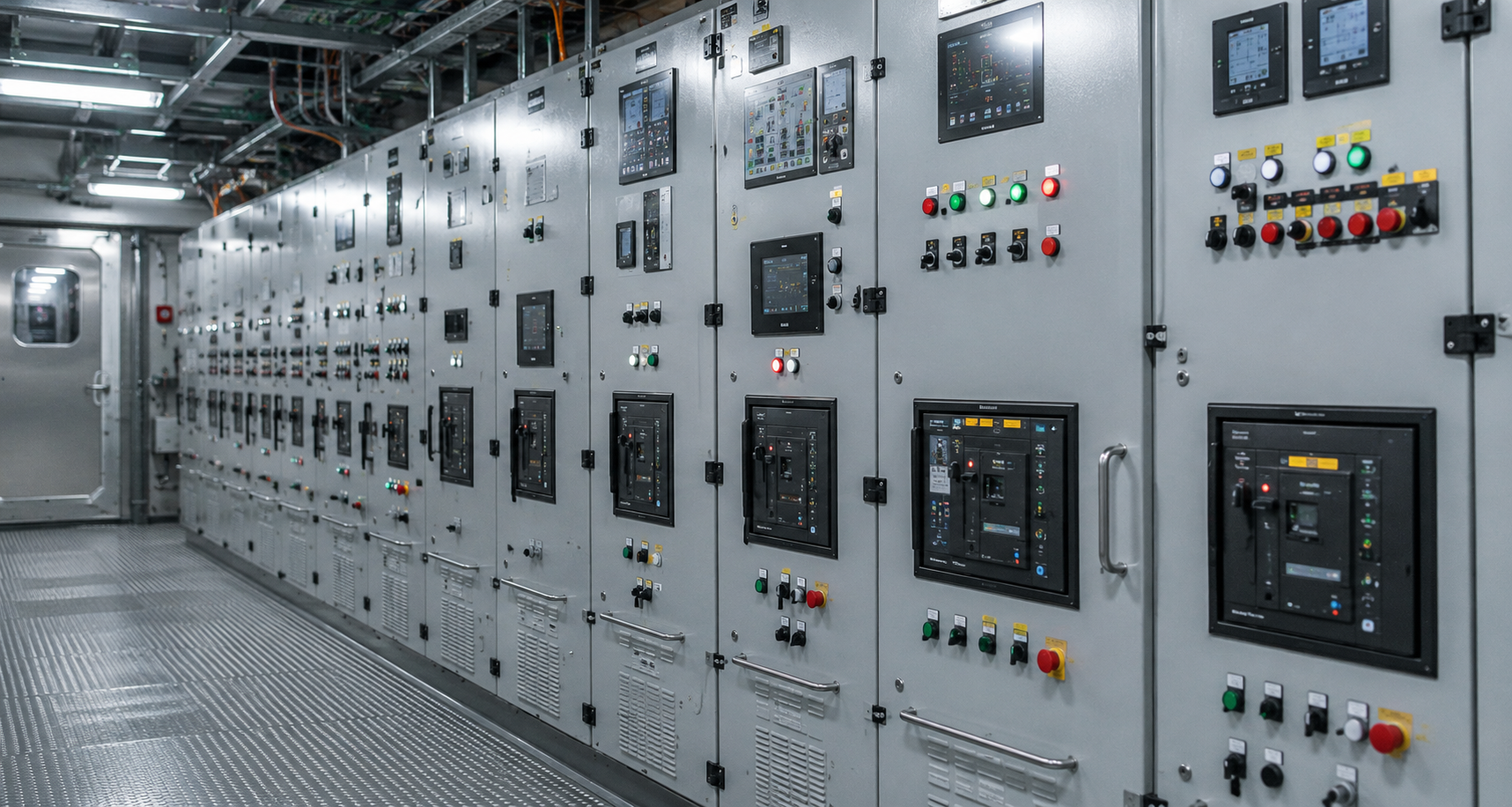
As vessels integrate new technologies, alternative power solutions and increasingly complex electrical loads, the systems responsible for managing onboard power need to evolve with them.
Switchboards, Power Management Systems (PMS) and Alarm and Monitoring Systems (AMS) sit at the centre of the vessel’s electrical architecture. Together, they influence how power is generated and distributed, how generators share load, how electrical faults are detected and isolated, how the vessel recovers from a blackout, and how operators monitor the condition of the electrical system.
Modernisation is therefore not simply about replacing ageing equipment. It is about ensuring that the vessel’s electrical architecture remains reliable, properly coordinated and capable of supporting both current operations and future upgrades.
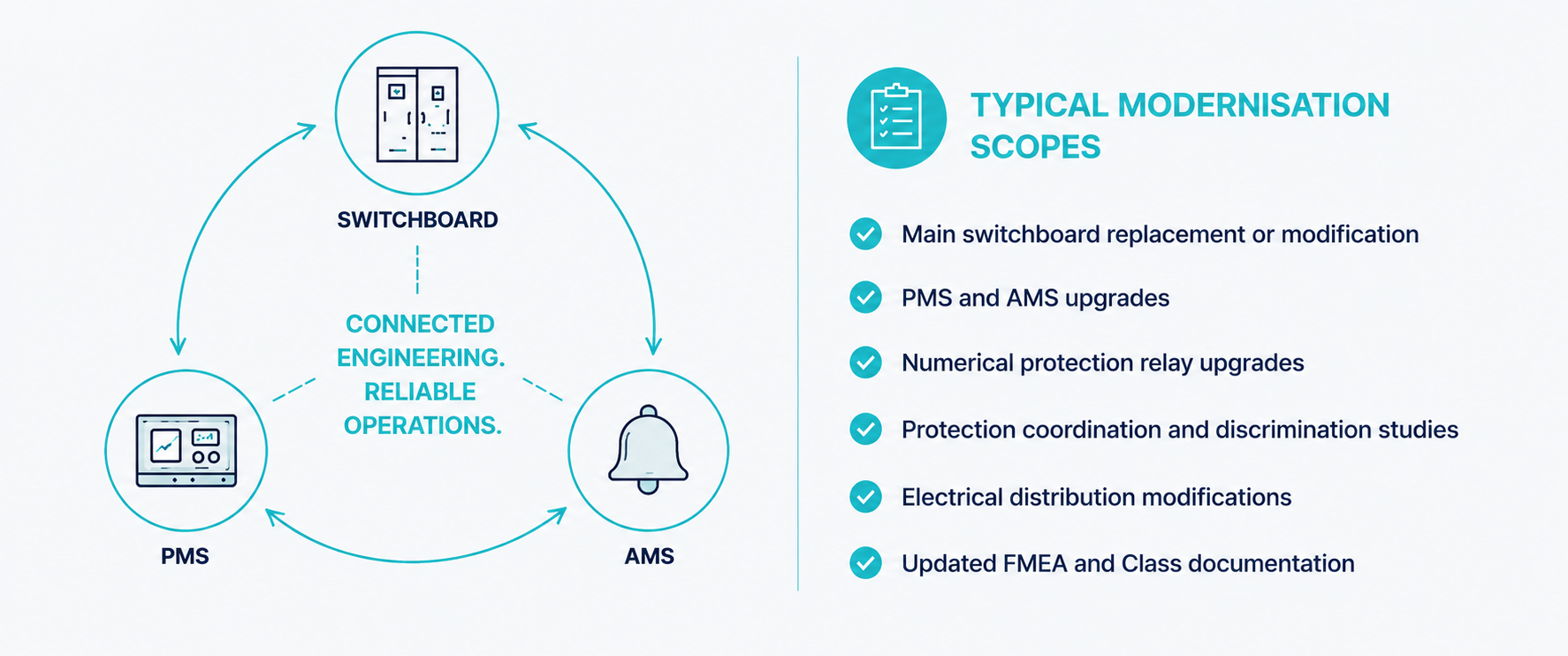
Switchboards, PMS and AMS are closely interconnected. Changes to one system often have implications for the others, from protection settings and PMS logic to alarm mapping, system interfaces and commissioning requirements.
A switchboard modification, for example, may introduce new protection requirements or change the way loads are distributed. Similarly, a PMS upgrade may require modifications to generator control, load sharing, load shedding or blackout recovery sequences.
Typical power and control modernisation scopes can include:
Coordinating these elements under one engineering scope helps ensure that individual modifications work together as part of the complete electrical system and that the vessel continues to operate as intended following the upgrade.
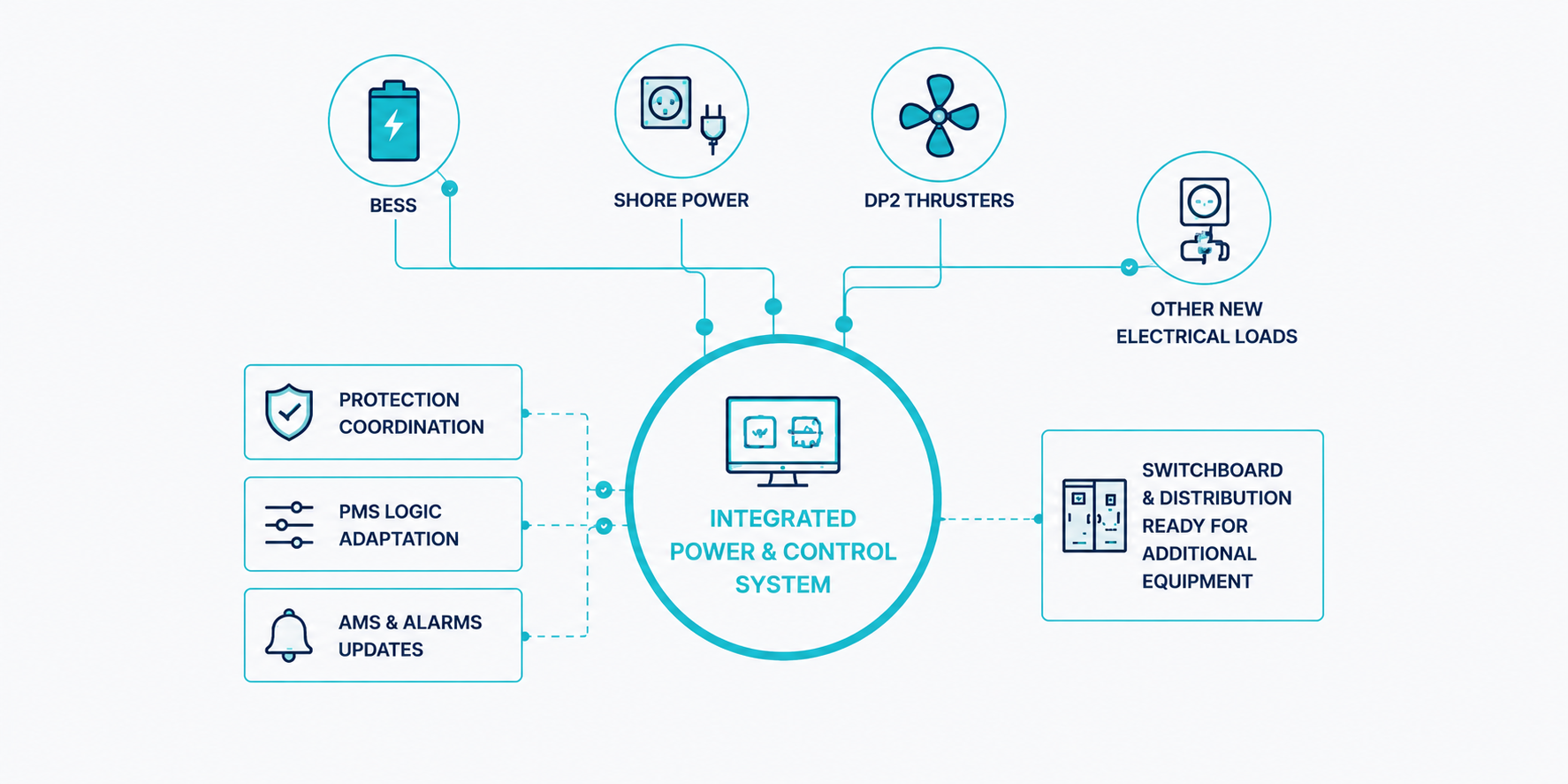
Power and control modernisation rarely happens in isolation. It is often part of a wider vessel upgrade involving new equipment or changes to the vessel’s operating profile.
Adding Battery Energy Storage Systems (BESS), shore power, DP2 thrusters or other significant electrical loads can affect the vessel’s load profile, protection requirements, power distribution and overall power management strategy.
This requires a system-level approach. Protection coordination may need to be reviewed to account for changes in fault levels and distribution. PMS logic may need to be adapted to new operating scenarios, while the switchboard and AMS must be prepared for additional equipment, signals and control interfaces.
Considering these requirements early in the project helps reduce integration challenges later during installation and commissioning. It can also create a more future-ready electrical architecture, allowing subsequent upgrades to be incorporated more efficiently without repeatedly redesigning the underlying power and control infrastructure.
At GLO Marine, we support power and control modernisation from initial engineering and system integration through to Class approval, testing and commissioning.
Our capabilities cover LV and MV switchboard engineering, PMS and AMS integration, numerical protection systems, protection coordination and discrimination studies, electrical distribution, FMEA and Class documentation, together with the wider multidisciplinary engineering required to integrate new equipment onboard.
Where modernisation forms part of a larger retrofit, our engineering teams can also coordinate the electrical interfaces associated with systems such as BESS, shore power, propulsion and thruster upgrades, and other new electrical consumers.
By looking at the complete electrical architecture rather than individual components in isolation, we help shipowners modernise existing vessels while ensuring their power and control systems are prepared for the next upgrade.
Assess your vessel’s electrical architecture, operating loads and planned upgrades to identify the switchboard, protection and control modifications needed to support reliable operations and future integration.


