
For shipowners considering decarbonisation, the available technologies are only part of the decision. Each option must fit the vessel’s operation, technical limitations and remaining service life, while delivering benefits that justify the investment.
GLO Marine provides decarbonisation advisory to help owners assess the options and develop a practical upgrade plan. Supported by multidisciplinary engineering expertise, our recommendations account for both potential savings and the requirements for implementation onboard.
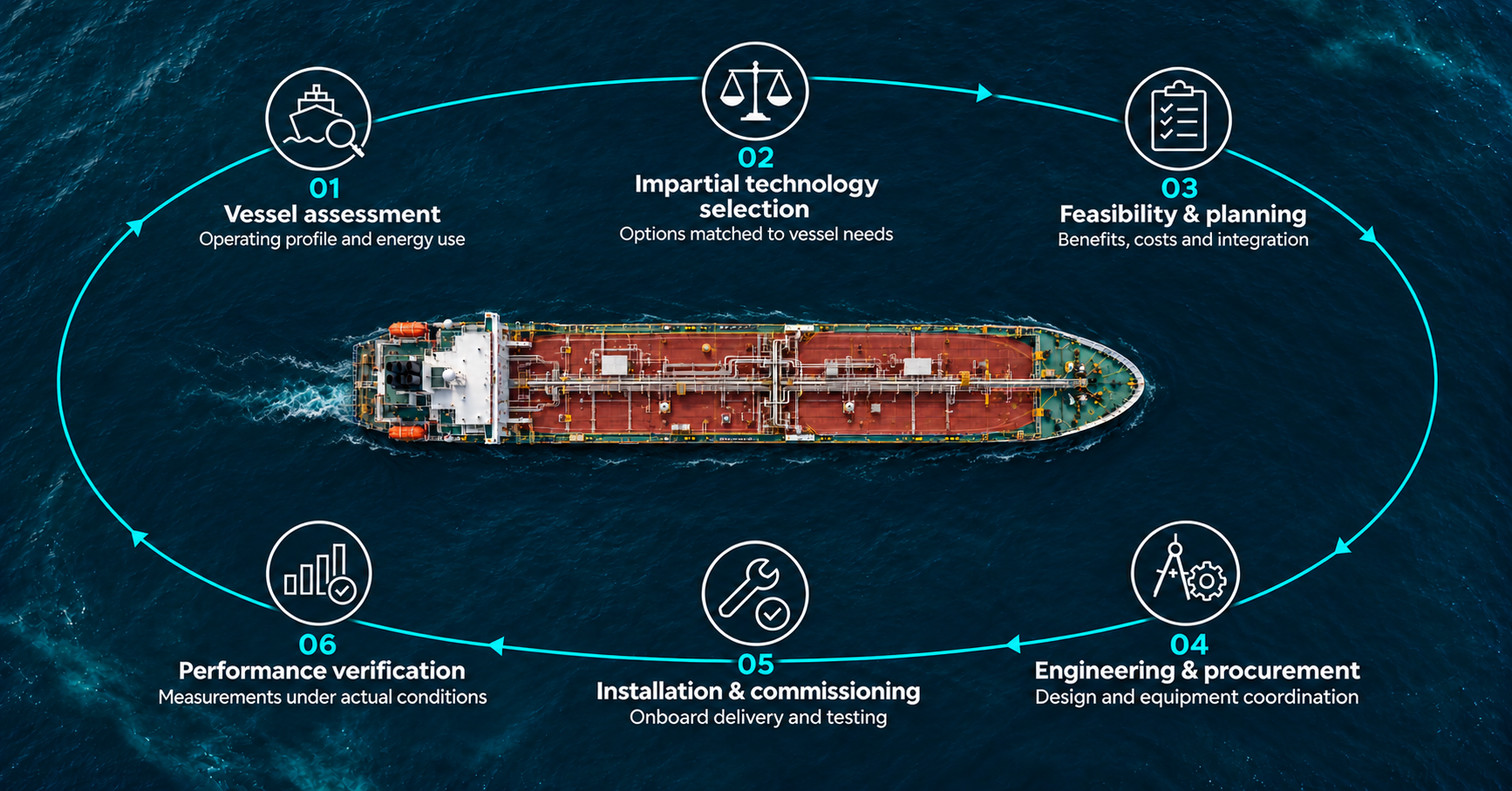
Our decarbonisation advisory starts with the vessel’s operating profile. Machinery demand, generator loading, fuel consumption, time in port and trading patterns help establish where improvements may be possible.
We consider these findings alongside the condition of existing systems, available space and upcoming docking opportunities. Where operational data is incomplete, onboard surveys and measurements provide a more reliable baseline for comparing solutions.
The appropriate scope may range from improvements to existing equipment to substantial changes in propulsion, power generation or fuel arrangements.
GLO Marine’s decarbonisation advisory considers both major retrofits and targeted efficiency measures, selecting options for further assessment according to the vessel’s requirements.
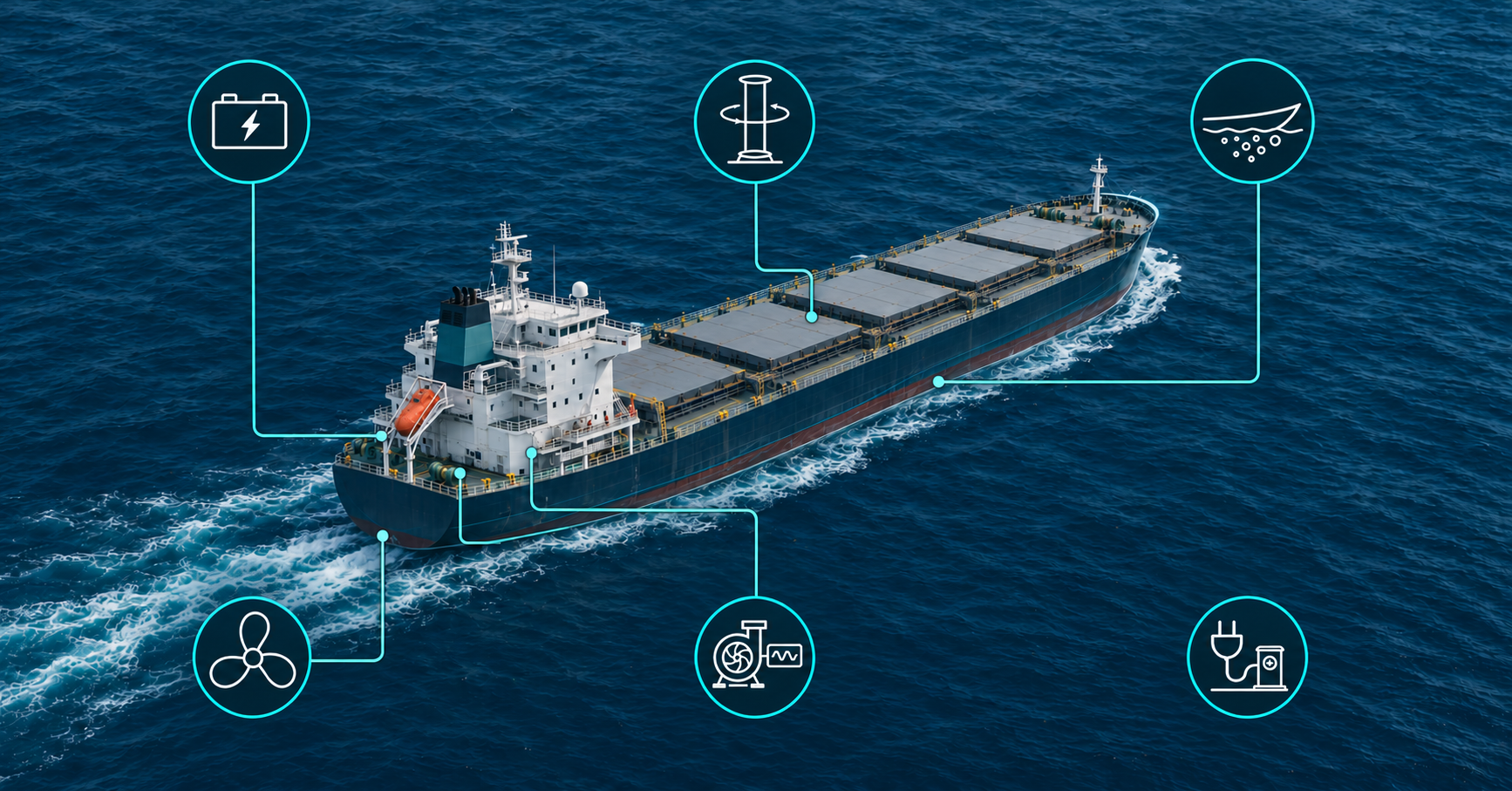
Each measure is screened for technical suitability and potential value before progressing to detailed engineering.
Decarbonisation advisory must consider how proposed measures affect the vessel as a whole. Expected savings need to be weighed against investment costs, maintenance requirements, installation constraints and operational disruption.
GLO Marine assesses the implications for structure, stability, piping, electrical systems and automation. We also examine the interaction between upgrades. Reducing auxiliary consumption, for example, changes the demand profile used to assess a battery installation.
Savings estimates account for these dependencies and any additional energy consumed by new equipment. The projected savings from individual technologies cannot simply be added together.
This provides a clearer basis for deciding which measures to prioritise, which to combine and when to install them.
The outcome of GLO Marine’s decarbonisation advisory is a vessel-specific plan covering:
Our technology recommendations remain impartial and reflect the vessel type, operating profile and owner’s objectives.
Once the scope is agreed, GLO Marine can carry the selected upgrades through engineering, procurement, installation and commissioning under one project management team. Planning performance verification from the outset allows the completed installation to be assessed against the agreed objectives.
By connecting decarbonisation advisory with project delivery, we help owners make informed investment decisions and put suitable upgrades into operation.
GLO Marine’s decarbonisation advisory helps you identify suitable upgrades, assess potential savings and define an implementation plan around your vessel’s operating profile and docking schedule.


