Across the offshore wind market, charter access increasingly depends on Class notation rather than vessel age alone. Offshore wind charterers increasingly require DP2 notation, redundancy validation, and emissions reduction capability as minimum technical entry criteria. As a result, DP2 charter upgrade projects are becoming one of the fastest-growing electrical retrofit segments across offshore support fleets.
Industry retrofit projects have shown that offshore wind DP2 conversion can often be completed without major structural reconstruction. In many cases, the conversion scope focuses primarily on redundancy engineering, UPS segregation, switchboard modifications, PMS integration, thruster control architecture, and updated FMEA validation.
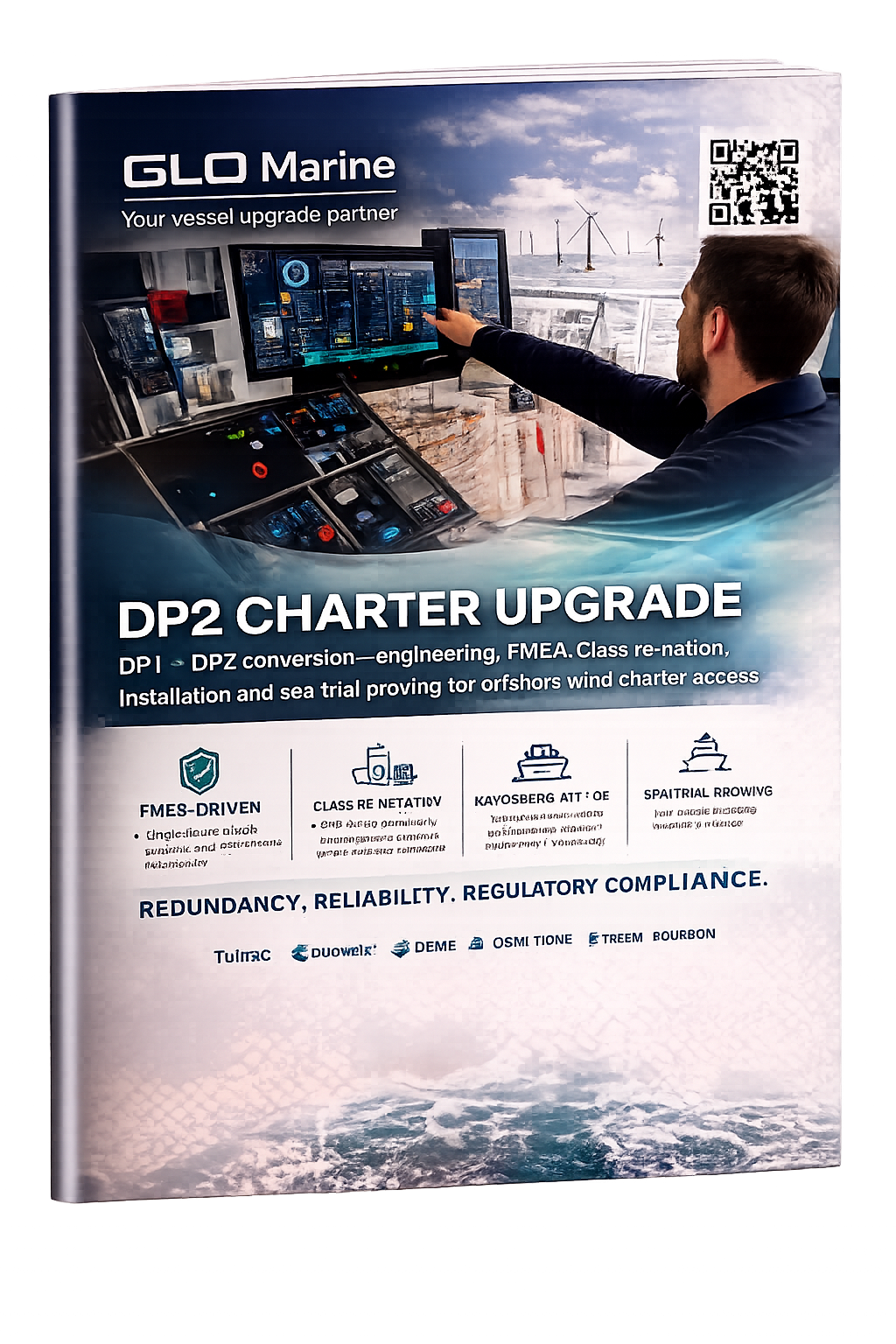
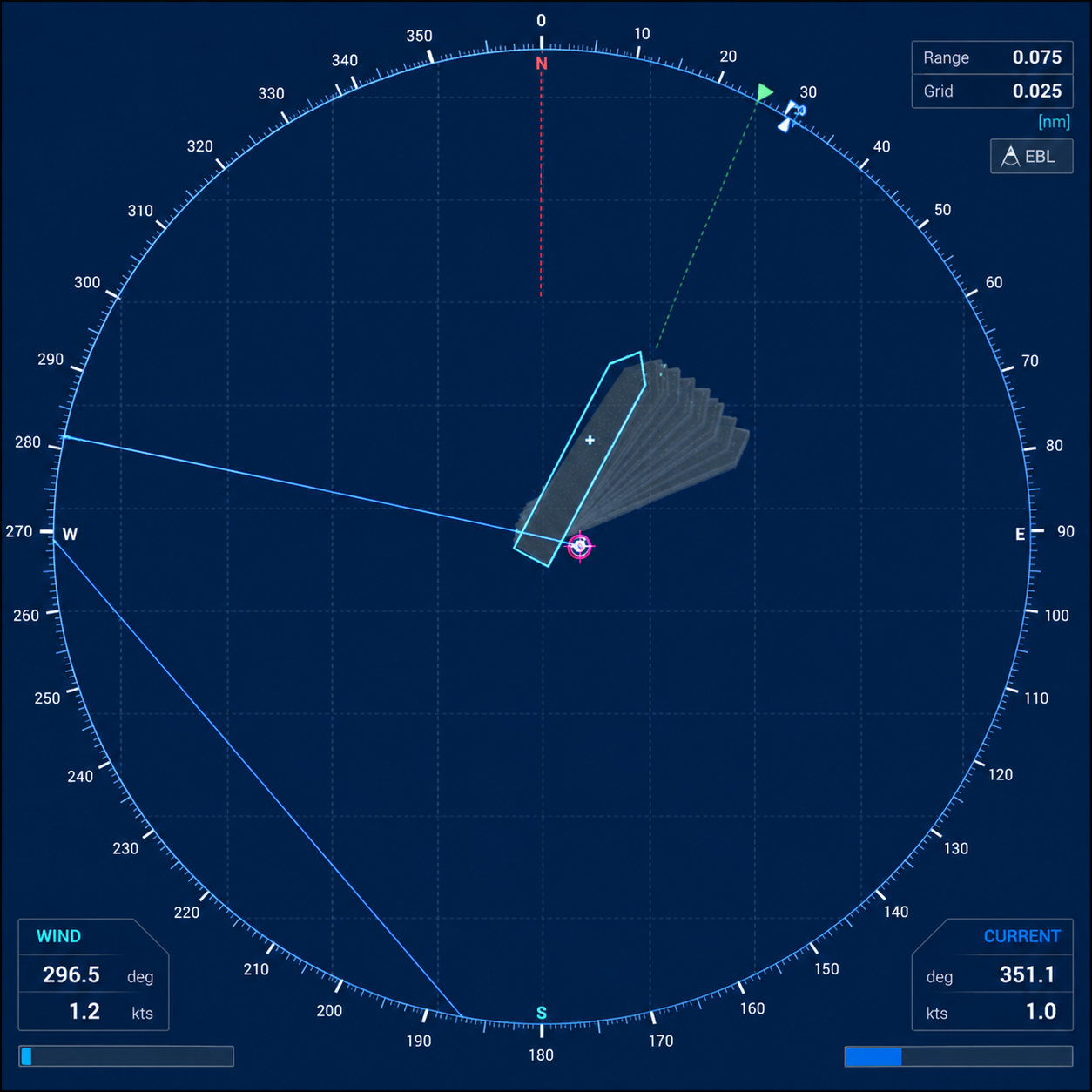
Modern offshore retrofit projects increasingly combine dynamic positioning class 2 conversion with future-ready hybrid architecture. As offshore charterers place greater emphasis on emissions performance, vessel operators are evaluating how DP upgrades, BESS integration, and low-emission operational capability can be engineered simultaneously rather than as isolated retrofit phases.
Hybrid-ready DP2 architecture allows vessel owners to prepare for future containerised battery integration, peak shaving capability, spinning reserve optimisation, and FuelEU Maritime compliance planning without secondary rework later in the vessel lifecycle.
For DP-capable vessels, this requires careful engineering review of generator configuration, bus-tie philosophy, redundancy groups, UPS segregation, PMS logic, thruster interaction, and operational load profile.
The ABS DP Guide defines the DP system as the combined integration of: power systems, thruster systems, DP control systems, sensors, communication, UPS systems, and redundancy architecture. For DP2 notation, the system must remain operational following any single active component failure.
The process begins with technical review of:
This stage determines whether DP2 conversion is technically and commercially viable for the fleet.
A vessel-specific FMEA is developed to identify:
The ABS Guide requires DPS-2 vessels to demonstrate single fault tolerance through FMEA validation and proving trials.
Engineering scope may include:
Conversion scope is typically executed during planned drydock periods to minimise vessel downtime.
Works may include:
Final project stages include:
DP2 notation is granted following successful validation and operational testing.
Conversion is commonly evaluated for:
A DP2 feasibility study assesses the vessel’s existing DP architecture, power distribution, thruster configuration, PMS and UPS capability, redundancy philosophy, and FMEA status. The objective is to identify the minimum technical scope required to achieve DP2 Class compliance and align the vessel with intended offshore charter specifications.
Not necessarily. Many DP1 to DP2 upgrades are primarily electrical and control-system retrofit projects involving switchboard modifications, redundancy segregation, UPS upgrades, and DP control integration. Structural modifications depend on equipment arrangement, compartmentation requirements, cable routing, and the extent of additional system installation.
Yes. DP2 re-notation requires an updated Failure Mode and Effects Analysis (FMEA) together with proving trials to validate single-failure redundancy and operational integrity in accordance with Class and DP notation requirements.
Yes. Many owners use DP2 conversion projects to prepare the vessel for future hybridisation, shore power, or Battery Energy Storage System (BESS) integration. Future-ready design may include switchboard capacity planning, PMS architecture updates, cable routing allowances, and power system preparation for later low-emission upgrades.
We begin with a DP2 conversion feasibility — reviewing your vessel's existing FMEA, power architecture, and control redundancy, and identifying the minimum scope required to meet DP2 plus your target charterer's spec. No commitment required. We provide a scope, an indicative cost, and Class pathway within 10 working days.


