 Request an assessment
 +40790870949

Propulsion systems are the largest energy consumers onboard any vessel. Traditional mechanical or fixed-speed propulsion setups often operate inefficiently, especially under variable load conditions such as maneuvering, standby, or dynamic positioning.
Variable Frequency Drives (VFDs) provide precise control over propulsion motor speed and torque, ensuring power is used only when needed. This leads to improved efficiency, reduced fuel consumption, and smoother overall performance.
Whether for retrofit projects or new builds, VFD-based propulsion systems provide a flexible and scalable foundation for modern and future-ready vessel operations.
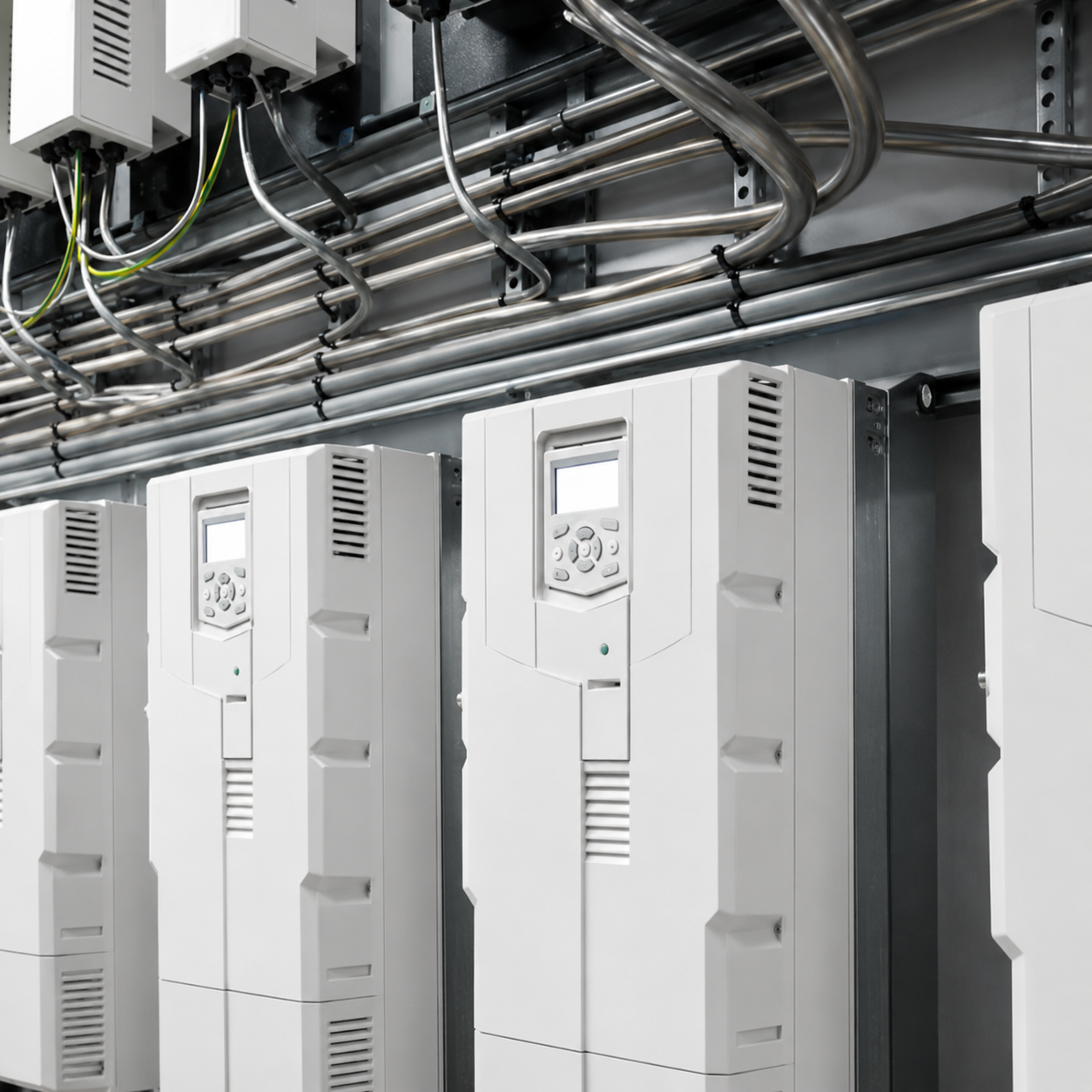
A VFD propulsion system controls the speed and torque of electric propulsion motors by adjusting power supply frequency. This allows propulsion power to match real operational demand—rather than running at constant speed regardless of conditions.
VFDs are commonly used in:
These systems are typically integrated as part of complete marine VFD solutions.
By removing mechanical constraints and enabling flexible system design, VFD propulsion allows more efficient vessel layouts and improved energy management.
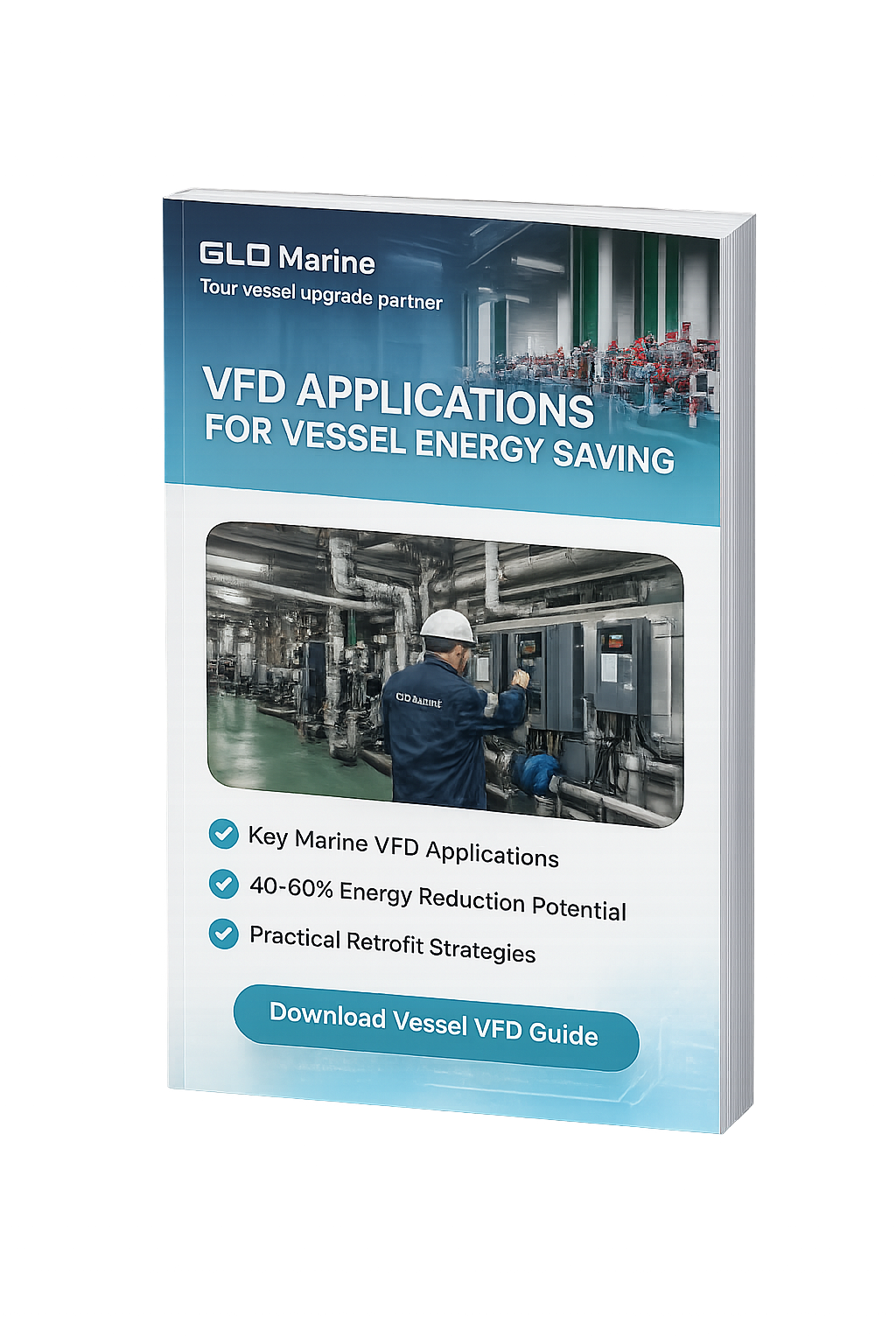
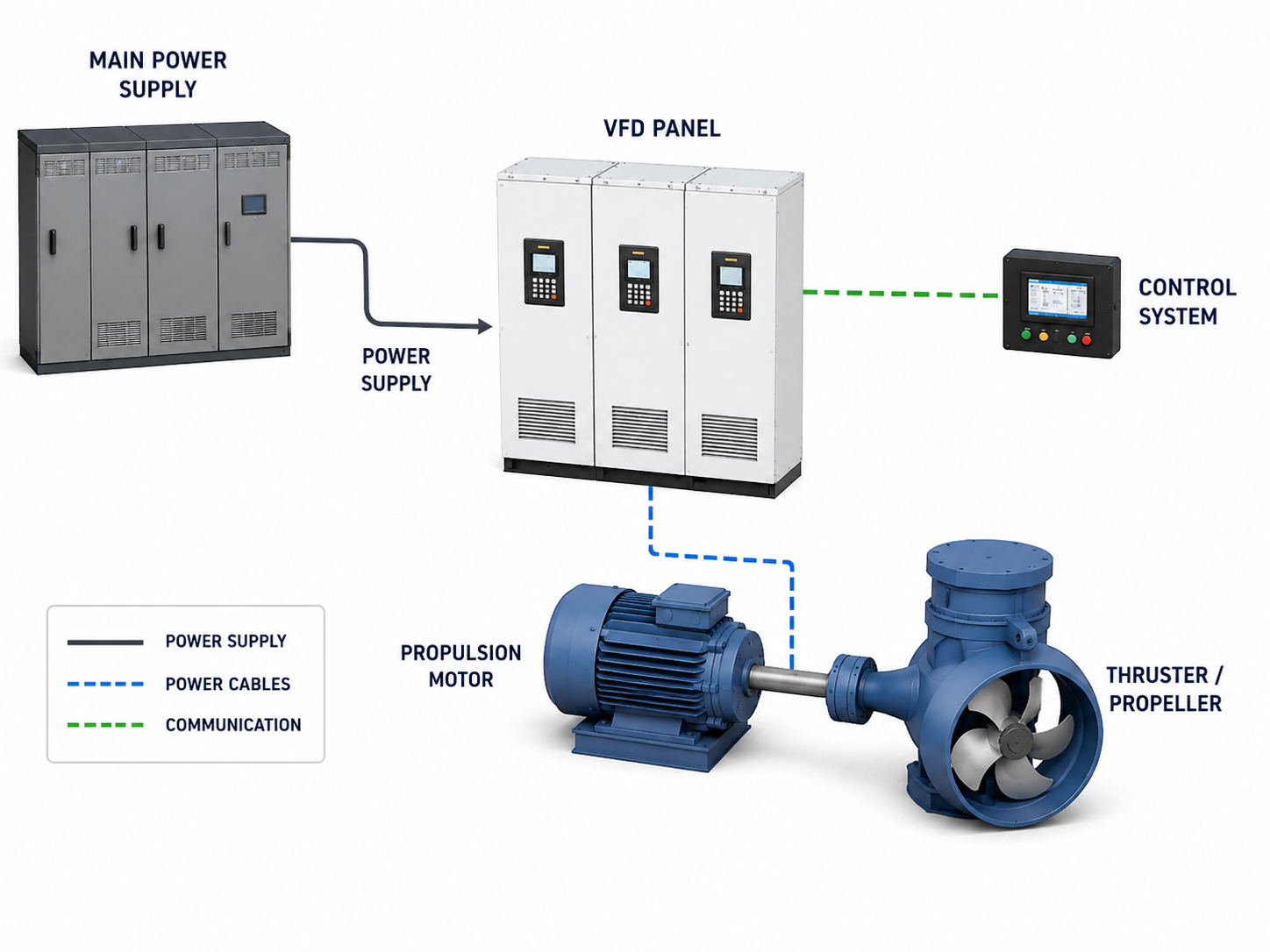
Many vessels still rely on fixed-speed or mechanically driven propulsion systems that limit efficiency and flexibility.
Upgrading to a VFD-based propulsion system enables:
For retrofit projects, VFD propulsion can significantly improve performance without requiring a full vessel redesign.
The process begins with a technical review of the vessel’s systems, with emphasis on propulsion operating under variable load conditions.
This stage includes:
The objective is to define where variable speed operation can deliver measurable efficiency gains.
Comprehensive power quality and energy consumption analysis for your vessel. GLO Marine's onboard energy audits identify inefficiencies, quantify potential savings, and provide a detailed ROI model for VFD investment.
Custom VFD system design for propulsion. Our certified marine electrical engineers analyze your vessel's power profile, load curves, and operational profile to specify the optimal drive configuration for maximum savings and reliability.
This includes:
All propulsion VFD systems are engineered and integrated by our in-house electrical engineering team.
Installation is performed in accordance with the approved engineering design and is planned to align with the vessel's operational constraints. The scope may vary with system complexity but typically includes electrical work and control system integration.
Activities generally involve:
Full VFD installation aboard vessels at sea, in port, or in drydock. We perform all commissioning to class society standards, with a full documentation package for your vessel's classification record.
The system is commissioned to verify functionality and performance under real operating conditions. This ensures that all components operate as intended and that the expected efficiency improvements are achieved.
This phase includes:
Where required, post-commissioning support can be provided to monitor performance and confirm long-term energy savings.
Most vessels can benefit from a marine VFD retrofit, especially those with:
A technical assessment is required to evaluate feasibility and expected savings.
Marine propulsion VFD solutions are suitable for a wide range of vessel types and operational profiles, including: Offshore support vessels, Tankers, Bulk carriers, Container vessels, Passenger vessels, Dredgers, Research vessels, Offshore construction vessels.
A typical marine VFD retrofit includes:
All work must comply with class and marine standards.
In most cases, a VFD retrofit can be implemented with minimal disruption. Systems are integrated into existing electrical infrastructure, although some modifications to control systems, cabling, or switchboards may be required.
Return on investment typically ranges from 6 months to 2 years, depending on fuel costs, operating hours, and system size. High-use systems often achieve faster payback due to significant energy savings.
By reducing electrical demand and fuel consumption, a marine VFD retrofit directly lowers CO₂ emissions. It is considered one of the most practical and low-risk solutions in a vessel decarbonisation strategy.
Yes, marine VFD systems must comply with classification society rules (such as DNV, ABS, Lloyd’s Register). Retrofit projects include proper documentation, approvals, and testing to ensure compliance.
Installation is typically planned during dry dock or scheduled maintenance periods; however, in some cases, phased installation can be carried out during operation with proper planning.

GLO Marine delivers complete propulsion upgrade and integration solutions, from concept to commissioning.
We combine:
Our focus is on delivering measurable efficiency improvements with minimal operational disruption.
Looking to improve propulsion efficiency, reduce fuel costs, or prepare your vessel for hybrid operation?
Our team can assess your current setup and develop a tailored VFD propulsion solution for retrofit or newbuild projects.


