 Request an assessment
 +40790870949

More than a decade of low day rates and shrinking oil & gas charters has left large parts of the global offshore support fleet stacked or idle, including a significant share of vessels that are structurally sound but commercially stranded. At the same time, the offshore wind, seismic survey, and decommissioning sectors are short of vessels able to carry the technicians, engineers, and industrial personnel these projects depend on.
SPS Class Notation is the engineering route between those two problems. Built on the IMO's Code of Safety for Special Purpose Ships (SPS Code), it lets a cargo-rated OSV or PSV be re-certified to carry more than 12 non-crew "special personnel" — without the full cost and complexity of meeting passenger ship rules.
GLO Marine's structural and systems engineering team designs and delivers SPS class notation conversions end to end: stability and damage-survivability engineering, structural fire protection, accommodation and life-saving arrangements, and full class society coordination, turning a stranded vessel into a special-purpose support vessel in months, not years.
A large share of the world's offshore support and platform supply vessels are laid up, several hundred of them for more than two years, with a meaningful proportion of those over 15 years old and facing scrapping. Yet with proper maintenance, many of these hulls have a service life of up to 40 years — assets with 10 to 15 years of useful life left are simply being written off for lack of a market to serve.
Without SPS class notation, that same fleet is locked out of the fastest-growing part of the offshore market:
SPS Class Notation is assigned by a classification society (DNV, ABS, Lloyd's Register, or Bureau Veritas) once a vessel is verified to comply with the IMO's Code of Safety for Special Purpose Ships (SPS Code). First adopted in 1983 and comprehensively revised as the 2008 SPS Code (IMO Resolution MSC.266(84), amended by MSC.299(87) in 2010), it sets out safety standards for special purpose ships: self-propelled vessels of not less than 500 gross tonnage carrying more than 12 special personnel.
An SPS ship may also carry up to 12 passengers, with that number aggregated with special personnel for the purposes of calculating fire protection, evacuation, and life-saving equipment standards. A vessel certified under the Code carries a Special Purpose Ship Safety Certificate alongside its standard SOLAS certification; if the number of passengers on board exceeds 12, the vessel is reclassified as a passenger ship rather than an SPS.
In practical terms, the Code is a deliberate step between the cargo/offshore vessel rulebook and full passenger ship regulation, proportionate enough to be achievable on a conversion project, but rigorous enough to protect the higher numbers of non-crew personnel these vessels carry. Its requirements scale with the number of persons on board, with distinct thresholds at 60 and 240 persons that determine the level of fire protection, structural, and evacuation standards applied.
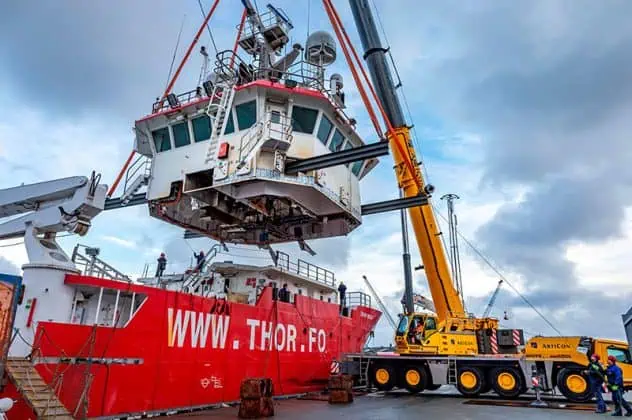
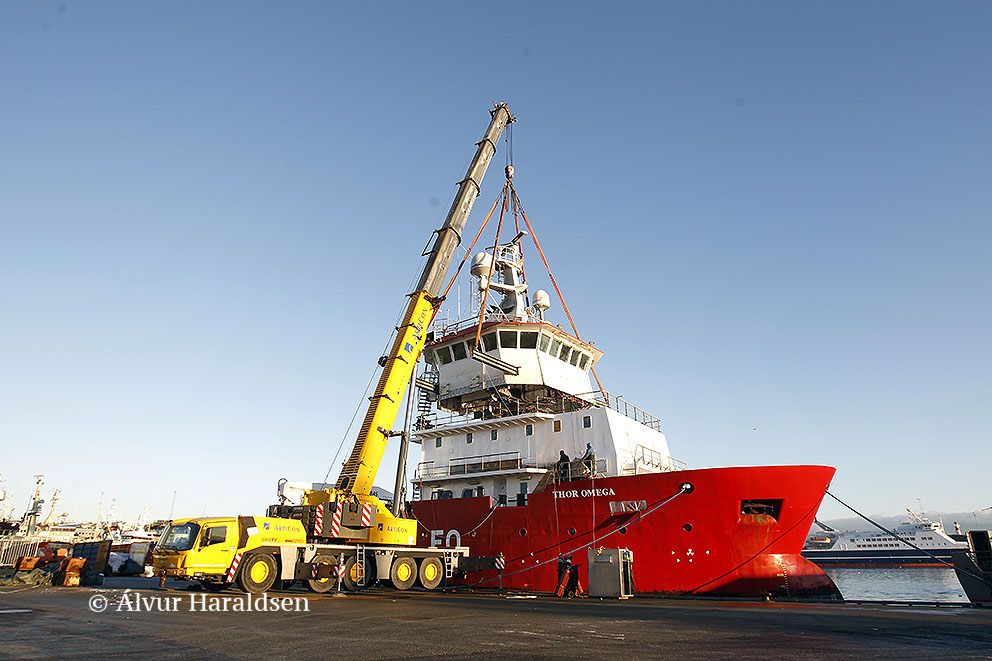
Rather than scrapping a mid-life PSV or OSV, an SPS class notation conversion re-purposes the existing hull, engines, and deck space, assets that would cost far more to replicate in a newbuild, for a role the vessel was never originally certified to perform.
GLO Marine has engineered SPS conversions that:
A technical review of the vessel's current class notation, structural condition, and general arrangement against SPS Code requirements.
This stage includes:
The objective is to establish whether — and how — the vessel can realistically reach SPS class notation.
Damage stability is typically the single hardest technical hurdle in an SPS conversion, particularly on vessels fitted with cargo tanks. Our naval architects model cross-flooding arrangements, KG limiting curves, and loading conditions against the SPS Code's damage standards.
Custom design of the accommodation solution needed to carry the additional special personnel, whether as an added superstructure deck of cabins or a containerised accommodation module fitted to the mezzanine deck.
This includes:
All designs are prepared for direct submission to the vessel's classification society.
Installation is planned around drydock or scheduled maintenance windows and managed in step with the class society throughout the approval process.
Activities generally involve:
Final testing and survey to confirm the vessel meets SPS Code requirements in full, concluding with the issue of the Special Purpose Ship Safety Certificate.
This phase includes:
The most demanding technical requirement in most conversions. The SPS Code applies stricter damage stability standards than the Offshore Support Vessel Code, particularly for vessels with cargo tanks.
Assessment covers:
Fire protection requirements scale with the certified number of persons on board, with distinct standards applied at the 60- and 240-person thresholds referenced in SOLAS Chapter II-1.
Life-saving arrangements must be sized and arranged for every special person, passenger, and crew member certified to be on board.
Accommodation for special personnel must meet standards well above typical crew quarters on a cargo or offshore support vessel.
Achieving SPS class notation is as much a class-interaction exercise as an engineering one.
Most self-propelled vessels of at least 500 gross tonnage can be assessed for SPS class notation, provided the hull and structure have enough remaining service life to justify the investment. Conversions are most commonly carried out on:
Platform supply vessels (PSVs), offshore support vessels (OSVs), anchor handlers, seismic survey vessels, and multipurpose offshore vessels being repurposed as walk-to-work or windfarm support vessels.
A technical gap analysis is required to confirm the feasibility for any specific hull.
A typical project includes:
All work is carried out in accordance with the IMO SPS Code and the relevant classification society's rules.
In most cases, yes — particularly when compared with a typical retrofit. Vessel conversion engineering for adding certified capacity for special personnel often involves installing a new accommodation module or additional superstructure deck, upgrading fire protection and escape arrangements, and reassessing or re-engineering damage stability. The exact scope of the conversion will depend on the vessel type, existing configuration, applicable class and statutory requirements, and the number of additional personnel to be certified.
Engineering and mobilisation typically take 6 to 8 months, depending on complexity. Where the design work is engineered with a high degree of accuracy, actual docking time can be as little as 3 months, considerably faster and cheaper than an equivalent newbuild.
The SPS Code sits between the Offshore Support Vessel Code and full passenger ship regulations, and is generally more demanding on damage stability than the OSV Code. It's the appropriate standard once a vessel needs to carry more than 12 non-crew special personnel; below that threshold, OSV Code compliance is normally sufficient.
Yes. DNV, ABS, Lloyd's Register, and Bureau Veritas all assign SPS class notation to vessels verified against the IMO SPS Code, each under their own class rules and guidance notes. The underlying IMO Code and Special Purpose Ship Safety Certificate requirements are consistent across societies.
The IMO's Industrial Personnel (IP) Code, in force since 1 July 2024, extends similar safety principles to ships transporting industrial personnel to and from offshore facilities, including renewable energy installations. Depending on a vessel's operating profile, it may be assessed against the IP Code, the SPS Code, or both. Our engineers will determine the right regulatory pathway during the initial gap analysis.
Have a stacked or mid-life OSV or PSV and considering a role in offshore wind, seismic, or industrial energy support?
Our naval architects and engineers can assess your vessel's structure and stability, confirm feasibility, and manage the project through to certification.


