 Request an assessment
 +40790870949
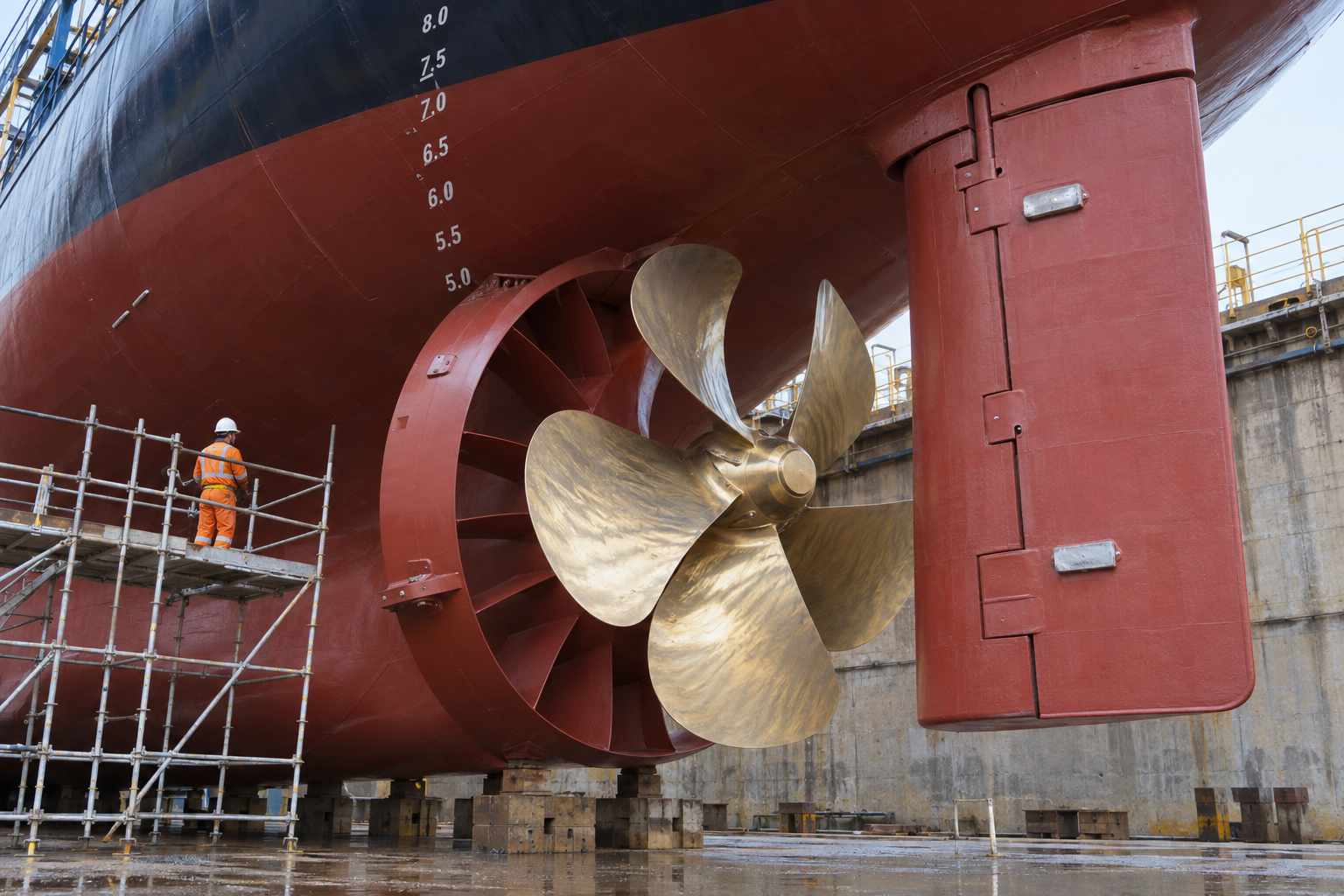
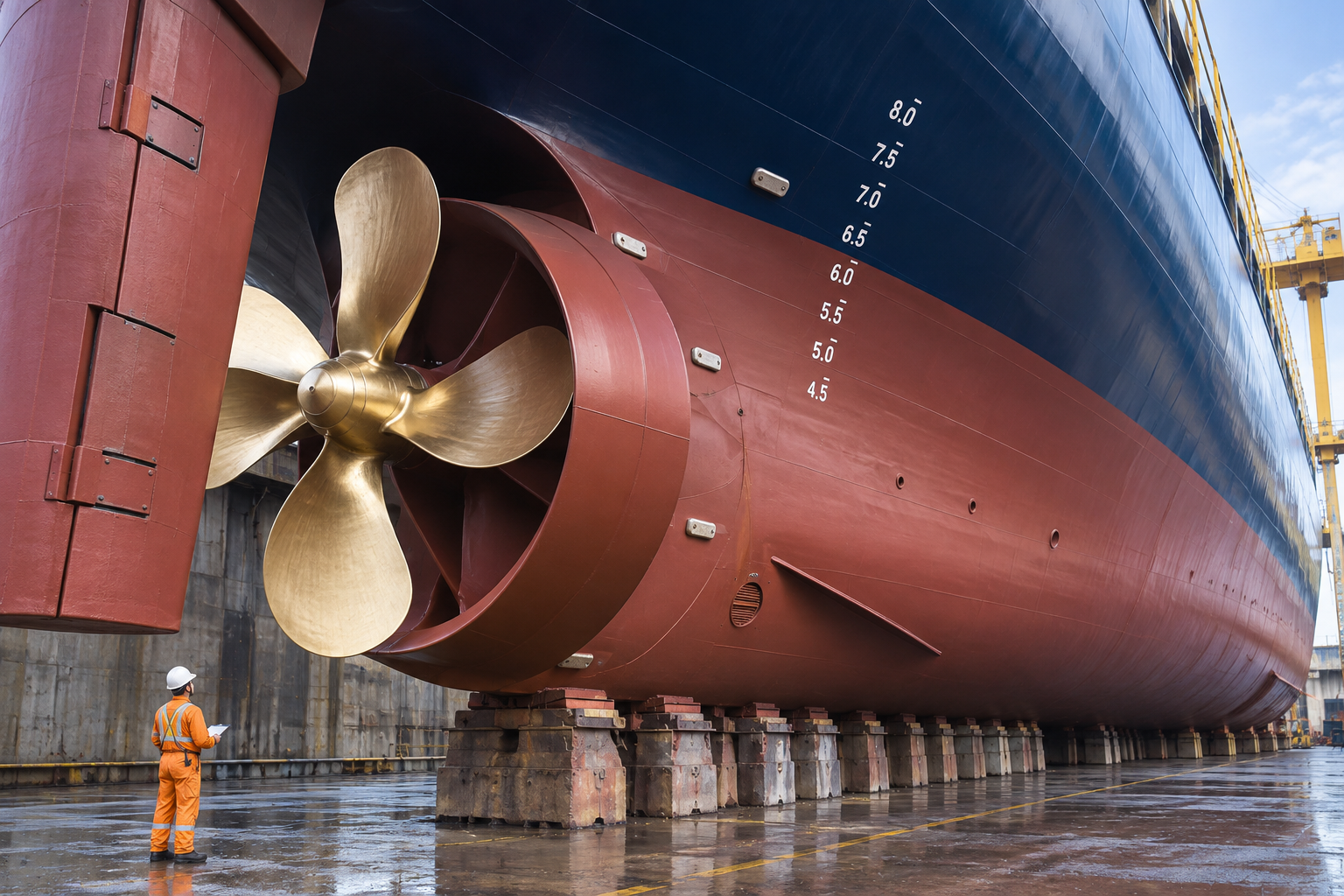
Energy-saving devices (ESDs) are fixed hydrodynamic appendages fitted around a ship's propeller, rudder or stern to recover energy lost in the propeller wake. They straighten the flow into the propeller, recover rotational losses or reduce the hub vortex behind it. The result is less propulsion power to hold the same speed. Savings depend on hull form, propeller loading, and operating profile, so each device must be selected and engineered for the specific vessel.
GLO Marine provides independent ESD retrofit engineering for in-service vessels. We are OEM-agnostic. We assess which device suits your hull and operating profile, then deliver the structural integration, class documentation, installation coordination, and performance verification, working with the device supplier you choose.
Most ESDs are installed during a scheduled drydocking, with no loss of cargo capacity and no change to daily operations. Combined with measures such as VFD retrofits, hull coatings and trim optimisation, they are a low-CAPEX step towards EEXI and CII compliance.
The services rendered were excellent, with full attention to all our details and requirements. Furthermore, I would like to highlight the effective communication and collaboration throughout the entire process.
Your team kept us well-informed at every stage, addressing our concerns promptly and providing valuable insights that contributed to the overall success of the project.

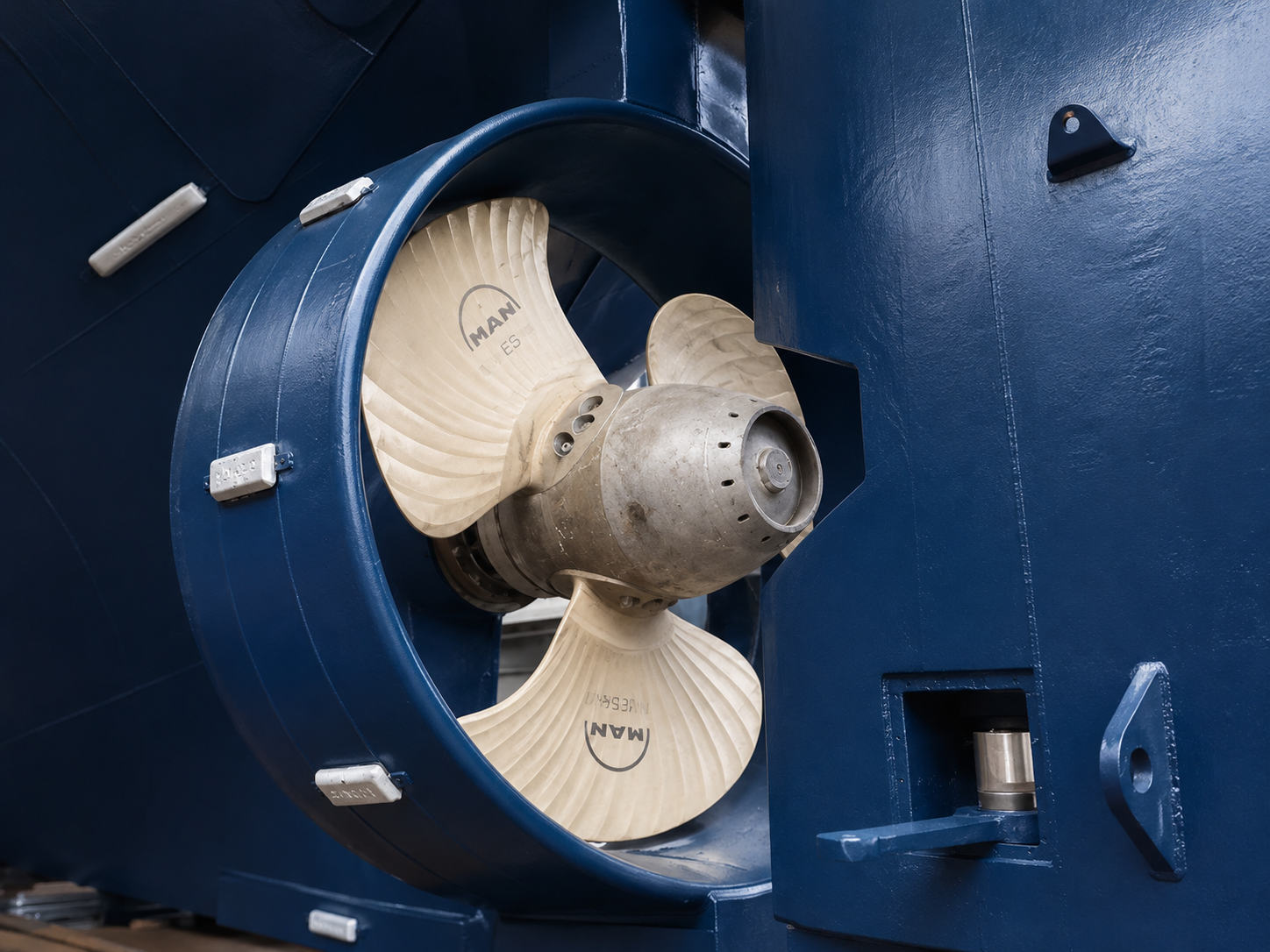
An ESD only delivers its rated saving when it is matched to the hull and propeller and fitted to an accurate stern geometry. That takes coordinated work across hydrodynamics, structure, class approval, and installation planning.
GLO Marine provides the complete vessel-side engineering package for ESD retrofits. Our capabilities include operational data analysis, device selection and supplier comparison, stern and propeller surveys, 3D scanning of the stern area, structural analysis of the device foundations, welding and installation procedures, class documentation, procurement & logistics, installation supervision, and post-installation performance analysis.
We are not tied to any device manufacturer. That lets us compare suppliers on expected savings, cost, and installation time, and recommend the option that pays back fastest on your vessel.
We support ESD retrofits on tankers, bulk carriers, gas carriers, container ships, and Ro/Ro vessels, in drydocks across Europe, the Middle East, and Asia-Pacific.
ESDs give the largest savings on vessels that spend most of their time at sea, at steady speeds, with a heavily loaded propeller.
Before recommending a device, we check whether the vessel:
If the answer to all three is yes, an ESD is usually one of the lowest-CAPEX ways to cut fuel consumption on a vessel in service.
A technical review of the vessel's hull, propeller, and operating data to confirm whether an ESD will pay back.
This stage includes:
The objective is to confirm the business case and the drydock target before design begins.
Suitable ESD types are compared for the vessel, using the supplier's CFD or model-test results for the actual hull and propeller. We compare suppliers on expected savings, cost, lead time and installation duration.
The selected device is designed for the vessel's real operating speed and draught range, not a single design condition.
The stern area is surveyed, and the device foundations, welding details and clearances to the propeller and rudder are engineered. Structural calculations confirm the hull and stern tube area can carry the device loads.
We prepare the drawings and calculations for class approval and coordinate comments with the classification society, so the approved package is ready before docking.
Installation drawings, welding procedures and a work plan are prepared to fit the vessel's drydock window. Most hydrodynamic ESDs are installed in a few days, alongside routine hull and propeller work.
GLO Marine can support procurement, logistics and on-site installation supervision, working with the shipyard and the device supplier.
The installed device is checked against the approved design and class requirements, and the documentation package is closed out. After return to service, fuel consumption and power are compared with the pre-installation baseline, using ISO 19030 principles where hull performance data is available.
The verified savings can be used in the vessel's SEEMP Part III, CII reporting, and charterer discussions.
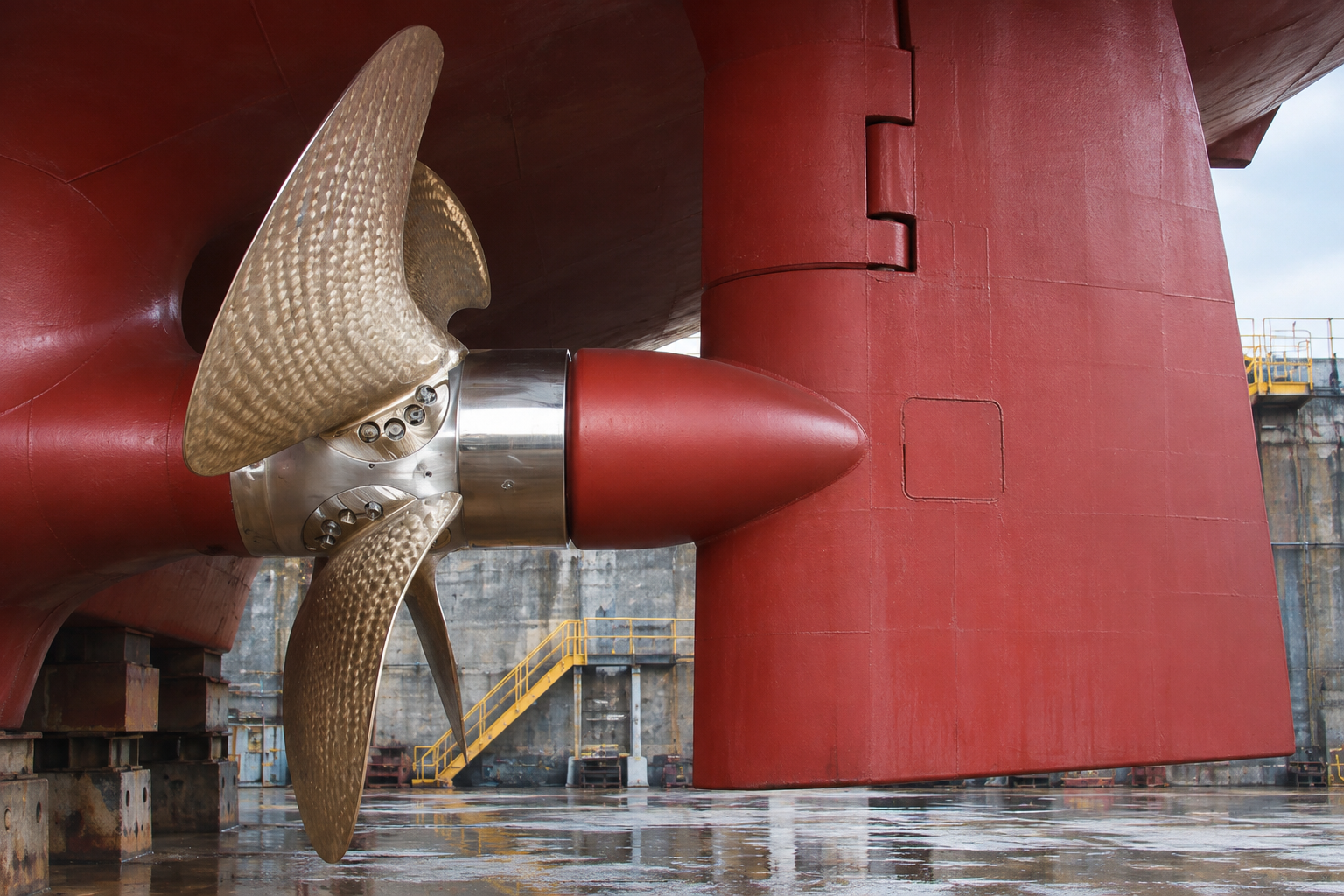
Energy-saving devices (ESDs) are fixed hydrodynamic appendages fitted around the propeller, rudder, or aft hull that reduce the power needed to drive a ship at a given speed. Common types are pre-swirl stators, pre-ducts (wake-equalising ducts), propeller boss cap fins (PBCF), and rudder bulbs. They work by improving the flow into the propeller, recovering rotational energy, or reducing the hub vortex behind it.
Most single ESDs save a few percent of propulsion power, depending on the vessel's hull form, propeller loading, and speed. Manufacturers quote 3–8% for pre-duct systems such as the Becker Mewis Duct, and around 4–5% for propeller boss cap fins. Operator data varies. Odfjell reports savings above 5% from PBCF and up to 10% on some vessels fitted with pre-ducts.
A vessel-specific assessment, using CFD or model-test results for the actual hull, is needed before any savings can be relied on.
Yes. Most ESDs are designed to be retrofitted during a scheduled or intermediate drydocking. Installation typically takes from half a day for boss cap fins to about five days for a pre-duct.
The longer lead items are design, class approval, and manufacturing. Starting the assessment several months before docking avoids extending the yard stay.
Yes. By reducing the propulsion power needed at a given speed, ESDs can improve a vessel's attained EEXI and reduce the fuel consumption that drives its annual CII rating.
For EEXI, improvement must be shown through updated speed–power data accepted by the classification society. IMO guidance (MEPC.1/Circ.896) notes that technologies which change the power curve are assessed together with the vessel's hull form and propulsion system, not in isolation. For CII, the lower fuel consumption appears directly in the vessel's annual operational data.
It depends mainly on the hull form, propeller loading and operating speed. Pre-ducts and pre-swirl stators suit slower, full-form ships such as tankers and bulk carriers. Propeller boss cap fins suit vessels with fixed-pitch propellers. Rudder bulbs suit vessels with the rudder directly behind the propeller.
Devices can sometimes be combined, but savings do not simply add up. Combinations should be confirmed by CFD or model tests for the specific vessel.
Yes, in most cases. ESDs are welded to the hull, stern frame, or rudder, so drawings and structural calculations are normally submitted to the classification society before installation.
The review covers the device foundations, weld details, clearances to the propeller and rudder, and any effect on vibration. Preparing this package before docking is one of the most effective ways to protect the drydock schedule.
Planning a drydock and looking for fuel savings? Our specialists can review your vessel's operating data and stern arrangement, identify which energy-saving devices suit it, and plan the retrofit around your docking date.
How We Can Support:


