 Request an assessment
 +40790870949

Integrating heavy equipment into an existing vessel requires consideration of more than the equipment’s physical installation. Cranes, launch and recovery systems, and walk-to-work gangways introduce additional load paths, moment arms, and dynamic forces that may not have been included in the vessel’s original structural and stability design. Foundation design and load-case analysis are therefore required to verify structural capacity, vessel stability, and compliance with classification requirements.
GLO Marine evaluates the vessel, equipment, and intended operating conditions as a single engineering scope. This includes the design of equipment foundations, any required structural reinforcement, and the interfaces with existing vessel systems. The objective is to confirm that the equipment can operate within its specified limits without adversely affecting the vessel’s structural integrity, stability, class status, or operational capability.
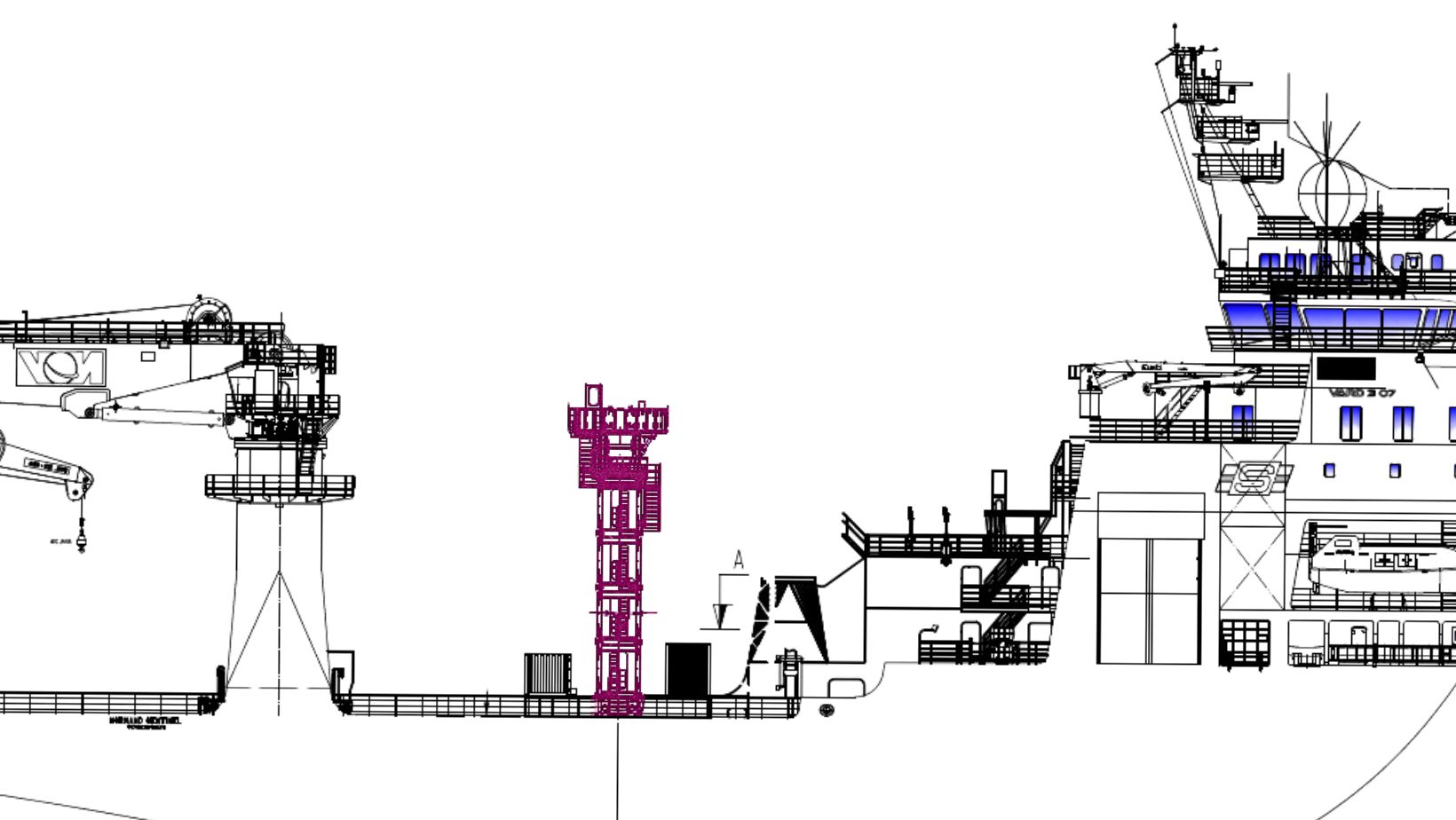
Vessel owners under pressure to mobilise quickly often treat equipment integration as a procurement decision rather than an engineering one. That approach tends to surface its cost later — in the yard, during sea trials, or during class survey.
Heavy equipment integration is the structural, stability, and interface engineering required to fit heavy or complex equipment — cranes, launch and recovery systems (LARS), vertical lay systems (VLS), gangways, or cable-lay and subsea equipment — onto a vessel that was not originally designed to carry it. It is a core part of GLO Marine's structural and systems engineering service.
Unlike newbuild design, integrating equipment onto a vessel in service means working within an existing hull form, deck arrangement, and stability envelope. Every addition shifts the vessel's centre of gravity, load paths, and motion response, which is why heavy equipment integration is typically delivered as part of a wider conversions and mobilisation scope rather than handled as an isolated equipment purchase.
A heavy equipment integration project establishes a verified engineering basis for each stage of the work.
Instead of fitting equipment and addressing problems as they surface, a structured integration process:
By engineering the integration up front, projects move from design to commissioning with far fewer surprises.
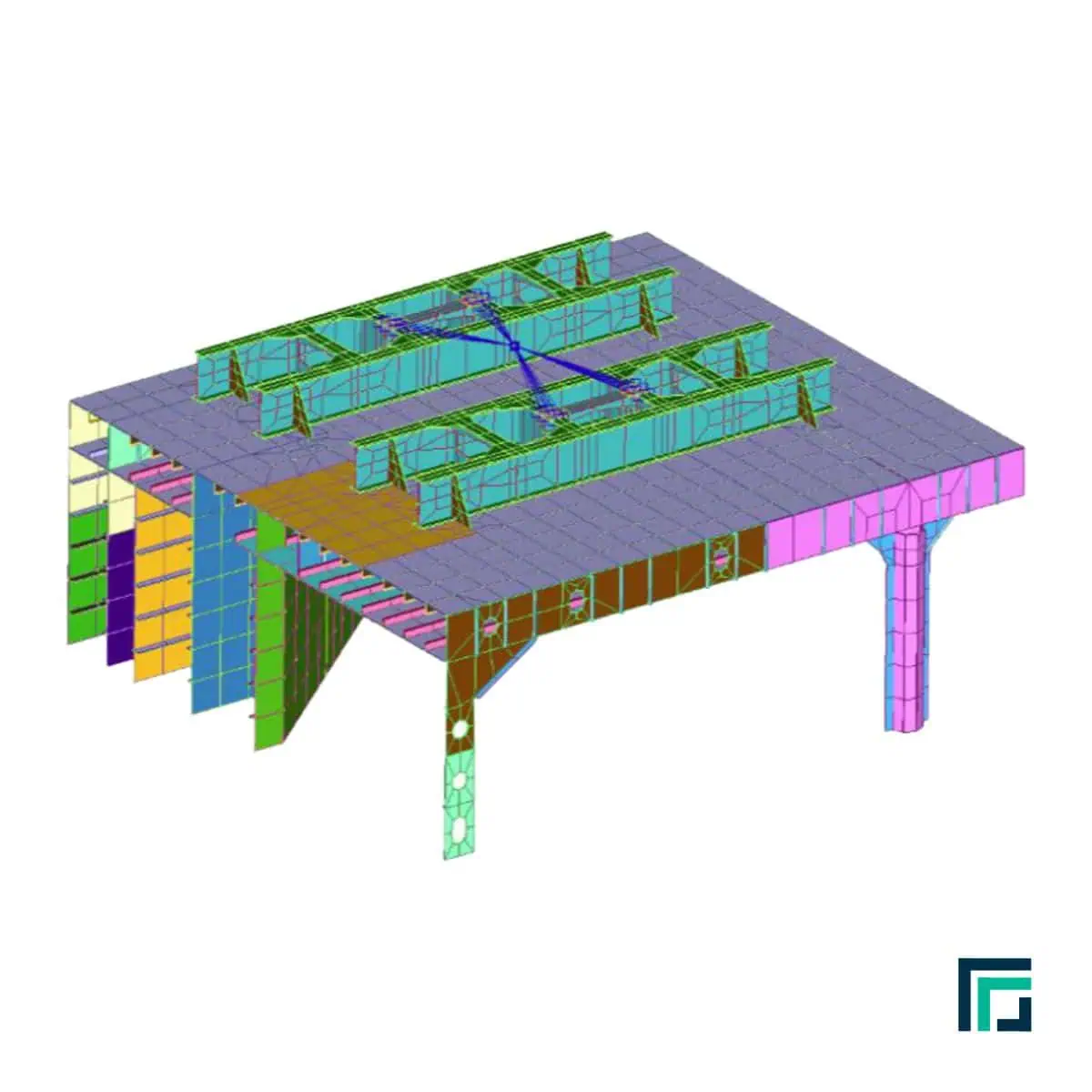
A technical review of the vessel's structure, stability, and available deck space against the proposed equipment.
This stage includes:
The objective is to confirm the integration is feasible before detailed engineering begins.
Custom foundation design for the equipment being integrated. GLO Marine's engineers define the static, dynamic, and operational loads the structure must carry and size the foundation accordingly.
This includes:
All calculations are prepared to satisfy classification society review.
Structural reinforcement and stability assessment carried out together, so changes to one are reflected in the other.
All designs are prepared to ensure safe, compliant, and reliable operation.
Installation is planned to align with the vessel's operational constraints and the equipment manufacturer's requirements.
Full installation support is available aboard vessels in port, at anchor, or in drydock.
The integrated system is commissioned to verify functionality and performance under real operating conditions.
Where required, post-commissioning support can be provided to confirm long-term performance.
Most heavy or complex equipment can be integrated onto a vessel in service, subject to engineering assessment, including cranes and winches, LARS and VLS systems, helideck, gangways, W2W systems, and cable-lay or subsea equipment. A technical assessment is required to confirm feasibility and identify any structural or stability constraints.
Not always. Many integrations, particularly deck-mounted equipment with limited hull penetration, can be carried out in port or at anchor. Projects involving hull penetrations, sea chests, or major structural reinforcement typically require a drydock period.
Any addition of weight and height above the waterline shifts the vessel's centre of gravity and can affect intact and damage stability, as well as motion response in a seaway. Updated stability calculations are required to confirm the vessel remains compliant and to define a safe operating envelope for the new equipment.
Heavy equipment integration projects are typically reviewed by the vessel's classification society, such as DNV, ABS, Lloyd's Register, or Bureau Veritas. Foundation calculations, stability assessments, and installation documentation are prepared to meet the relevant society's requirements.
Timelines vary with equipment complexity and the extent of structural reinforcement required, ranging from a few weeks for straightforward deck-mounted systems to several months for major crane, LARS, or W2W integrations. A feasibility assessment early in the process gives a realistic project timeline.
In some cases, phased integration can be planned around the vessel's operating schedule, particularly for equipment with limited structural impact. Projects involving major reinforcement or hull penetrations are usually planned for drydock or scheduled maintenance periods.
A typical package includes feasibility assessment, foundation and load case engineering, structural and stability calculations, system interface design, installation drawings, and class-ready documentation, supported through installation and commissioning.
Planning a crane, LARS, gangway, or subsea equipment integration on your vessel?
Our specialists can assess your vessel's structure and stability, identify the engineering required, and develop a coordinated integration plan tailored to your equipment and operational profile.
• Foundation and load case engineering
• Structural reinforcement and grillage design
• Stability, seakeeping, and operability assessment
• Electrical, hydraulic, and control system interface design
• Installation support and commissioning assistance
• Class compliance and documentation support


