Engine reliability decides vessel availability, offshore operations and project schedules. When a fault appears or an overhaul interval comes closer, owners and technical managers face the same question. What does this engine really need, and how long will the vessel be out of service?
GLO Marine answers that question with a structured condition assessment for slow-speed 2-stroke and medium- and high-speed 4-stroke engines across all major brands. Our technicians combine performance data, borescope inspection and measurement to find the root cause, then turn the findings into a costed scope for repair or overhaul, delivered on board, in drydock, offshore or through our workshop network.
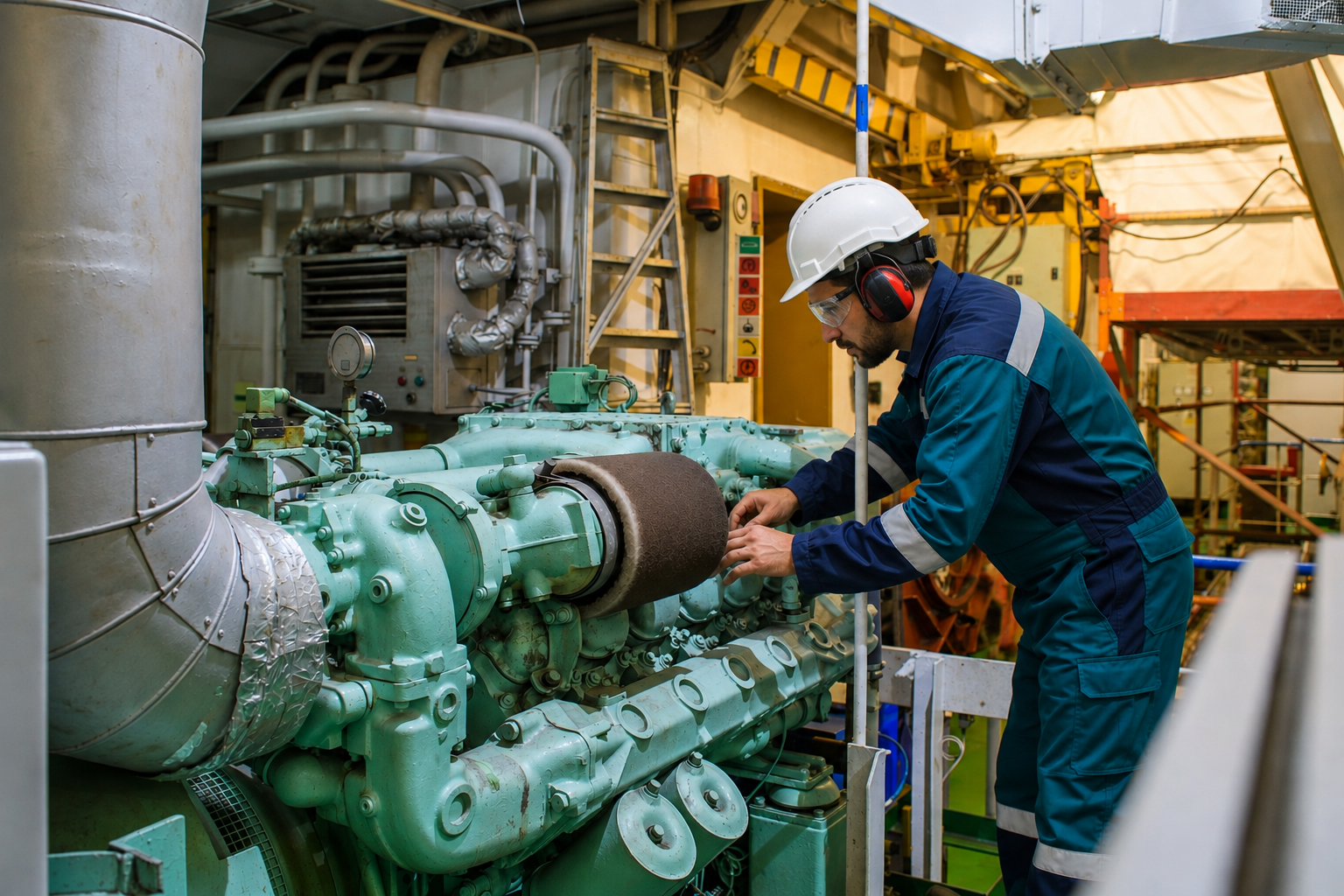
Main engine damage is among the most expensive machinery claims in shipping. In The Swedish Club’s main engine damage study, the average claim cost was close to USD 650,000, 21% more than in the previous five years, and main engine damage made up 28% of all machinery claims and 34% of their total cost. The most common causes were lubrication failure, incorrect maintenance or repair, and poor fuel management, while damage to crankshafts and bearings was the most expensive of all. Medium- and high-speed engines, the type that powers most gensets, were damaged two and a half times more often than slow-speed engines.
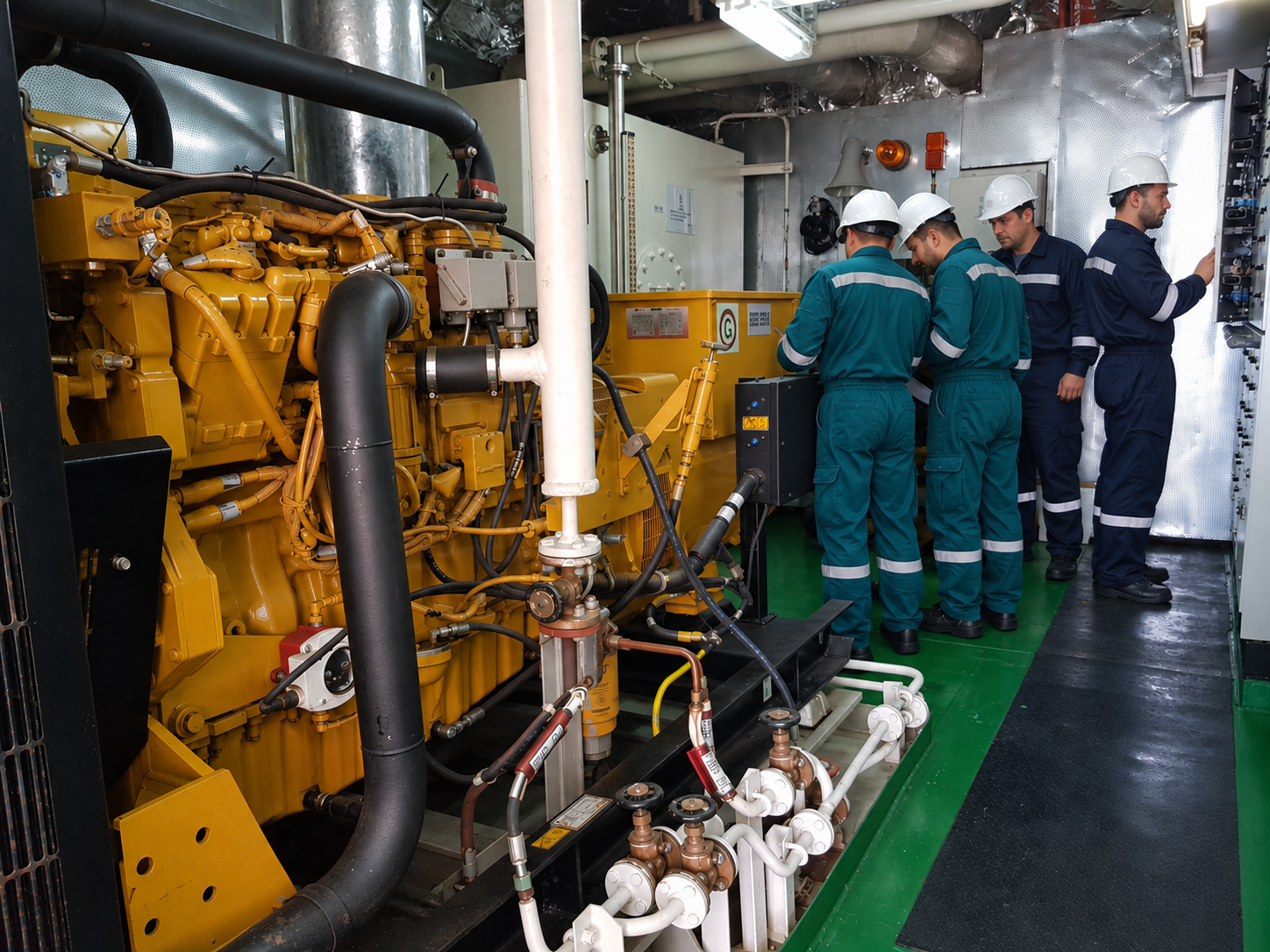
Every assessment starts with the data your crew already records, such as running hours, exhaust temperatures and lube oil results. It shows our technicians where to look before anyone opens the engine.
On board, we inspect and measure only what the data points to, using borescope inspection and crankshaft deflection checks where needed. On slow-speed 2-stroke engines that usually means the cylinder units, running gear and turbocharger. On medium- and high-speed 4-stroke engines and gensets, we focus on the cylinder heads, fuel system, turbocharger and controls.
From the first data review to the final sea trial, one GLO Marine team takes your engine through diagnosis, repair and return to service. Each step builds on the one before, so nothing is lost between the inspection, the workshop and the crew on board.
We review running hours, performance trends, lube oil and fuel analysis, alarm logs, and maintenance records to focus the inspection before mobilising.
Our technicians inspect the engine on board, in drydock or offshore, with borescope inspection, crankshaft deflection and alignment checks, and component measurements against OEM tolerances.
We identify the cause of the fault, rank findings by risk and deliver a defined scope with a spare-parts list, downtime estimate and cost.
Our team carries out the work, from turbocharger or fuel injection repair and in-situ machining to top-end, major or full engine overhaul, with genuine or certified exchange parts.
We work on slow-speed 2-stroke main engines and medium- and high-speed 4-stroke engines and gensets. Our technicians are certified across major brands including Caterpillar, MTU, Cummins, MAN and Wärtsilä, and many more.
Not always. Data review and many inspections can be done during a port call. Work that requires the engine to be opened, such as bearing or crankcase checks, is planned around the vessel's schedule, on board, in drydock or offshore.
A review of performance data and maintenance history, onboard inspection including borescope and crankshaft deflection where relevant, and root-cause analysis of recurring faults. You receive findings ranked by risk, with a scope, spare-parts list, cost and downtime estimate.
Yes. We supply OEM genuine parts and certified reconditioned or exchange units, all with full traceability, and provide class approval and documentation support for the completed work.
Share your engine type, scope and timeline. Our specialists will review it and respond as soon as possible with a structured plan to get your engine back to full operation. No commitment required.
We can support with


