Air Cavity Systems use structurally defined cavities beneath the hull to retain air and reduce the wetted surface area. By holding air in controlled cavities, ACS can reduce frictional resistance with lower air flow requirements than some open-air-layer concepts.
As part of a broader air lubrication system strategy, Air Cavity Systems can be particularly effective on vessels with large, flat-bottomed areas and suitable operating profiles.
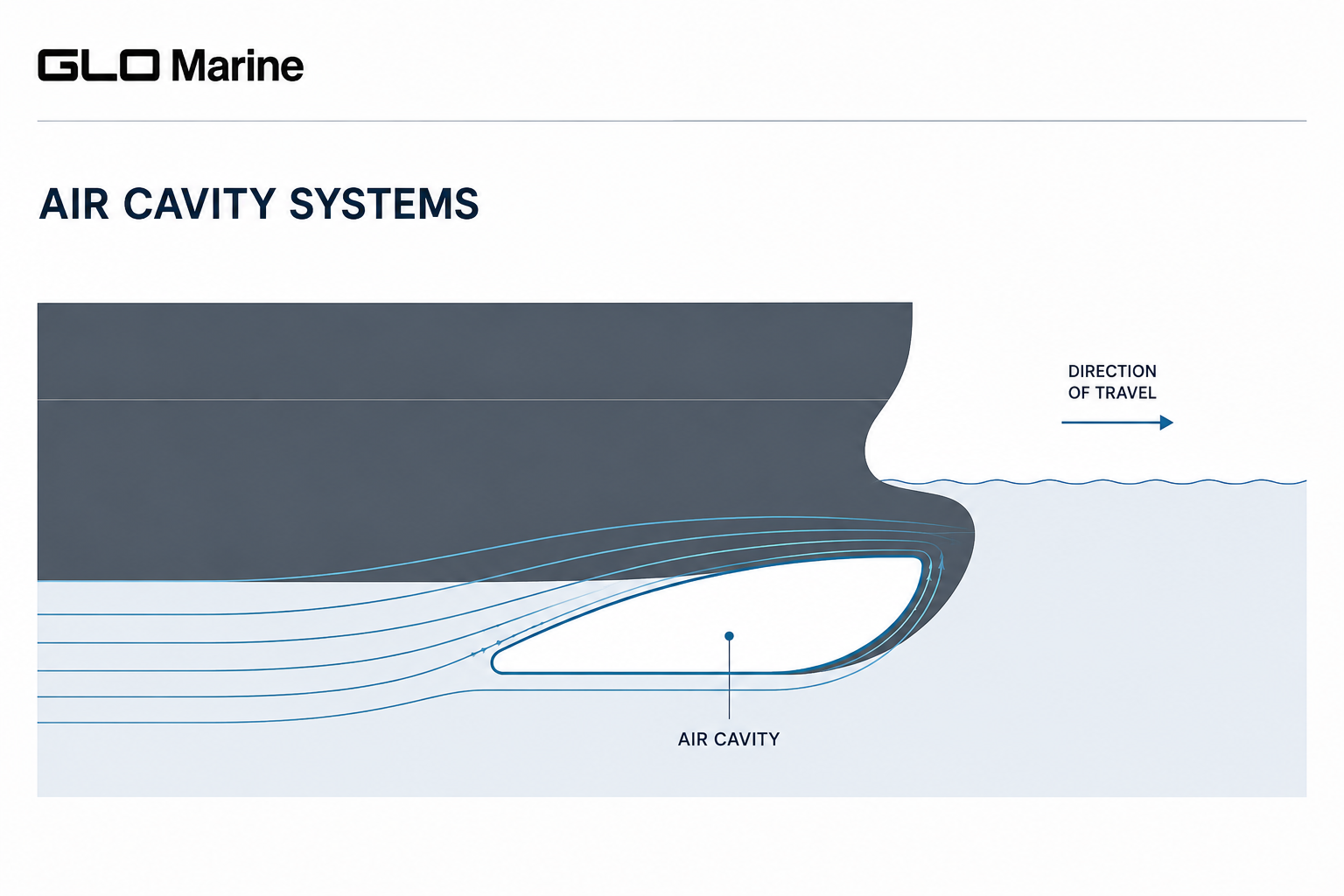
Air Cavity Systems are not universal solutions. They are most effective when the vessel has sufficient flat-bottom area to form, retain, and control air cavities beneath the hull.
ACS may be considered when vessels require:
GLO Marine assesses hull suitability, structural integration, system arrangement, and class requirements to determine whether ACS is technically and commercially viable for your vessel.
GLO Marine provides independent engineering support for air cavity and vessel energy-efficiency retrofit projects, including feasibility assessment, structural integration, system design, and class documentation.
We help owners and operators determine whether ACS is suitable for their vessel and define how the system can be implemented efficiently, with technical responsibility managed by one engineering team.
Because ACS modifies the physical geometry beneath the hull, early engineering must confirm both hydrodynamic benefit and structural feasibility before implementation.
GLO Marine is an independent engineering provider and is not affiliated with any specific air lubrication technology manufacturer.
If you are considering an Air Cavity System for a new build or retrofit project, we can evaluate your vessel's configuration and propose a tailored engineering approach.
This ensures:
Please include the Vessel Name, IMO Number, vessel type, main dimensions, service speed, draft range, operational profile, and any available hull drawings or general arrangement plans. This information enables our team to review your vessel and provide the appropriate technical solution quickly.


