Offshore Helideck Design & Integration

Helideck integration extends beyond structural design. It requires aerodynamic validation, structural verification, systems engineering and coordinated certification to satisfy both marine and aviation requirements.

This engineering guide explains the methodology used to develop certifiable helideck installations on FPSOs, offshore construction vessels, SOVs and CSOVs, from feasibility assessment through commissioning and HCA certification.

Helideck performance is established long before steel fabrication begins.

Location studies, CFD analysis, structural load assessment, exhaust plume modelling, lighting design, DIFFS integration and certification strategy all influence whether a helideck achieves operational approval without redesign or programme delays.

This guide presents an engineering framework that manages these disciplines as one coordinated scope.
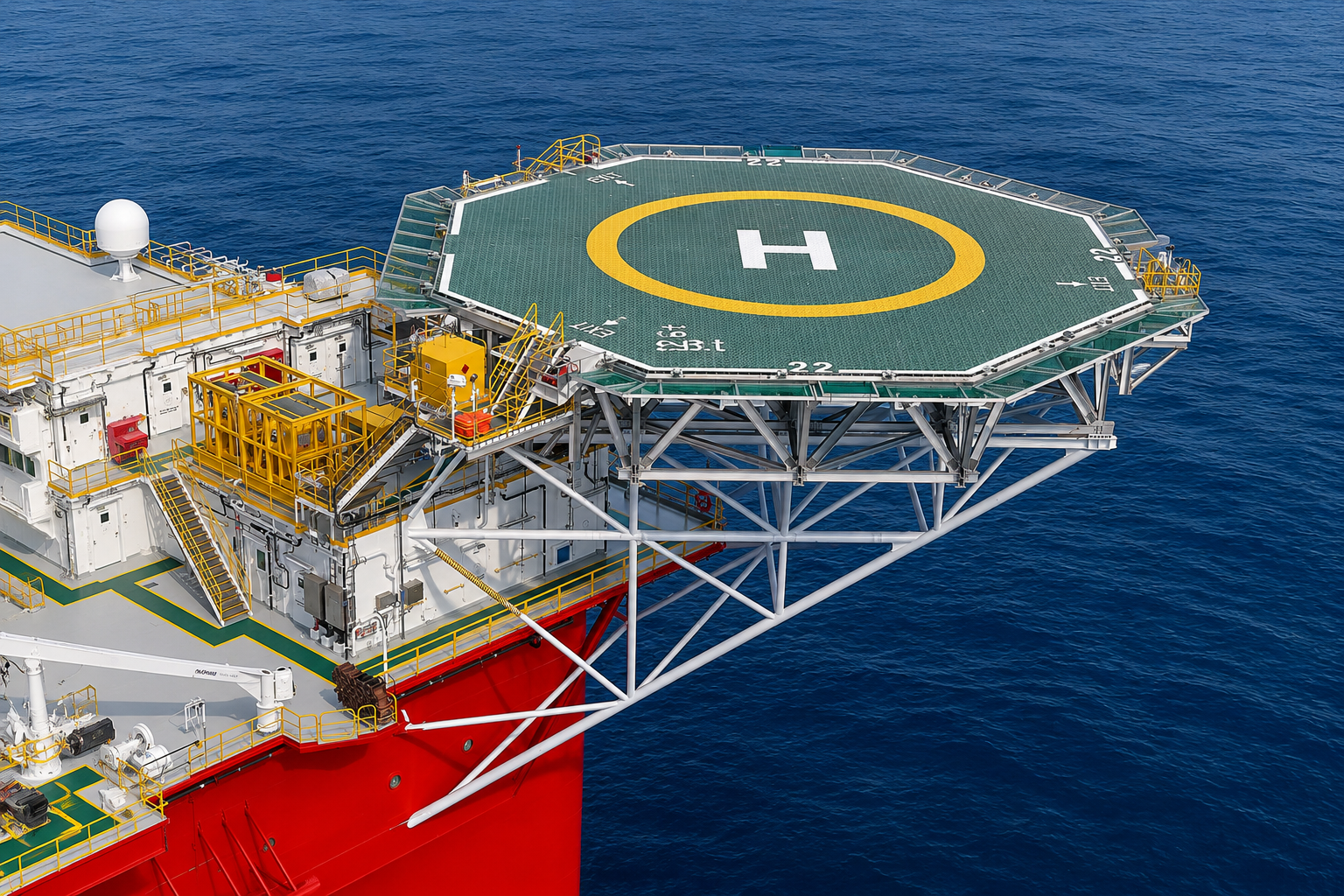
Coordinating the complete helideck engineering package

GLO Marine develops integrated engineering packages covering the full technical scope of offshore helideck installations, including:

  • CFD wind flow, turbulence and exhaust plume analysis
  • Helideck location and obstacle sector assessment
  • Structural FEM and fatigue verification
  • Load definition and supporting structure design
  • DIFFS, HMS, lighting and drainage integration
  • OEM interface management
  • Class submissions and aviation compliance
  • Installation engineering, commissioning and HCA close-out

Engineering activities are developed against a common technical baseline, reducing interface conflicts between structural, mechanical, electrical and regulatory disciplines.
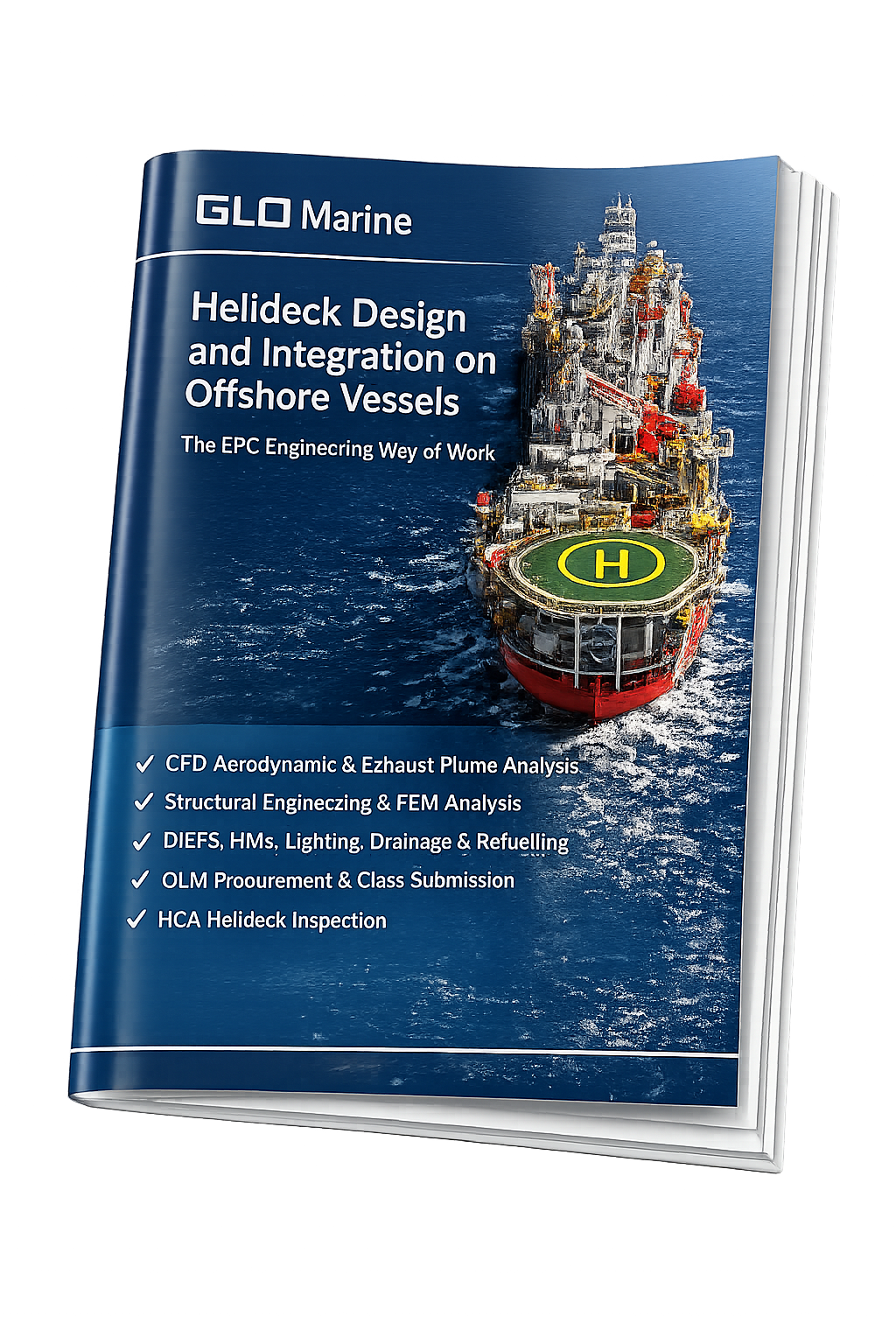
Download the Engineering Guide

Review the engineering methodology applied to offshore helideck integration projects.

The guide covers:

● Aerodynamic assessment methodology
● Structural verification principles
● Helideck systems engineering
● Certification workflow
● Construction and commissioning strategy

Complete the form to access the guide.
Download Guide
Engineering topics

Aerodynamic performance

CFD methodologies used to evaluate wind flow, turbulence, obstacle sectors and exhaust plume behaviour during helideck location studies.

Structural integrity

Structural FEM, fatigue assessment, landing load verification and supporting steel design for offshore operating conditions.

Integrated systems design

Engineering of DIFFS, lighting, monitoring, drainage and auxiliary systems within a coordinated design environment.

Certification readiness

Engineering documentation supporting class approval, aviation authority requirements, HCA inspection and operational acceptance.

Engineering methodology for offshore helideck certification


Certification begins with engineering—not inspection.

Successful helideck projects require validated aerodynamic performance, structurally verified supporting arrangements, integrated safety systems and a coordinated approval strategy developed before construction commences.

The guide explains how these technical activities are managed throughout the engineering lifecycle.

Topics include:

  • CFD aerodynamic modelling
  • Exhaust plume dispersion analysis
  • Obstacle sector verification
  • Structural FEM and fatigue analysis
  • Helideck systems engineering
  • Certification documentation
  • Commissioning methodology
  • HCA inspection preparation

Use this guide as a technical reference when planning offshore helideck integration or retrofit programmes.


Engineering support throughout the project lifecycle

Delivering a certifiable helideck requires more than compliant structural design. CFD validation, load assessment, systems engineering, OEM coordination and regulatory approvals must progress against a common engineering baseline to ensure technical consistency throughout the project.

Explore our Offshore Vessel Mobilisation & Systems Integration services to see how we support retrofit projects from concept through commissioning.


3000 characters left