Bubble Drag Reduction uses dispersed microbubbles injected into the turbulent boundary layer beneath the hull to reduce friction between the vessel and the surrounding water. As part of a wider air lubrication system strategy, BDR can support lower propulsion demand, improved energy efficiency, and reduced fuel consumption on suitable vessel types.
Many vessels operate with a significant share of resistance caused by hull-water friction, yet not every vessel is suitable for a continuous air layer or structurally defined air cavity.
Bubble Drag Reduction may be considered when vessels face:
GLO Marine evaluates whether BDR is technically suitable for your vessel, how it can be integrated, and what level of performance can realistically be expected.
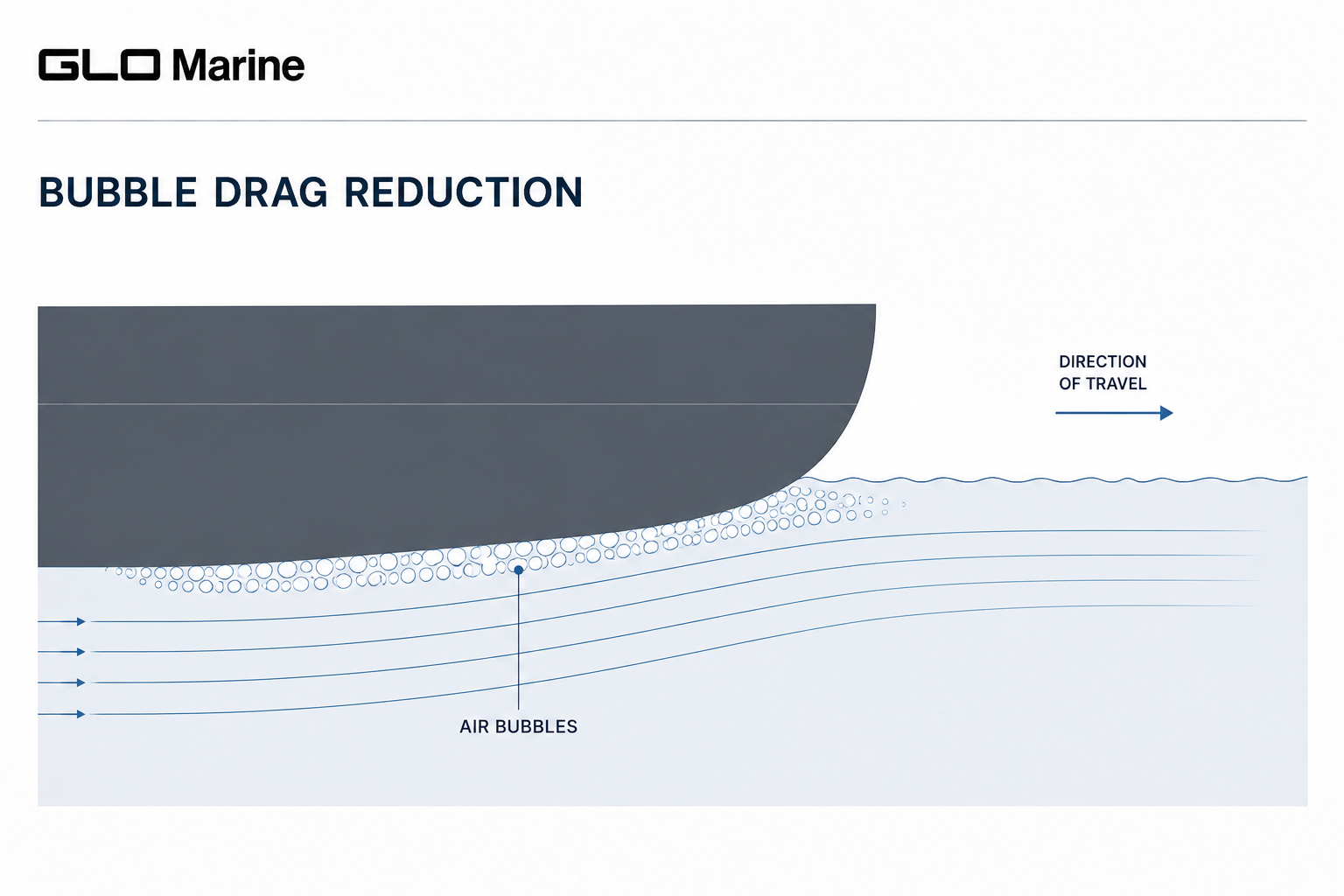
GLO Marine provides independent engineering support for air lubrication and vessel energy-efficiency retrofit projects, including feasibility assessment, system integration, class documentation, and installation planning.
Our team can support the full BDR engineering process, from hull-form and operational profile review to air release integration, compressor and electrical load assessment, piping, automation and structural design, retrofit documentation, yard installation support, and performance monitoring.
We provide independent engineering support and can work alongside shipowners, technology providers, shipyards, and class societies to help define a technically robust implementation pathway.
GLO Marine is an independent engineering provider and is not affiliated with any specific air lubrication technology manufacturer.
If you are considering Bubble Drag Reduction for a newbuild or retrofit project, we can evaluate your vessel configuration and propose a tailored engineering approach.
This ensures:
Please include the Vessel Name, IMO Number, vessel type, main dimensions, service speed, draft range, operational profile, and any available hull drawings or general arrangement plans. This information enables our team to review your vessel and provide the appropriate technical solution quickly.


